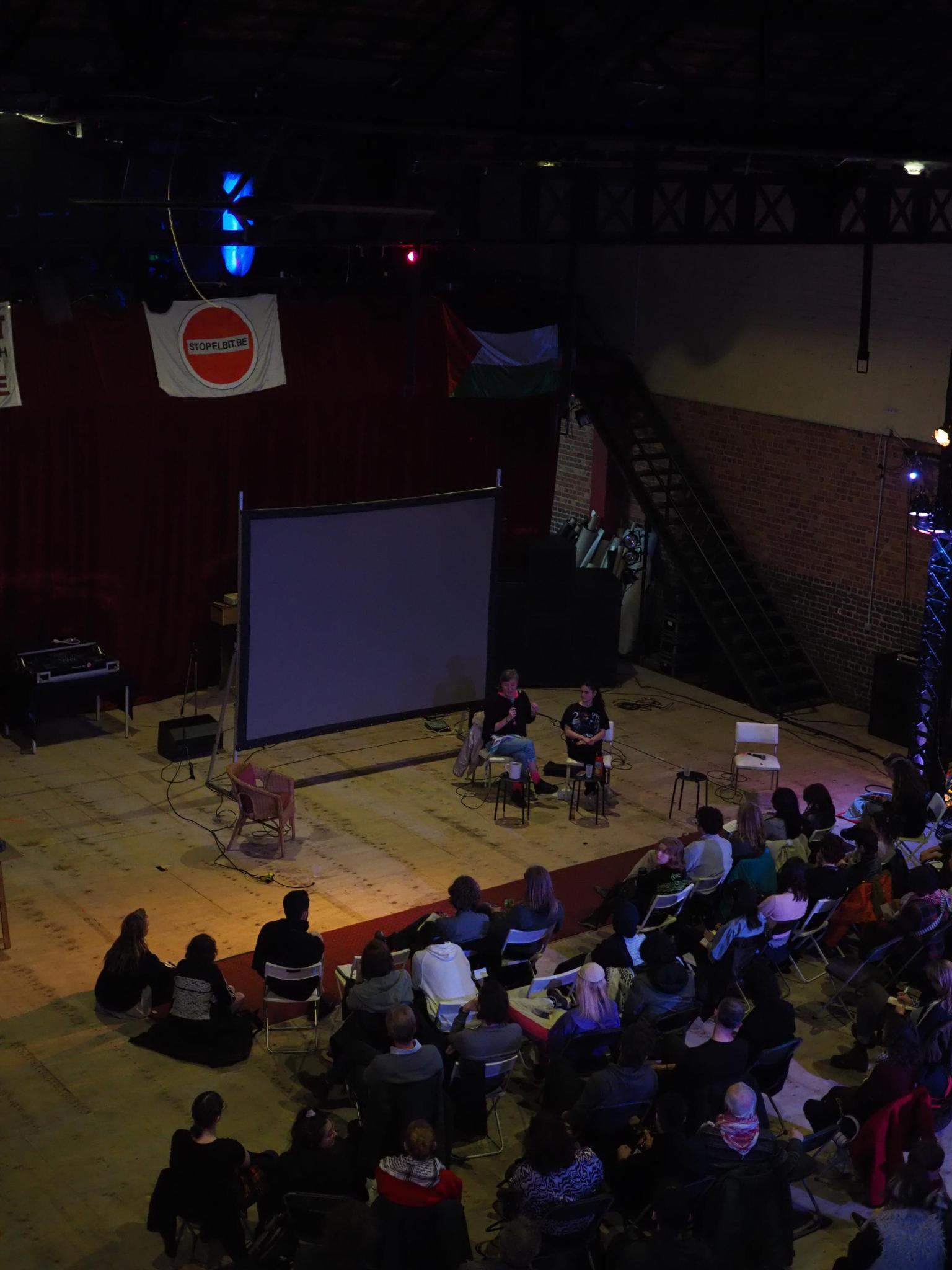
On Sunday, 8 February, Samidoun Belgium spoke at an event in support of seven activists going on trial for blocking the site of “OIP Sensor Systems” in Oudenaarde. Acquired in 2003 by “Israel’s” largest private arms contractor, Elbit Systems, OIP Systems produces weapons components and technologies used by the Zionist army. The seven defendants were singled out from a group of one hundred activists who blocked the site on 4 March 2024, and are now facing criminal damages of up to €100,000 for allegedly disrupting the site’s activities and causing “moral damages to employees.”
Rather than being intimidated by OIP–Elbit’s decision to press charges, activists in Belgium have launched a new collective under the name Stop.Elbit, seeking to draw further attention to the company’s role in genocidal violence. In its founding statement, the new collective affirms the need for a “People’s Arms Embargo,” stating that “since the Belgian state continues to refuse an arms embargo on Israel, we decided to take matters into our own hands.”
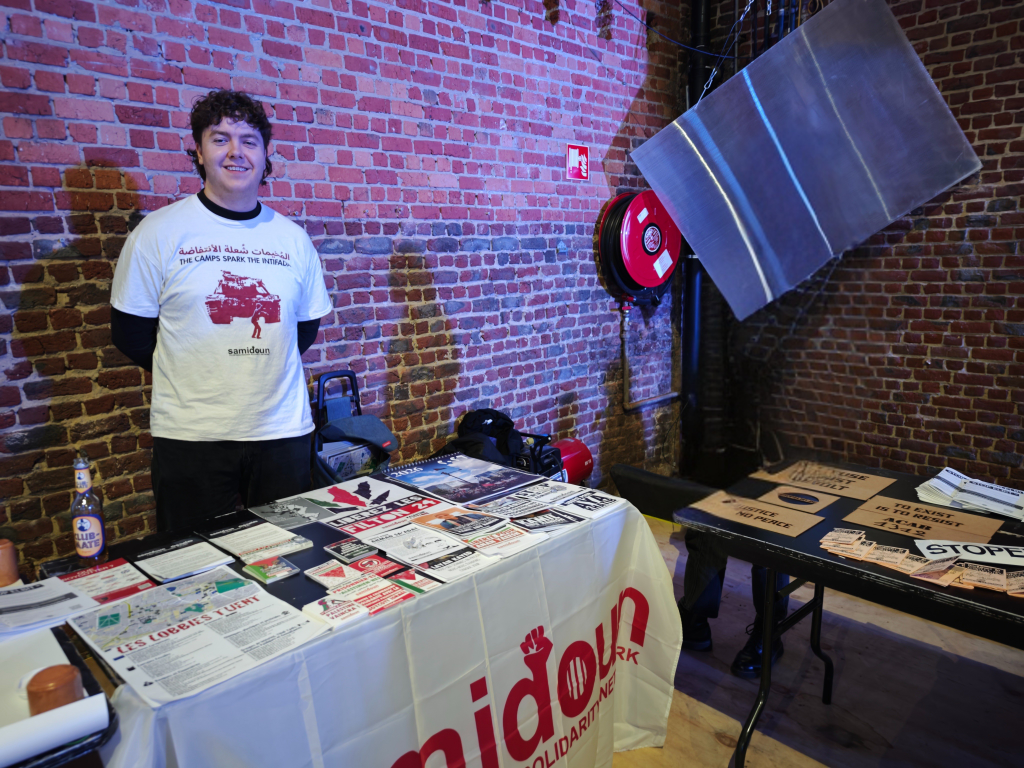 During the event, Samidoun Belgium expressed its full support for the seven activists on trial, emphasizing that despite the severe financial pressure they now face, they should remain proud and steadfast in their decision to take action in support of the liberation of Palestine.
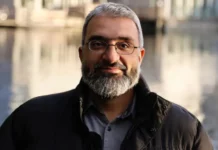
On the same panel, a member of Samidoun Belgium spoke at length about the different forms of repression faced by the Palestine solidarity movement, and the need to distinguish between repression resulting from direct action and repression targeting Palestinian refugees for calling for the liberation of Palestine. The day before the event, Samidoun’s European Coordinator, Mohammed Khatib, was detained at Heraklion Airport in Crete while traveling to speak at an event with liberated prisoner Abdel-Nassar Issa and the Anti-Imperialist Front. There, he faces deportation back to Belgium, where his refugee status was revoked by former minister Nicole De Moor following pressure from the Zionist Embassy in Belgium.
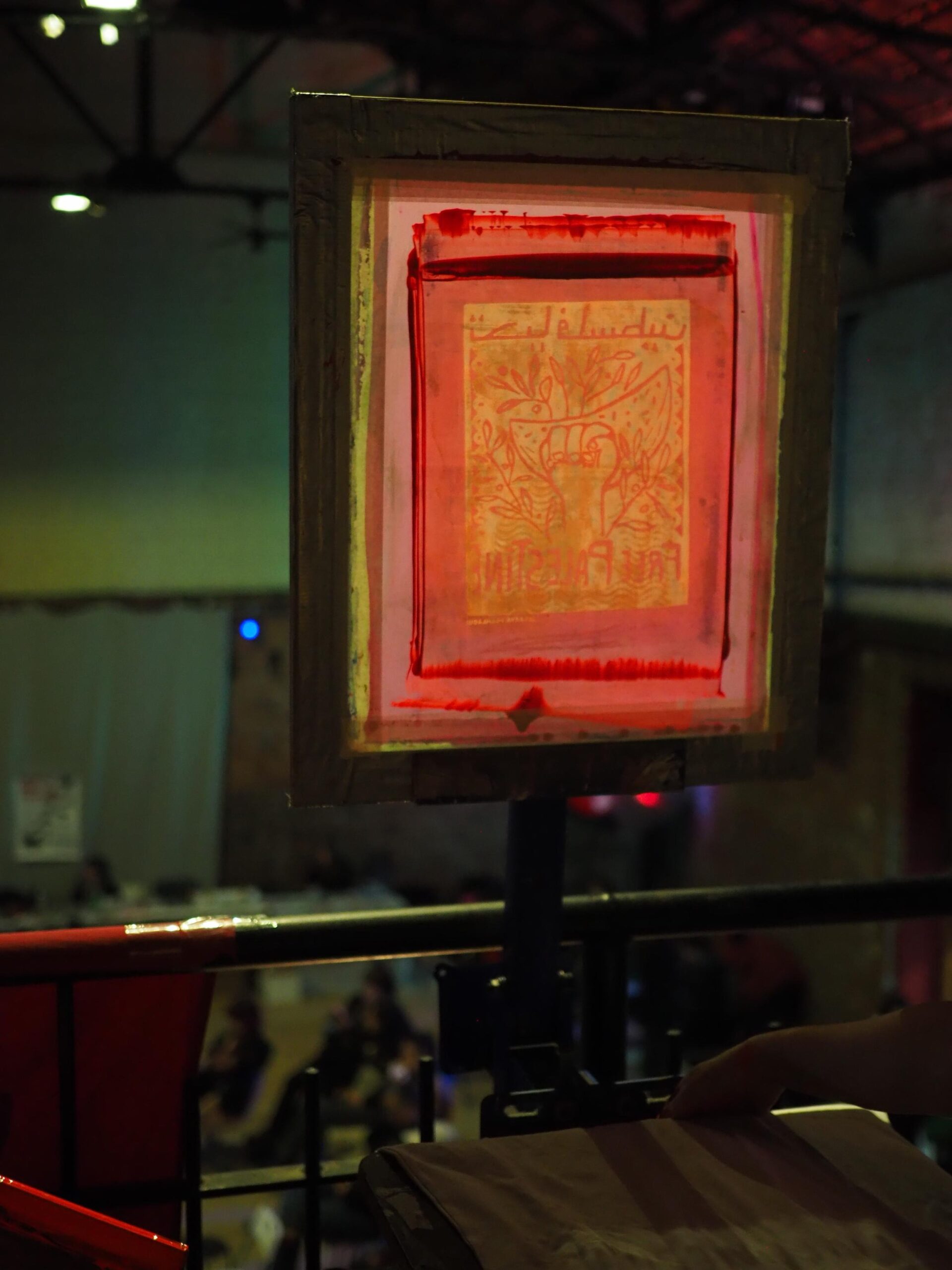
The detention of Mohammed Khatib reflects a broader pattern in which European governments use Palestinians’ right to asylum as a tool to silence, intimidate, and, in the worst cases, detain and deport those who continue to speak out for Palestine. In Belgium alone, around ten Palestinian refugees have been arrested, detained, and in many cases deported—not for any crimes they have committed, but for their continued mobilization for Palestine, support for the resistance, and opposition to the Belgian authorities’ ongoing backing of the Zionist entity. To this day, two of the ten—Fathi Alhams and Ali Abu Taha—remain in detention.
Underlying this intensifying repression is a material and legal expansion of detention and deportation infrastructures across Europe. On the one hand, this includes increased funding for Frontex, Europe’s border agency, and the deployment of technologies and materials developed and tested on Palestinians, such as Palantir systems and so-called “less-lethal” rubber bullet weapons. On the other hand, it involves a new European Union–wide legal framework that further criminalizes the “facilitation” of migration, increases coordination among member states to detain and deport migrants, and expands who can be detained and for how long—changes that, for example, allow member states to detain families with children in closed detention centers for up to two years.
The panel concluded by emphasizing the need for a common front against all forms of repression, recognizing that despite the different ways repression manifests, we are united in the struggle to support the liberation of Palestine, from the river to the sea—whether through direct action that strikes at the underbelly of the imperial beast, or through political work that centers the steadfastness of Palestinian prisoners in Zionist jails.
Discover more from Samidoun: Palestinian Prisoner Solidarity Network
Subscribe to get the latest posts sent to your email.