
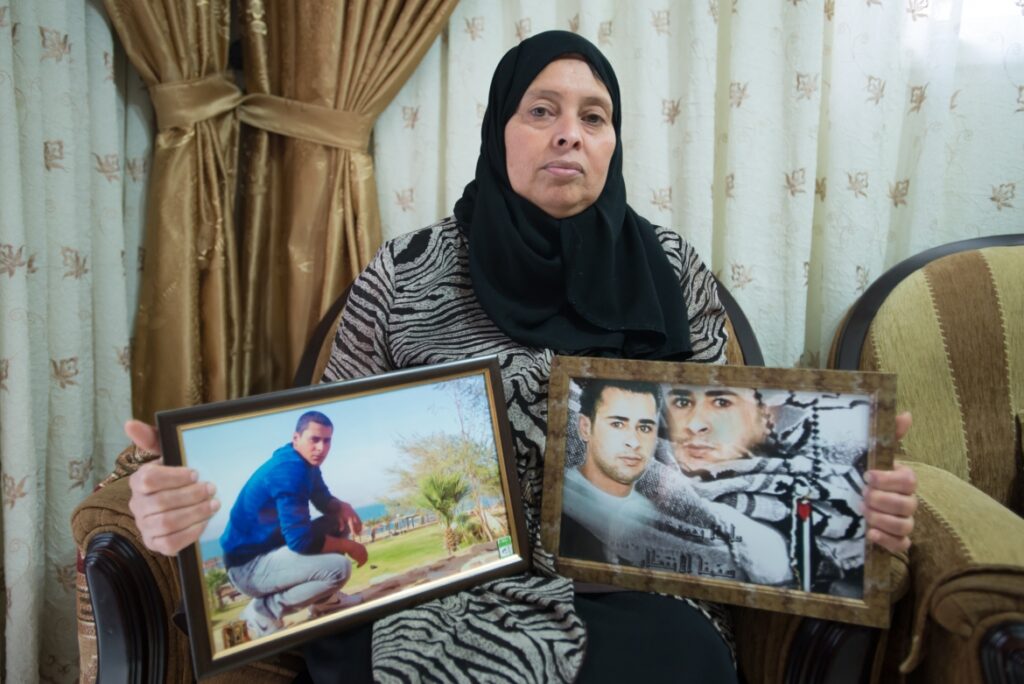
Palestinian human rights organizations, including the Prisoners’ Affairs Commission, Addameer Prisoner Support and Human Rights Association, Palestinian Prisoners’ Society and Al-Mezan, issued a report documenting Palestinians’ experiences with Israeli arrest and imprisonment in July 2019. The following translation is provided by Samidoun Palestinian Prisoner Solidarity Network.
Israeli occupation forces arrested 615 Palestinians from the occupied Palestinian territories (oPt) in July 2019, including 93 children and nine women. They seized 266 people from Jerusalem, 76 from Ramallah and el-Bireh, 75 from al-Khalil (Hebron), 54 from Jenin, 33 from Bethlehem, 39 from Nablus, 17 from Tulkarem, 21 from Qalqilya, seven from Tubas, six from Salfit, eight from Jericho and 13 from the Gaza Strip.
The number of Palestinian prisoners in Israeli jails reached approximately 5,700 including 37 women and approximately 230 children. Approximately 500 were jailed without charge or trial under administrative detention, including those under new administrative detention orders and renewals of previous orders.
The following is a summary of the situation faced by detainees in Israeli jails and detention centers, and the most prominent policies of the occupation authorities during the month of July:
Martyr Nasser Taqatqa faced torture and medical neglect before becoming martyr No. 220
On 16 July 2019, the Israeli Prison Administration announced the death of Nasser Majed Omar Taqatqa, 31, from the village of Beit Fajar in Bethlehem governorate, inside the cells of Nitzan Ramleh prison, where he spent his final hours.
From the day of his arrest on 19 June 2019 until his death, he was subjected to harsh and coercive conditions of interrogation and detention by interrogators and jailers, as well as repeated transfers between interrogation centers. During this time, he faced a serious aggravation of his health condition, according to the testimony of his fellow prisoners.
According to data received by prisoners’ institutions after his martyrdom, Taqatqa was tortured and neglected during the interrogation period. He was held first for interrogation at the Moskobiya interrogation center, then transferred to the Jalameh interrogation center and the Megiddo detention center, where he was beaten by jailers.
According to the autopsy carried out on Taqatqa’s body, the direct cause of death was severe pneumonia, confirming that he experienced medical neglect and denial of appropriate treatment while under interrogation, in addition to harsh conditions of interrogation itself, until he died alone and struggling inside his cell.
As of the date of this report, Israeli occupation authorities continue to detain the body of the martyr Taqatqa in order to further complete its repressive and arbitrary policies against the prisoners during their detention and even after their death.
The prisoners’ institutions consider that the prisoner was subjected to a crime, one of a long list of crimes committed by the occupation authorities and their various agencies against Palestinian prisoners, including torture, which is prohibited by international laws and norms.
It is worth mentioning that the number of the prisoners’ movement since 1967 has reached 220, with the martyrdom of Nasser Taqatqa.
Child prisoners: minors are no exception to harsh policies
Palestinian children in Israeli jails suffer from harsh, inhumane conditions of detention that fail to meet international standards for the rights of children and the rights of prisoners. They are detained in rooms with inadequate ventilation and lighting, subjected to medical neglect and a lack of health care, poor food, lack of play, education and entertainment, in addition to the lack of access to the outside world, denial of family visits, lack of counselors or psychologists, detention together with adults or Israeli criminal children, verbal abuse, beatings, isolation, collective punishment, heavy fines, and others.
During the past month, Israeli occupation forces continued to target minors for arrest, interrogation and detention. There were over 90 cases of the detention of Palestinian minors during July, bringing the total number of child prisoners in Israeli jails to 230, distributed between Ofer, Megiddo and Damon prisons. Many are held in detention centers, while fines amounting to tens of thousands of shekels were imposed.
In a troubling, serious precedent violating humanitarian and legal standards, occupation authorities called the father of the child Mohammed Rabia Alayan (4 years old) for interrogation as well as the father of the child Qais Firas Obeid (6 years old).
The battle against administrative detention continues; 22 prisoners on hunger strike during the month of July
In July 2019, 22 administrative detainees engaged in hunger strikes against the policy of administrative detention without charge or trial.
According to the prisoners’ institutiosn, the majority of these hunger strikers are also former prisoners who have spent years in administrative detention, an experience which has led them to wage a confrontation for freedom from the renewal of their imprisonment. As of the date of this report, six prisoners continue their open hunger strike. Huzaifa Halabiya has been on hunger strike for 37 days and continues his strike after his comrades Mohammed Abu Aker and Mustafa Hassanat suspended their strikes in an agreement to limit their administrative detention after a 36-day strike.
Ahmad Ghannam has been on hunger strike for 24 days, Sultan Khallouf for 20 days, Ismail Ali for 14 days, Wajdi al-Awawda for 9 days and Tareq Qa’adan for 7 days.
The prisoner Huzaifa Halabiya, 37 days of confrontation on hunger strike
The detainee Huzaifa Halabiya from Abu Dis has been on hunger strike for 37 days at the Ramle-Nitzan prison clinic. He is facing the serious deterioration of his health and refuses medical care or supplements, depending on water only in his strike. According to the lawyers who visited him, he has lost a great deal of weight and experiences severe fatigue. He must use a wheelchair when his lawyers visit him.
Halabiya has been detained since 10 June 2018. He is the father of an infant daughter born while he has been imprisoned. He has already suffered from leukemia, and as a child was subjected to severe burns that continue to affect his body. He was arrested on several occasions in the past.
A number of prisoners suspended their hunger strikes in July after reaching agreements to cap or end their administrative detention, including Jafar Ezzedine, who struck for 39 days against his transfer to administrative detention after the end of a 5-month prison sentence and Ahmad Zahran, who ended his strike after 34 days with an agreement to end his detention.
The prison administration carried out a series of systematic retaliatory measures against hunger-striking prisoners: isolating them in cells unfit for human survival, denying them family visits, obstructing legal visits and frequently transferring them from one detention center to another or to civilian hospitals in the “bosta” vehicle. The prisoners describe transport on the “bosta” as another journey of punishment for the striking prisoners.
In addition, jailers continue provocations against the prisoners around the clock, including bringing food to the strikers, deliberately eating in front of them, conducting repeated searches, especially during the night hours, and pressuring them psychologically in an attempt to deprive them of their ability to continue their struggle against administrative detention.
Support for the prisoners on hunger strike
In support of the hunger strikers, prisoners of the Popular Front for the Liberation of Palestine have begun to enter a support strike in batches, and a new batch of support strikers have recently begun the strike.

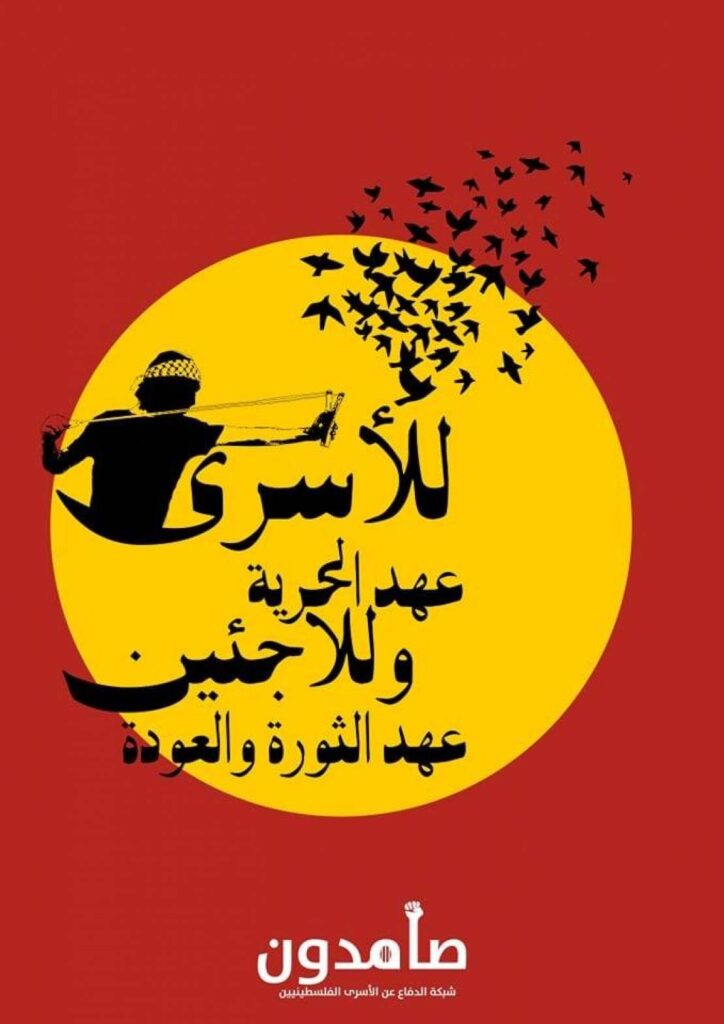 Samidoun in occupied Palestine is
 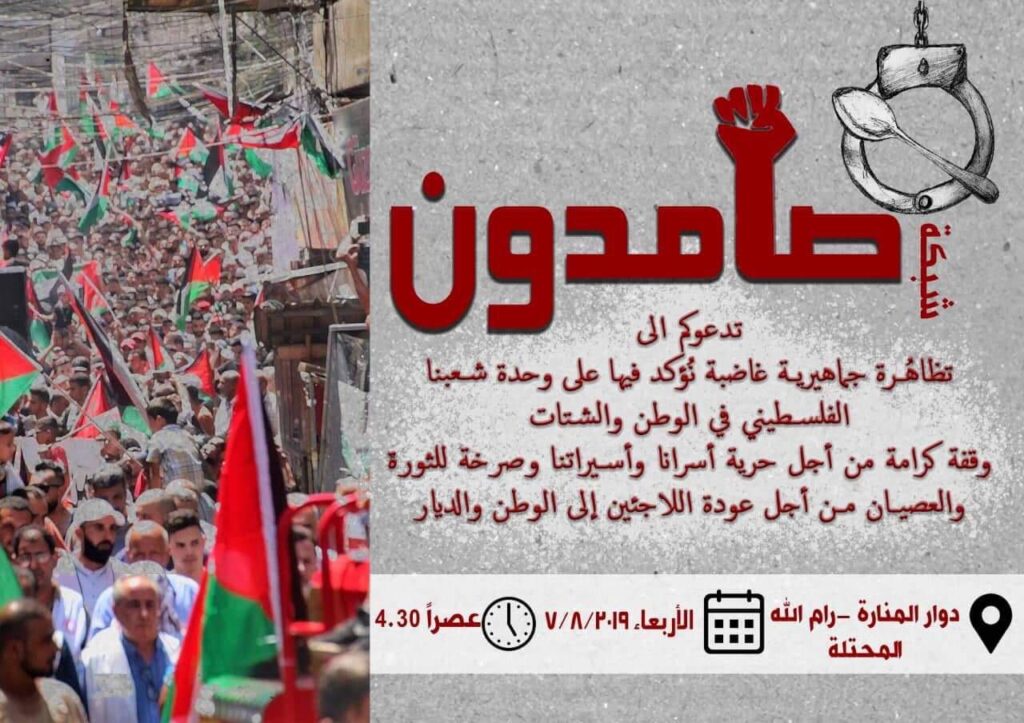 For the prisoners of the struggle and the uprising of return and revolution…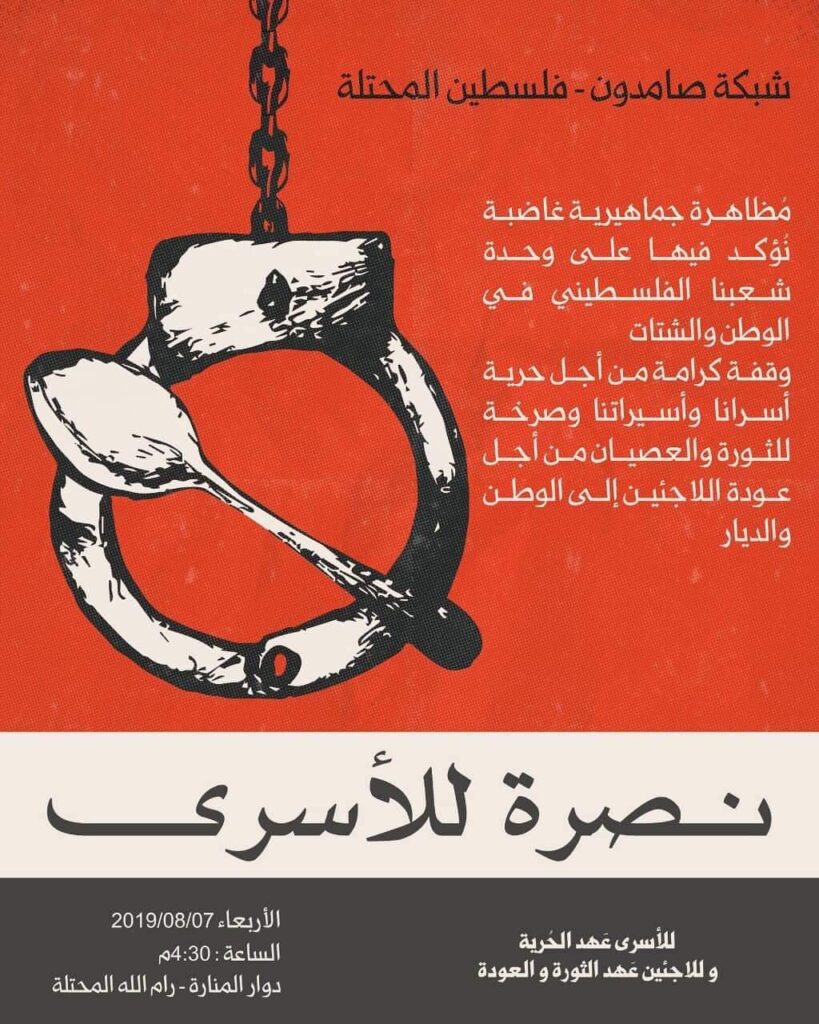


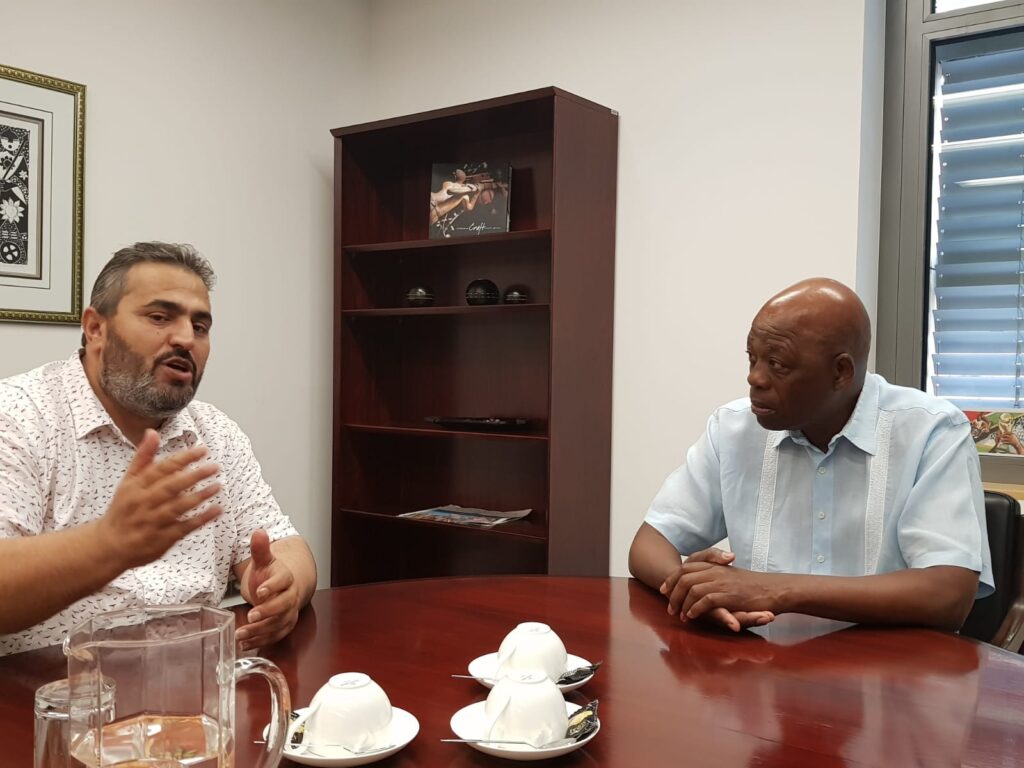
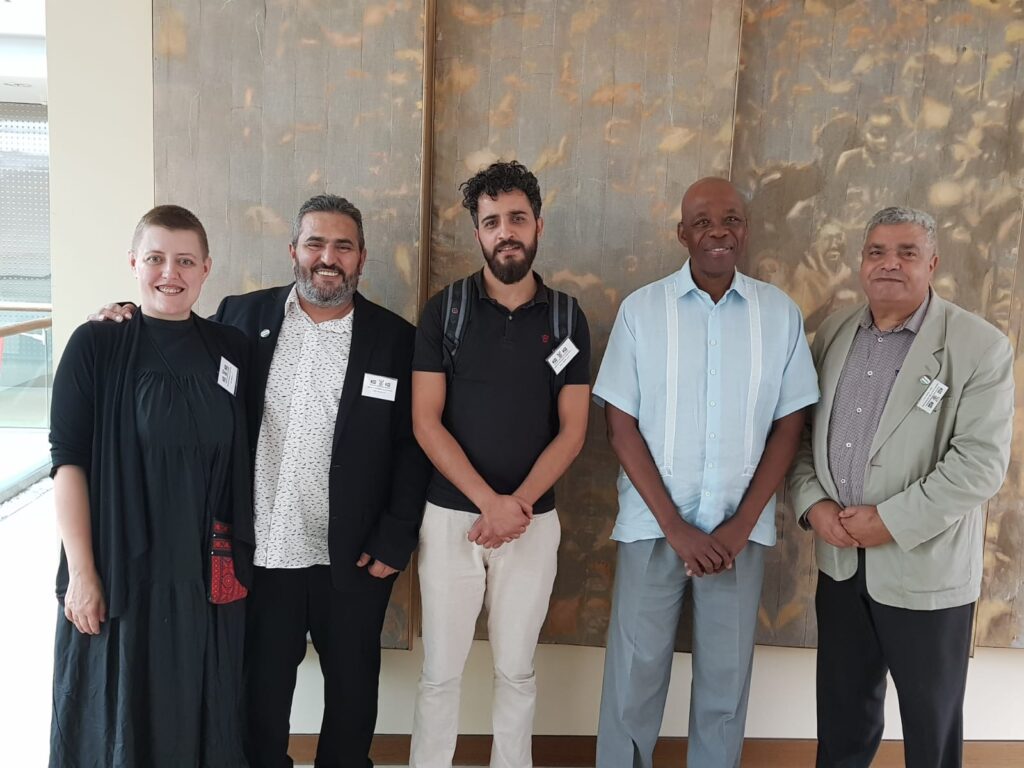 Samidoun participated in a meeting with the South African Ambassador to Germany along with Palestinian writer
 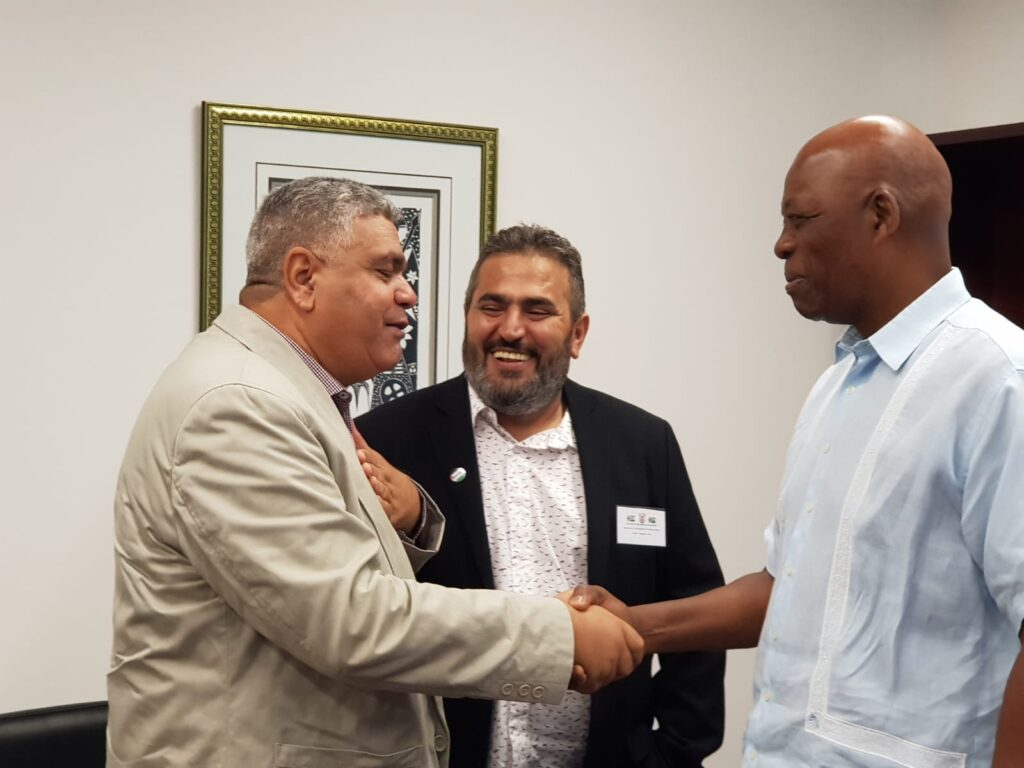 Sizani noted that Mandela’s words continue to pose an important direction for South Africa as a whole and the African National Congres (ANC) in particular. He noted the historical support from the Palestinian movement for the South African liberation struggle. During the discussion, Hamad, now an activist with the Democratic Palestine Committees, noted that he and other Palestinians in Berlin were involved with anti-apartheid campaigns in the 1970s and 1980s.
 She also discussed ongoing repression in Europe faced by advocates for Palestinian rights, including the
 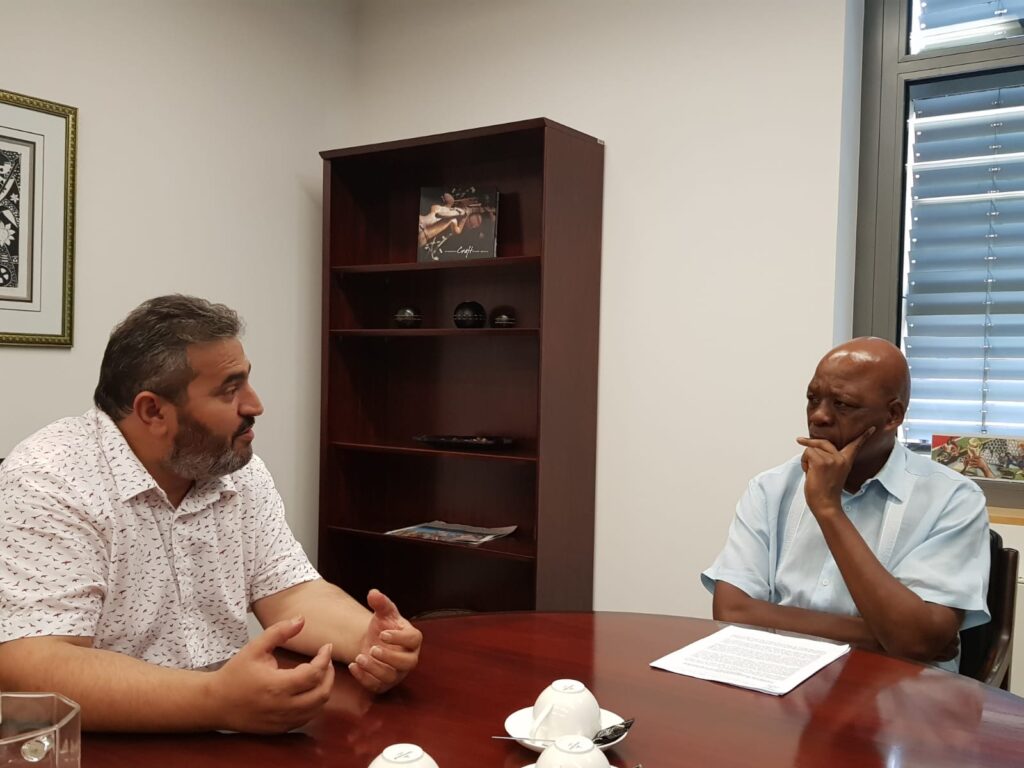 Barakat also emphasized the broad Palestinian support for the boycott of Israel, especially given that the Israeli state is attempting to expand its networks in Africa and become a member of African economic and political bodies. He also focused on the need to build the campaign for boycott, divestment and sanctions (BDS) and confront attempts to criminalize or repress the movement.
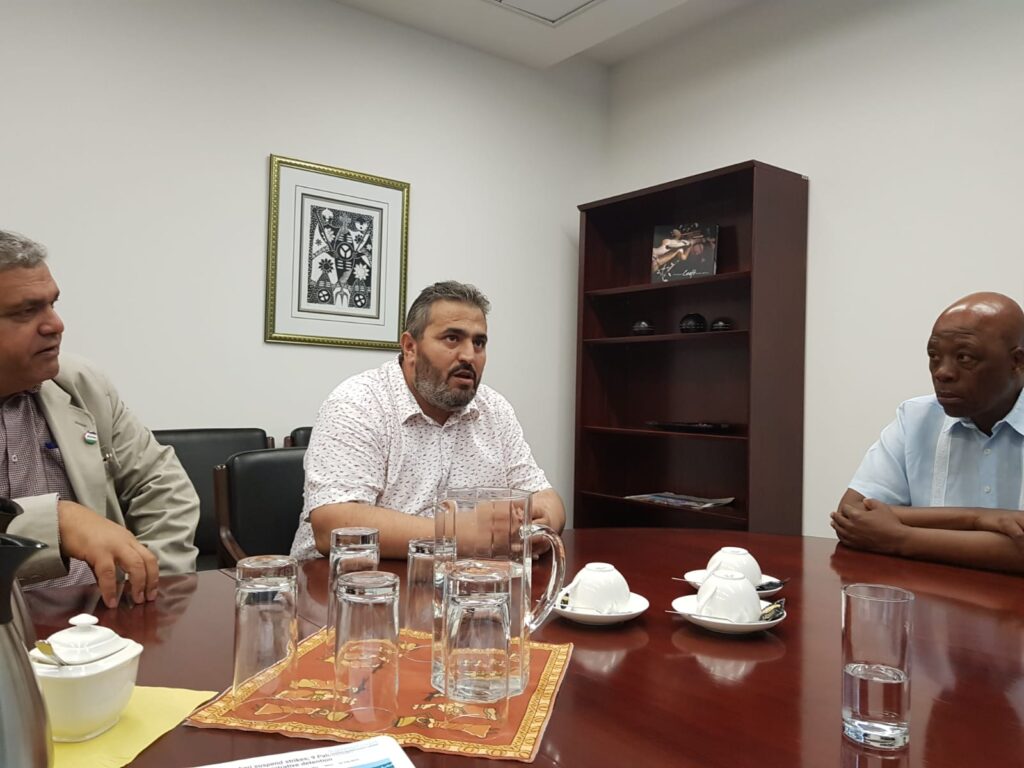 Barakat noted the centrality of Palestinian refugees’ right to return, noting that Palestinian refugees are under attack in Gaza – where they are shot down while marching for their rights – and even in Lebanon from right-wing political forces. He linked all of these attempts to liquidate the Palestinian cause with the offensive being conducted by Israel and the United States under the banner of the “deal of the century.”
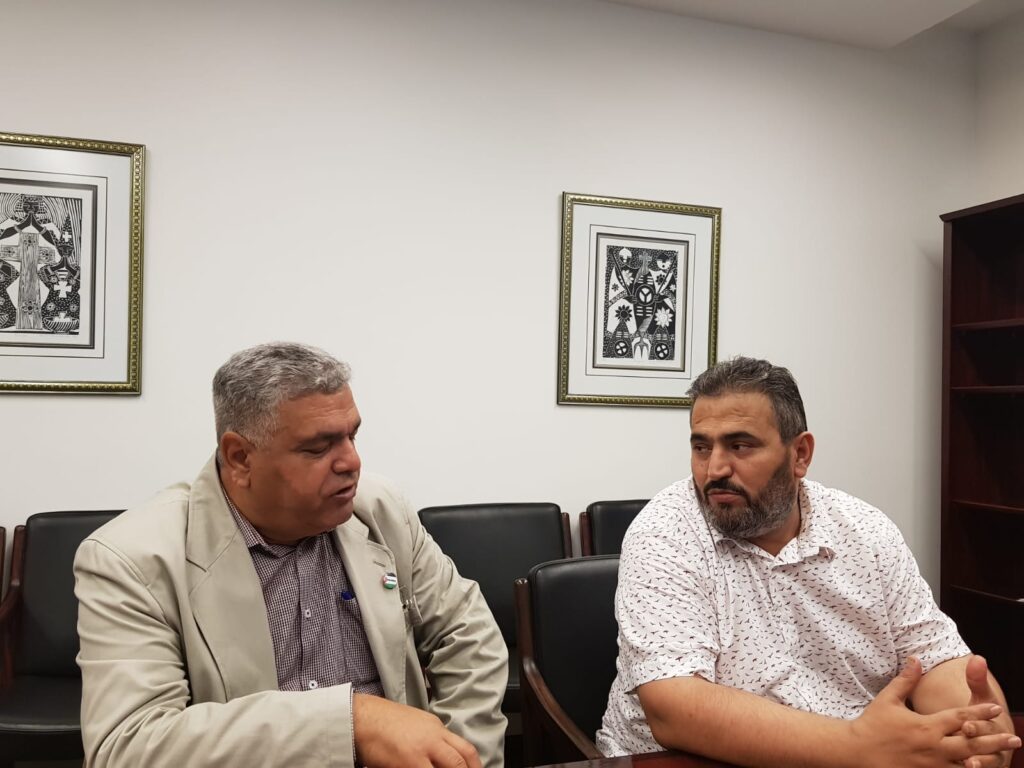 He also noted that “Palestinians consider South Africa to be a supporter of the Palestinian cause,” expressing strong support for South Africa’s decision to downgrade its diplomatic presence in Tel Aviv. “We know that the people of South Africa know the horrors of war and racism and support the Palestinian people in confronting colonization and occupation in order to achieve return and liberation.”
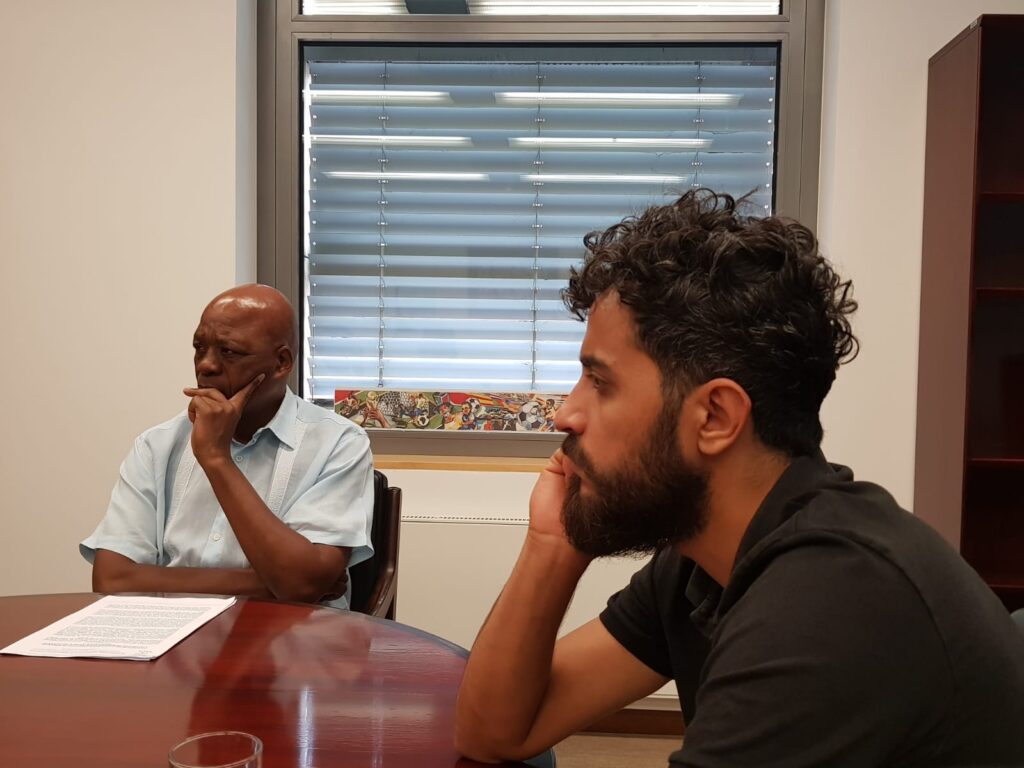 All present emphasized the importance of continuing connections and discussions between Palestinians and South Africans, including the involvement of Palestinian communities in exile and diaspora around the world, especially in an era of escalated international attempts to marginalize the Palestinian cause.
 On Tuesday, 30 July, 20 more Palestinian prisoners joined the
 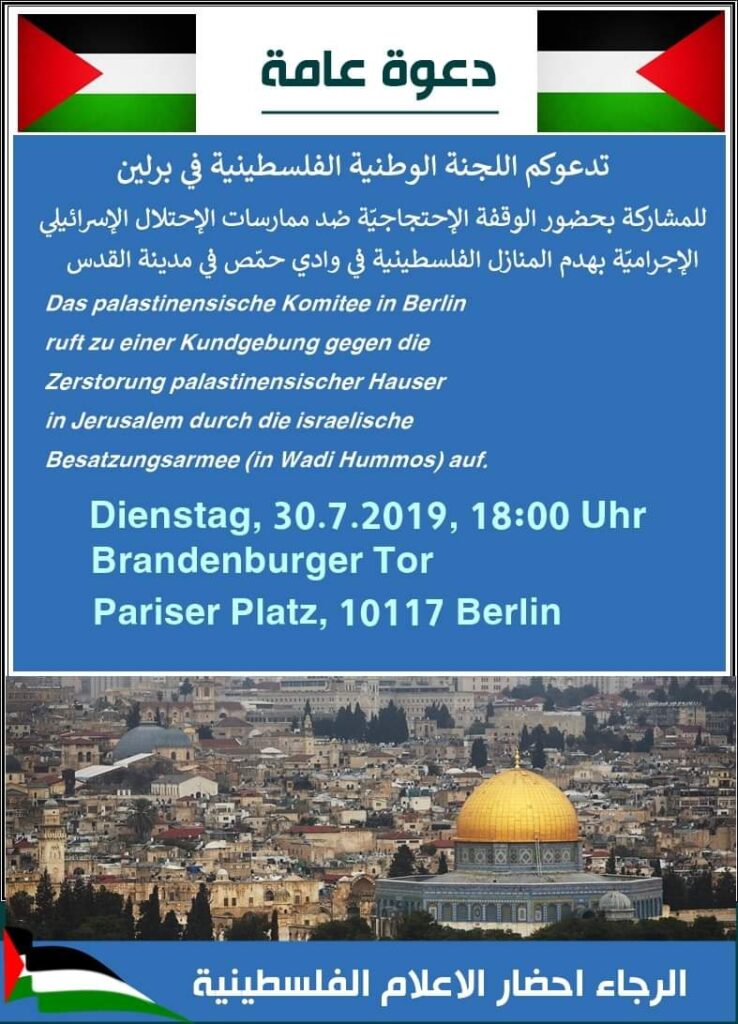 Today in Berlin! Protest against Israeli home demolitions in Wadi al-Hummus.