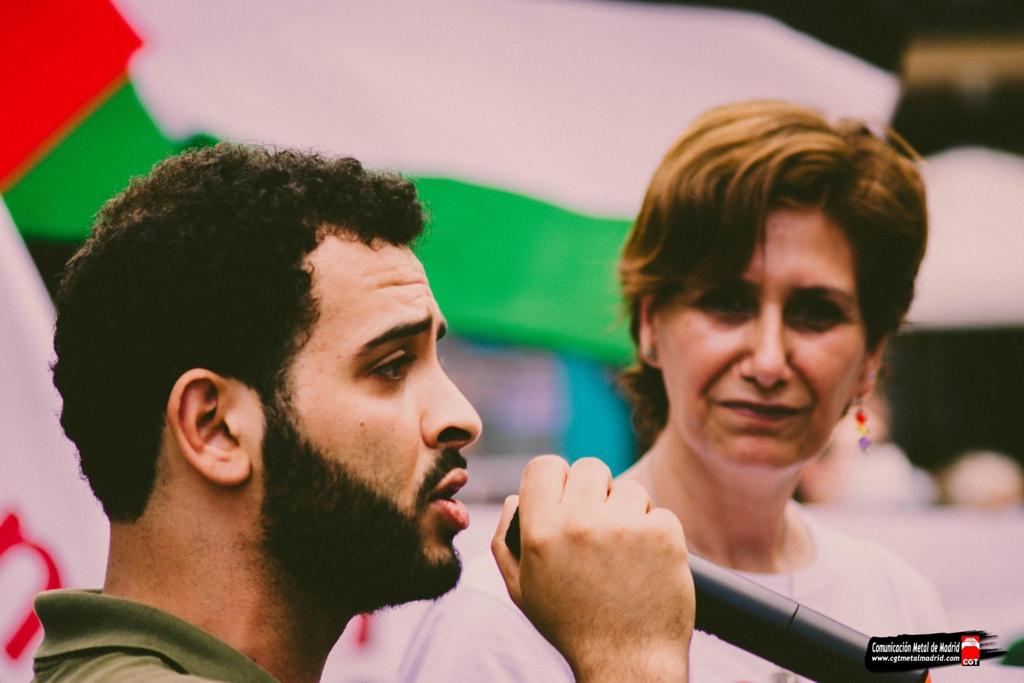
Mohammed Khatib, Europe coordinator of Samidoun Palestinian Prisoner Solidarity Network and a member of the Follow-Up Committee of the Palestinian Alternative Revolutionary Path Movement (Masar Badil), said that the correct approach for the Palestinian national liberation movement in dealing with Mahmoud Abbas and his cohort can only be to hold them accountable and isolate this defeated group, on the path to overthrowing the project of the “self-rule” Palestinian Authority.
He pointed out that PA President Mahmoud Abbas acts as an agent selected by Zionist colonialism, and his recent meeting with the Zionist war minister Benny Gantz, which took place in Tel Aviv, is a new confirmation of the role of the puppet authority. We consider this a force hostile to the Palestinian people, a tool of liquidation of the Palestinian cause, and an integral part of the Israeli security and economic system.
Khatib said that the Abbas-Gantz meeting comes within the framework of the Zionist enemy and the United States to rescue the Oslo Authority, which has begun to crumble and crack due to the Palestinian popular rejection of the approach of exclusion, oppression and corruption on the one hand, and the escalation of the popular uprising and valiant resistance in the occupied West Bank of Palestine on the other hand, especially after the assassination of the struggler Nizar Banat.
He called upon the leadership of the Palestinian armed resistance forces to establish a unified national front rather than relying on so-called “reconciliation” with the Palestinian Authority, which we consider a waste of blood and time.
Khatib added that the escalating level of repression practiced by the occupation forces and their subordinates from the puppet PA against the strugglers in the West Bank, especially against the freed prisoners, has included the banning of mass gatherings celebrating prisoners’ liberation, the confiscation of resistance banners, a policy of political arrests, targeting of the student movement and other practices that prioritize the concerns and interests of the Zionist project, whose army recently deployed three battalions in the north and center of the occupied West Bank as it summoned Abbas to Tel Aviv.
Khatib emphasized that strengthening this cooperation between the “two parties” means that Gantz wants to facilitate the role of the security forces that play the role of a guard dog protecting the Zionist settlements, working day and night to target the forces and cadres of the resistance. In this context, the Zionist enemy also wants to perpetuate this useful relationship with the Oslo sector and give it some privileges and small bribes so that it can fulfill its role as an agent fully dependent on the decisions of the occupation.
He noted that the escalation of various forms of resistance inside and outside Palestine is a guarantee of achieving national unity in the field of action and popular struggle. This was achieved as a reality in the valiant popular uprising last May, when revolutionary and popular action was integrated throughout occupied Palestine and the diaspora.
Khatib called upon all forces and organizations participating in the Palestinian Alternative Revolutionary Path Movement to redouble their role in the coming year. The mission and role of the Palestinian diaspora in isolating and boycotting the Oslo “Palestinian Authority” and confronting the approach of normalization and corruption cannot be separated from the growing struggle inside occupied Palestine, as our national responsibility requires confronting the Zionist movement and its agents inside and outside Palestine.
He called for wide participation in the Week of Action to free Ahmad Sa’adat and all Palestinian prisoners, which will begin on 15 January 2022. In its statement, Samidoun emphasizes the need to confront the path of “security coordination,” which has played a devastating role in the case of Sa’adat and his comrades and for hundreds of Palestinian strugglers.
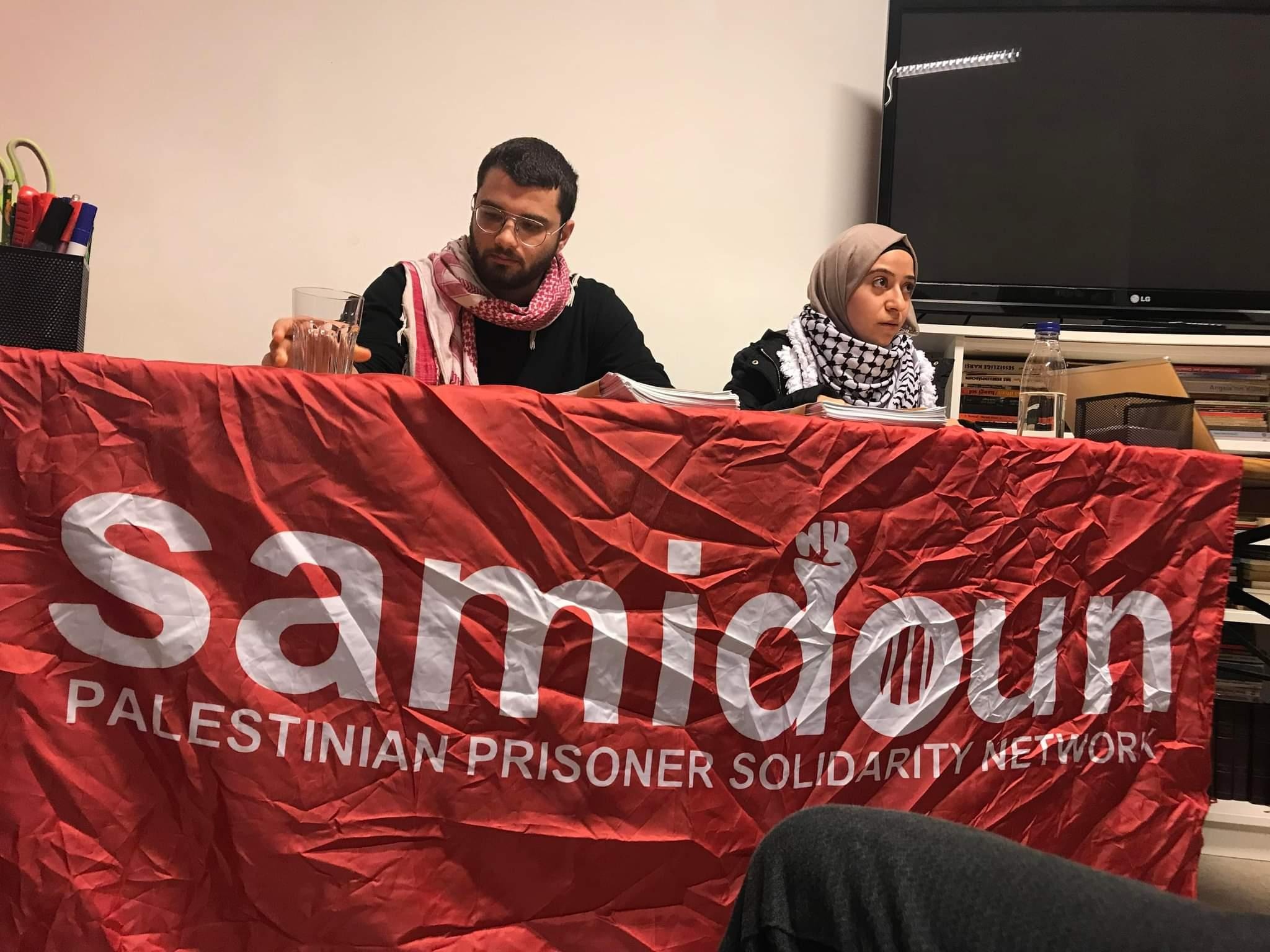
Samidoun Deutschland organized a political symposium in Berlin on Tuesday, 28 December, addressing the situation of Palestinians in exile and diaspora and their central role in the struggle to liberate Palestine and confront attempts to liquidate the Palestinian cause. Specifically, they discussed the Palestinian Alternative Revolutionary Path (Masar Badil) and its focus on rehabilitating the centrality of return and liberation to organizing the Palestinian national movement.
The speakers at the event focused on the failure of all attempts to liquidate the Palestinian cause despite Zionist, imperialist and reactionary forces attempting to impose surrender upon the Palestinian people and confiscate the role of Palestinians in exile and diaspora. They also addressed the need to build an alternative revolutionary path to stimulate the organizing of the Palestinian student movement, women’s movement and labor movement and strengthen their ranks to overcome the dispersion and submission that has been imposed upon these movements through the Oslo Accords and their aftermath, especially through the Palestinian Authority in Ramallah and the reactionary forces supporting it and sustaining its “security coordination” with the Israeli occupation.
The event presented the general principles on which the Masar Badil movement was founded in Madrid, Sao Paulo and Beirut in November 2021, the documents of the founding conferences, and the goals and decisions reached by them. The speakers also emphasized the need to overturn and isolate the Palestinian Authority project and the so-called “two state solution,” and instead to struggle for the liberation of Palestine from the river to the sea.
The speakers also highlighted the priorities identified by the movement for the next stage of the Palestinian struggle, especially with regard to the right of return, supporting the Palestinian prisoners’ movement and the core principles behind which the Palestinian people unite inside and outside Palestine in order to develop the liberation movement in its Palestinian, Arab and international dimensions.
2021 has been a year of struggle for Palestine – towards return and liberation. This year, Samidoun Palestinian Prisoner Solidarity Network has taken to the streets, organized new chapters, marched for justice, and fought to free Palestinian prisoners.
We’re now preparing for 2022. From New York to Vancouver, from Germany to occupied Palestine, from Toulouse to Madrid to Sao Paolo, from Beirut to Amsterdam, we are growing, building and organizing to support Palestinian liberation from the river to the sea.
In order to achieve our goals, we need your support and contributions. When you make a donation to Samidoun today, you are supporting our active work to achieve justice and liberation for over 4,500 Palestinian prisoners and for the land and people of Palestine.
Samidoun is funded by the movement. As a grassroots organization without foundation funding or full-time staff, your generosity is absolutely critical to continuing to build our work to support Palestinian liberation. Make your US tax-deductible donation today, and donate safely and securely from around the world.
As an international, Arab and Palestinian movement are working to build the movement to boycott Israel and confront complicit corporations profiteering from colonization. We stand with the Palestinian prisoners and the entire Palestinian people’s resistance and liberation movement for liberation – and with all of those around the world confronting imperialism, capitalism, Zionism and reactionary repression.
As we prepare to march forward into 2022, we ask you to consider donating to Samidoun today and supporting us as we grow bigger, stronger, broader and bolder in advancing the voices and demands of the Palestinian prisoners and building the movement for Palestine.
If you would like to make a donation in another form, such as through a corporate program, matching program, a gift of stock or a gift in kind, or to send us a wire transfer, please contact us at samidoun@samidoun.net.
Below is a brief overview of just some of our work during 2021:
#FreePalestinianStudents: Fighting for Palestinian freedom
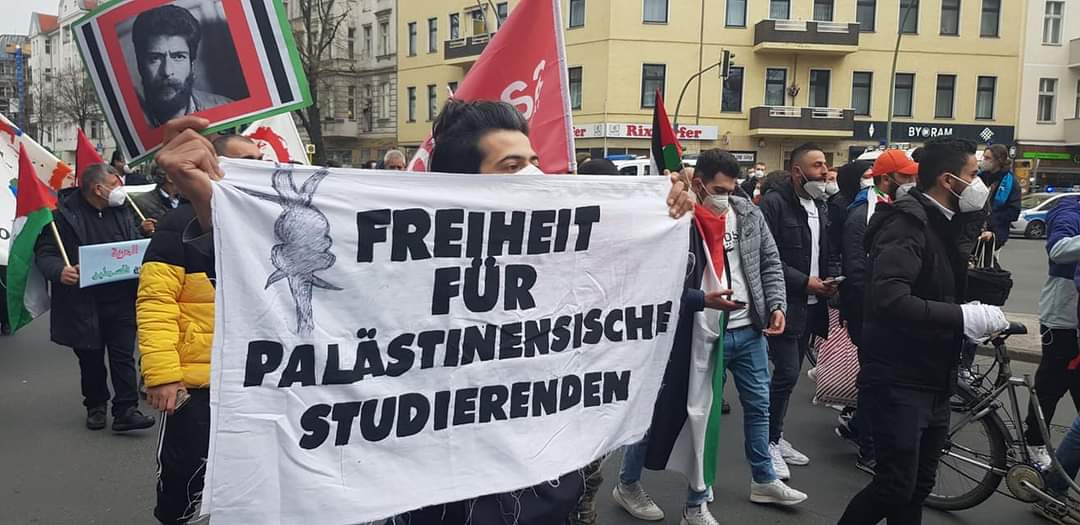
In March 2021, Samidoun launched the #FreePalestinianStudents campaign, with the support of over 350 international organizations, including trade unions, student associations, political parties and supporters of justice around the world. The campaign has drawn widespread support and action, raising awareness and fighting for the freedom of Palestinian students held in Israeli prisons.
Hundreds of Palestinian students remain behind bars. In 2022, we’ll keep building the campaign to free imprisoned students — and all Palestinian prisoners!
“Terrorist” Designation and the Global Fightback
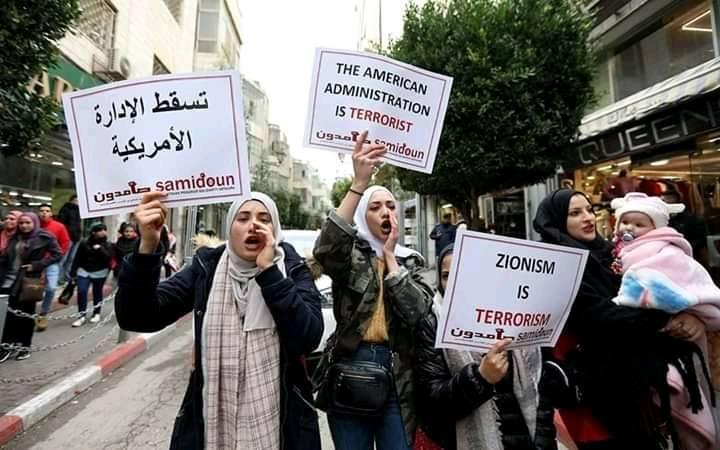
In February of 2021, Israeli “Defense” Minister and war criminal, Benny Gantz, designated Samidoun as a “terrorist” organization, the same tactic that he would later apply to Palestinian non-governmental organizations. Even NGO Monitor, the infamous smear-campaign organization that aims to target Palestine solidarity and Palestinian organizing on behalf of the Israeli regime, admits that “Samidoun is a main advocate for the release of Palestinian prisoners.”
They want to stop people from standing up for freedom for imprisoned Palestinians, but the response of organizations in Palestine and around the world has made it clear: we’re bigger and stronger than ever, organizing to uphold Palestinian rights and support Palestinian liberation. In 2022, we’ll show Gantz and the Israeli regime that repression only makes our movement stronger!
Global Coordination: The Unity Uprising
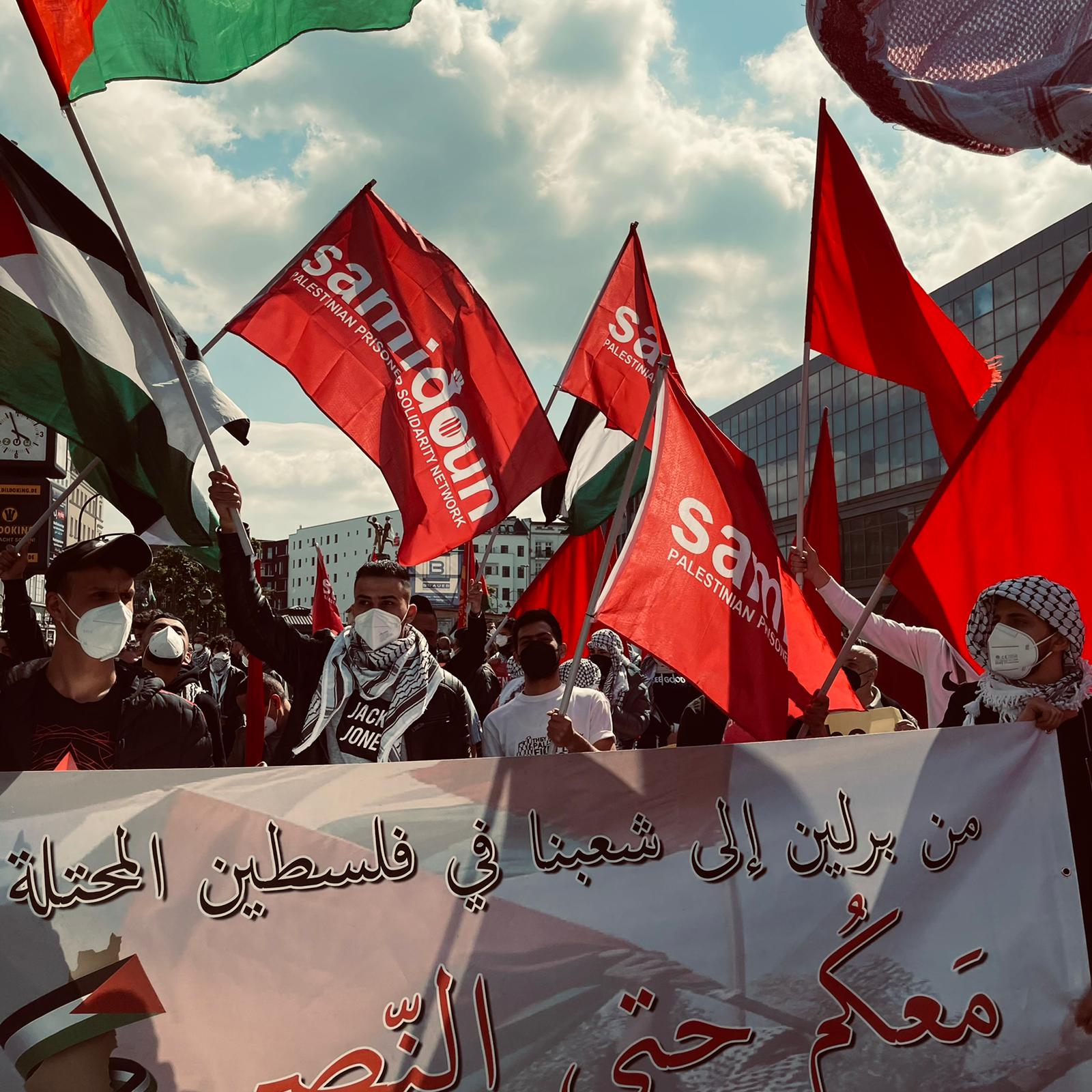
From Berlin to Toulouse, Madrid to Vancouver, Amsterdam to Ramallah, Samidoun chapters and activists were in the streets, organizing demonstrations where thousands marched as part and parcel of the Unity Uprising taking place in Palestine in May-June 2021. We played a key role in global coordination, with even CNN taking note of the Global Calendar of Palestinian Resistance. And everywhere, we worked hand in hand with our partner organizations and comrades in struggle to build larger, mass actions to mobilize to stand with the Palestinian resistance.
In 2022, we’ll be working even harder to coordinate, organize and build the movement towards liberation and return, with a firm foundation of struggle and unity forged through these actions.
Free Georges Abdallah! The call to action sweeps the world
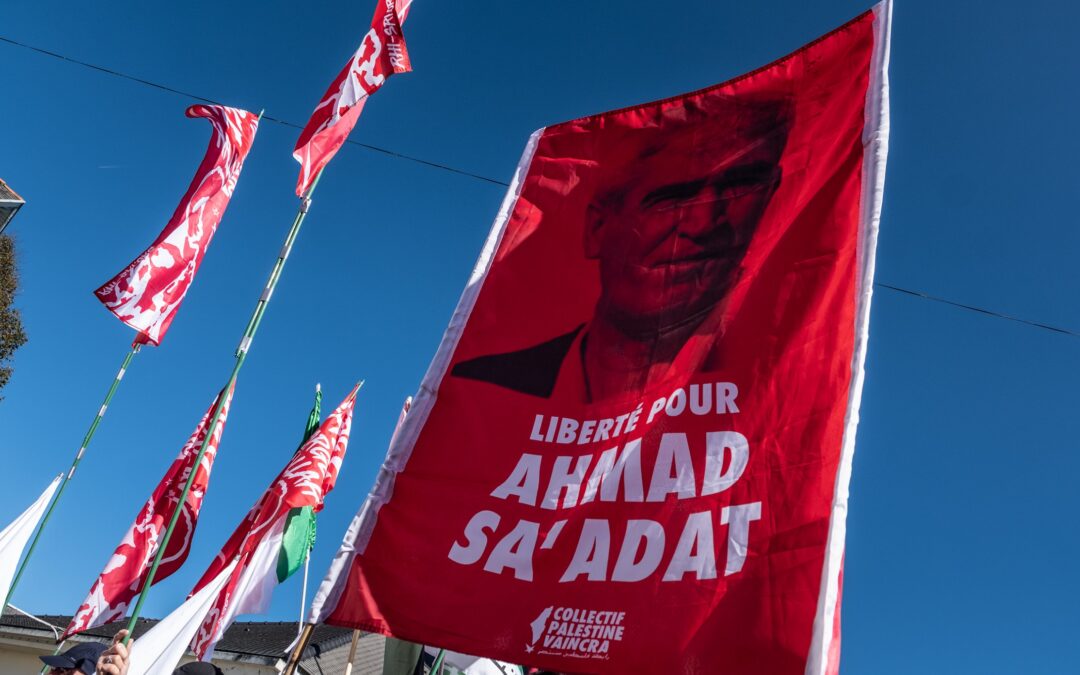
2021 was a banner year for the campaign to free Georges Abdallah, with unprecedented global action and support to free this Lebanese Arab struggler for Palestine imprisoned in France for over 37 years. There were over 100 screenings of “Fedayin” organized in global cities, while over 1,000 marched to the gates of Lannemezan prison in October, the culmination of a month of action in which our comrades in Collectif Palestine Vaincra played a leading role.
Let’s make 2022 the year when Georges Abdallah is free!
Return and Liberation: The Ghassan Kanafani Samidoun Brigade to Lebanon
In July 2021, Samidoun Palestinian Prisoner Solidarity Network organized a delegation to Lebanon. Delegates based in Spain, Sweden, the Netherlands, Belgium and France traveled to Lebanon to meet with Palestinian organizations in the refugee camps, Lebanese campaigners to free Georges Abdallah, former Lebanese prisoners during the Zionist occupation, political parties, and more. This was not only a delegation, but a brigade committed to continuing the work and deepening the relationships — toward victory and liberation.
In 2022, we’ll continue forging connections through delegations and brigades that connect movements and focus on the struggles of Palestinian popular classes.
Material Solidarity: Supporting Palestinian Initiatives for Justice
In 2021, Samidoun ensured that our political solidarity was also material solidarity. We raised the funds needed to refurbish the People’s Ambulance in Beddawi Palestinian refugee camp, providing necessary medical transportation not offered in the camp. We closed out the year with a successful campaign to support the Palestinian Chess Club in Shatila camp, and we’re working with our comrades and partners to support the Hakoura organic farm run by Palestinian refugees in Greece.
In 2022, we’ll continue to build that material solidarity and support popular, unconditional funding of Palestinian institution-building and liberation projects.
Marching towards Liberation: The Alternative Palestinian Revolutionary Path
The Palestinian Alternative Revolutionary Path Movement (Masar Badil) launched amid a series of conferences in Madrid, Spain; Beirut, Lebanon; and Sao Paulo, Brazil, between 30 October and 2 November 2021. The Masar Badil is a popular, mass movement of Palestinians, Arabs and internationalists struggling for the liberation of Palestine from the river to the sea, in complete rejection of the so-called “peace process” of the Madrid Conference and the Oslo Accords, which have led to nothing but destruction for Palestinian rights and the Palestinian national liberation movement. Samidoun organizers played a leading role in organizing the conference and now, building the movement and ongoing follow-up work.
In 2022, we’re committed to building together for a revolutionary, liberated future for Palestine, from the river to the sea.
Free Ahmad Sa’adat: The Global Call to Action
From 15 to 23 January 2021, activists and organizations around the world joined Samidoun Palestinian Prisoner Solidarity Network in the Week of Action to free Ahmad Sa’adat and all Palestinian prisoners. The week of online events, media actions, demonstrations and street stands highlighted the case of Sa’adat, the imprisoned General Secretary of the Popular Front for the Liberation, and the 4,500 Palestinian political prisoners in Israeli jails. The week also highlighted the complicity of the Palestinian Authority with the imprisonment of Sa’adat, part of the Oslo project and its “security coordination” with Israel, as well as the direct responsibility of the United States, UK, Canada and other imperialist powers for Sa’adat’s imprisonment and the ongoing dispossession and colonization of the land and people of Palestine.
Speaking Out for Justice: Media and Events for Palestine
In 2021, Samidoun activists and chapters organized street actions, protests, educational events, film screenings, webinars and conferences for Palestine, everywhere around the world. Even more, Samidoun remained a resource for media coverage of Palestine and Palestinian political prisoners, with Samidoun speakers appearing on programs in English, Arabic, French, Spanish and Portuguese to discuss Palestine and the struggle to liberate Palestinian prisoners. With dozens of media appearances and public events, Samidoun is speaking up and being heard — amplifying the voices of Palestinian prisoners marching towards freedom.
In 2021, we were loud — in 2022, we’ll be even louder in defense of Palestine!
Building the Movement: The Samidoun Network is growing!
Samidoun organizes with an anti-imperialist, anti-colonialist vision of justice and liberation, confronting imperialism, Zionism and reactionary forces. This means that we cannot struggle for justice for Palestine alone, but that it is critical to support the Black Liberation movement, Indigenous sovereignty and self-determination movements, and anti-imperialist movements around the world. We organize to free political prisoners in the U.S., UK, Canada, France and elsewhere, and work in solidarity with prisoners’ struggles from Morocco to Turkey to the Philippines.
In 2022, we’re building even more chapters, welcoming more affiliate organizations and building the movement to liberate all Palestinian prisoners, stand with the Palestinian resistance, and realize a free Palestine from the river to the sea. We invite you to join us!
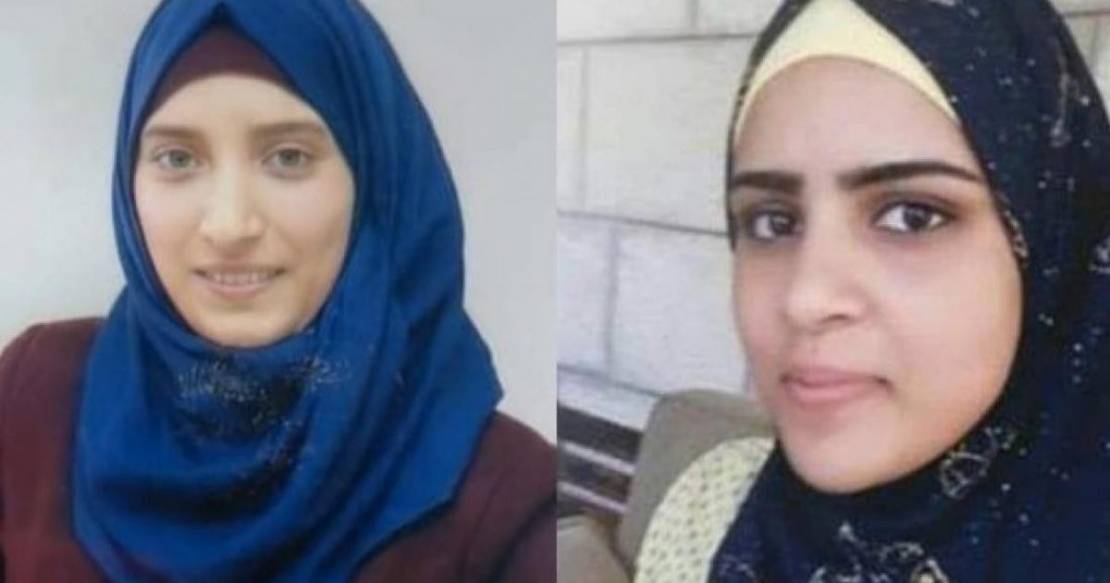
At the demonstration, activists held the images of Palestinian women prisoners and issued a joint statement on behalf of Samidoun and Palestina Libre. The statement is below:
FREE PALESTINIAN PRISONERS! BOYCOTT ISRAEL!
On Wednesday December 22, Marah Bakir and Shorouq Dwayyat were released from solitary confinement and returned to their cells in the Palestinian women’s section of Damon Prison.
Bakir and Dwayyat, elected representatives of the detained women, had been transferred out of Damon Prison and held in solitary confinement by the Israeli occupation forces in retaliation for their defense of the rights of Palestinian prisoners. This is a success for the resistance of Palestinian women and the Palestinian prisoner movement, achieved through struggle and action.
Shorouq Dwayyat and Marah Bakir
Of course, the fight is not over. Palestinian women remain deprived of family visits and other basic needs.
Bakir and Dwayyat, as well as their fellow prisoners, have been repeatedly attacked by repressive units that invaded their sections. Palestinian women political prisoners have been deprived of family visits for more than three months, subjected to security cameras in prison corridors and courtyards, and unsanitary and humid conditions in winter, without heating and with insufficient blankets. Prisoners, including Israa Jaabis, who suffers from serious health problems and injuries, are denied adequate medical care. The repressive forces invaded the cells of the women and attacked them, cutting off the electricity.
The assault on the prisoners and the isolation of Bakir, Dwayyat and Qaadan provoked an outraged reaction from the Palestinian people, their resistance organizations and the prisoner movement. The prisoners closed their sections and returned their meals, while three prisoners – Nurhan Awad, Maysoon Musa al-Jabali and Shatila Abu Ayada – began a hunger strike that began on December 21 to demand the return of their female companions.
In all Israeli occupation prisons, Palestinian prisoners returned their meals Wednesday morning to demand that Bakir and Dwayyat be released from solitary confinement, and that Hisham Abu Hawash , who has been on a hunger strike for 128 days, be released from incarceration without charge or trial, and that attacks by repressive units against Palestinian prisoners in Nafha prison end. Palestinian resistance organizations have also declared their full support and willingness to mobilize to defend the prisoners.
Samidoun Palestinian Prisoner Solidarity Network and Palestina Libre stand in solidarity with Palestinian female prisoners and the Palestinian prisoner movement as a whole, as well as their continued resistance and leadership.
The return of Dwayyat and Bakir to their sections and the restoration of the prisoners’ membership is a material success that shows that the resistance of the prisoners wins. However, the fight is not over yet: we must obtain the demands of the prisoners and their release. We call on all international supporters of Palestine to act to support imprisoned Palestinian women in their fight for justice, until the liberation of Palestine from the river to the sea.
On 25 December 2008, Palestinian leftist leader Ahmad Sa’adat was sentenced to 30 years in prison by an illegitimate Israeli occupation military court, for his role as General Secretary of the Popular Front for the Liberation of Palestine. On the 13th anniversary of this shameful sentencing, we reiterate our commitment to struggle for the liberation of Ahmad Sa’adat and his fellow Palestinian prisoners. We call upon all supporters of Palestine to join us from 15 to 22 January 2022 for the International Week of Action to free Ahmad Sa’adat, and we invite you to endorse the week! Click here to send your endorsement for the week of action.
Supporting Ahmad Sa’adat is supporting the resistance
From the prisons of the Israeli occupation, Ahmad Sa’adat continues to play a major role as a leader of the Palestinian resistance. Alongside his 5,000 fellow Palestinian political prisoners, he organizes collective hunger strikes, declarations of solidarity, and stands firm with resolute commitment to the liberation of Palestine from the river to the sea Moreover, he regularly expresses his solidarity with the struggles of peoples around the world, from the Black liberation movement to global struggles confronting imperialism, as well as the campaign to free Georges Abdallah, who Sa’adat views as “the general of the prisoners of the PFLP.”
Supporting Sa’adat’s release is part of confronting the role of the imperialist powers in his imprisonment and in the Zionist colonization of Palestine. It also means confronting the complicity of the Palestinian Authority and its “security coordination” in the oppression of the Palestinian people and in the criminalization of Palestinian resistance, a situation that has reached crisis-level proportions in 2021 with multiple attacks on celebrations for released prisoners and political arrests of Palestinian students and activists.
Ahmad Sa’adat is the imprisoned General Secretary of the Popular Front for the Liberation of Palestine. One of nearly 5,000 Palestinian political prisoners, he has been sentenced to thirty years in Israeli prisons for a range of “security-related” political offenses. These charges include membership in a prohibited organization (the PFLP, of which Sa’adat is General Secretary), holding a post in a prohibited organization, and incitement, for a speech Sa’adat made following the Israeli assassination of his predecessor, Abu Ali Mustafa, in August 2001.
Sa’adat has been targeted for imprisonment because of his political activity and in his capacity as a Palestinian leader. The systematic assassination, imprisonment and detention of Palestinian political leaders has long been a policy of the Israeli state, as reflected in the imprisonment of Sa’adat and the nearly 5,000 Palestinian political prisoners, targeted for their involvement in and commitment to the struggle for the liberation of their land and people.
Born in 1953, Ahmad Sa’adat is the child of refugees expelled in 1948 from their home in the destroyed village of Deir Tarif (near al-Ramleh) and is himself a Palestinian refugee denied his right to return. He has been involved in the Palestinian national liberation movement since 1967, when he became active in the student movement and then officially joined the Popular Front for the Liberation of Palestine in 1969. He was arrested by the Israeli occupation on numerous occasions, notably in 1970, 1973, 1975, 1976, 1989 and 1992 for a total of 10 years of detention.
In 1993, he was elected to the Political Bureau of the PFLP and became responsible for the West Bank sector in 1994. In this context, he was arrested several times between 1994 and 1996 by the Palestinian Authority as part of security coordination with the Israeli occupation established following the Oslo accords of 1993.
In 2000, George Habash resigned from his post as General Secretary of the PFLP and was replaced by Abu Ali Mustafa . He was assassinated by the Israeli occupation on 27 August 2001 by a U.S.-made missile fired into his office in central Ramallah. On 3 October 2001, Ahmad Sa’adat was elected General Secretary of the PFLP . On this occasion, he declared during his inaugural press conference that the objectives of the Palestinian people are “our right of return and our independence, with Jerusalem as our capital” and he also swore to avenge the assassination of Abu Ali Mustafa.
On 17 October 2001, four members of the PFLP executed the far-right Israeli Minister of Tourism Rehavam Zeevi . He is known as a supporter of the forced displacement/”transfer” of Palestinians and as a supporter of “targeted assassinations”. This operation sparked a wave of popular mobilization in Palestine and revived support for the PFLP. Israel accused Sa’adat of ordering the assassination.
On 22 October 2001, the Palestinian Authority — actively engaged in security coordination with the Israeli occupation — condemned Zeevi ‘s murder as contrary to Palestinian interests on the pretext that it gave Israel an excuse to undertake military action in the occupied territories. Jibril Rajoub, head of the West Bank Preventive Security Service, banned the military wing of the PFLP – the Abu Ali Mustafa Brigades – and issues an ultimatum to Ahmad Sa’adat to surrender or face arrest .
On January 15, 2002, Sa’adat attended a meeting with PA security chief Tawfiq Tirawi under false pretenses, from which he was abducted and taken to the Muqata’a compound in Ramallah, then-Palestinian President Yasser Arafat’s headquarters. In a deal involving Israel, Britain and the U.S., Sa’adat was then held in a Palestinian Authority prison in Jericho for over four years under the oversight of U.S. and British guards along with Ahed Abu Ghoulmeh, Majdi Rimawi, Hamdi Qur’an, Basil al-Asmar and Fouad Shobaki.
On 3 June 2002, the Palestinian High Court of Justice in Gaza ruled that there was no evidence linking Sa’adat to Zeevi’s assassination, and no legal grounds for his continued detention. He orders his immediate release from prison. Nevertheless, he remained imprisoned in the PA’s Jericho prison, with U.S. and British guards overseeing his and his comrades’ incarceration.
The director of the US/British “supervision” of the prisoners at Jericho Prison formerly ran the infamous Maze Detention Center for Britain in the occupied North of Ireland, where Irish republican prisoners were held. Canadian and Turkish guards also served here to imprison these Palestinian resisters.
Sa’adat and his fellow prisoners were not subject to any real Palestinian sovereignty, but rather to the conditions and demands of the United States and Great Britain, in which the PA was fully complicit. Sa’adat and his comrades were held under difficult conditions in Jericho prison, often secluded from one another and not allowed to communicate, denied access to newspapers, books, recreation and family and other visits. Water and electricity in their cells have been turned off, and numerous other punitive measures were implemented against them by the British and U.S. guards “monitoring” the prison. In response, Sa’adat and his comrades engaged in two hunger strikes, demanding an end to inhumane treatment and their immediate release.
In January 2006, he was elected to the Palestinian Legislative Council on the Abu Ali Mustafa slate. On 14 March 2006, days before the newly elected Hamas majority government of the PA was due to assume office, the Israeli military stormed that prison at Jericho, killing two Palestinian guards, abducting Sa’adat and five fellow prisoners and taking them to Israeli military prisons. For the entire period of Sa’adat’s imprisonment in the PA jails, he had been convicted of no crime; his sentencing- in an illegitimate military court of occupation, on 25 December 2008 – came nearly seven years into his detention, after a trial that began after five years of PA/US/British, then Israeli, imprisonment.
This trial was, of course, a military trial, as are the trials of nearly all Palestinian political prisoners. These trials are based on military law, including military regulations that may be issued at any time by the Israeli military commander over the area. This military rule under occupation dates from the era of the British occupation of Palestine, in which these “emergency” military rules were adopted in order to suppress the Palestinian national movement for independence and self-determination. These military laws continue today for the same purpose – to continue a military occupation and suppress the indigenous people of Palestine’s struggle for liberation and self-determination. Such military trials generally fail to uphold international standards for fair trials. At a more basic level, they are an illegitimate manifestation of an illegitimate system – trials that, by their very nature, can never be fair or legitimate.
Sa’adat is the child of 1948 refugees who, with six million others in Palestine, in the camps outside Palestine and in exile around the world, are denied their right to return to their homes, lands and properties and denied their right to organize, struggle and act to obtain their freedom, their return and their liberation.
JERICHO ASSAULT AND ABDUCTION
On 14 March 2006, the Israeli army laid siege for twelve hours to the Palestinian Authority prison at Jericho holding six political prisoners. Israeli bulldozers and tanks attacked the prison while the Israeli military issued threats of assassination against the prisoners. This military assault caused the death of two Palestinians, the injury of twenty-three more, and the abduction of Ahmad Sa’adat and five other political prisoners from Jericho to Zionist prisons.
For over four years, these men had been held in the Palestinian Authority prison at Jericho, under U.S. and British guard. Immediately prior to the Israeli assault on the prison, these U.S. and British guards abandoned their posts, clearing the way for the military attack. The U.S. State Department blamed Palestinians for the siege, stating that the democratically-elected Palestinian Legislative Council leadership had indicated its willingness to release these illegally-held political prisoners. Said Sa’adat in a letter to the Palestinian people after his abduction, “The Quartet [US, EU, Russia and UN] provide a cover for occupation. What happened in Jericho Prison has made the British and US governments an integral part of the conflict and forever buried any illusions in their neutrality.”
Since his abduction – a blatant violation of Palestinian sovereignty – Sa’adat’s trial was repeatedly postponed and delayed. Israeli Attorney General Menachem Mazuz admitted shortly following the abduction that there was insufficient evidence to indict Sa’adat in the assassination of extreme racist Israeli minister Rehavam Ze’evi in 2001, an act of retaliation for the August 2001 Israeli murder of PFLP General Secretary Abu Ali Mustafa. Instead, Sa’adat was indicted on a wide array of political charges in a hearing on March 28, 2006 at Ofer Military Base in Ramallah.
Sa’adat consistently and repeatedly refused to recognize the legitimacy of the illegitimate court; his lawyers petitioned for the charges to be dropped, as they are clearly politically motivated and the court itself is illegitimate. His trial was repeatedly postponed, from May 2006, to September 2006, to January 2007, to May 2007, and finally to July/August 2008. With each hearing, Sa’adat’s courageous refusal to recognize in any way the illegitimate court – refusing to stand for the military judges, issuing statements exposing this mockery of justice, and refusing to deal with the military courts or interrogators – stood in clear contrast to the system of occupation and oppression represented by the military courts, exposing its bankruptcy and illegitimacy.
On 25 December 2008, Sa’adat was sentenced to 30 years in the Israeli occupation prisons. His lengthy sentence, produced by an Israeli military court, was intended as a mechanism for imprisoning the resistance and the commitment of the Palestinian people to seek freedom, justice, liberation and self-determination. This is the highest sentence delivered in the occupation courts for a political charge.
Since that time, he has continued his leadership of the Palestinian prisoners’ movement behind bars. He was held in isolation for nearly three years, and was repeatedly denied family visits. Several major Palestinian prisoners’ hunger strikes, including the September-October 2011 hunger strike and the April-May 2012 hunger strike, placed an end to isolation as a central demand, including an end to the isolation of Sa’adat. Sa’adat was finally released from isolation and returned to the general prison population in late May 2012, following the agreement to end the prisoners’ hunger strike. During the strike, Sa’adat was hospitalized due to the severe physical stress of consuming only salt and water.
Sa’adat’s statement before sentencing (25 December 2008)
To start, I do not stand to defend myself in front of your court. I have already confirmed that I do not recognize the legitimacy of this court as it is an extension of the illegal occupation under international law, and as well as the legitimacy of our people’s right to resist occupation, and that this court is based on the British emergency laws of 1945 about which one of one of the leaders of the Zionist Labor Party said after their approval, It is one of the worst of the Nazi laws. He added, “It is true that the Nazi crimes committed did not reach the degree of crime of this legislation.”
So I stand to defend my people and their legitimate right to national independence and self-determination and return. These rights are guaranteed by international law and humanitarian law and the resolutions of the United Nations, as well as the most recent recommendations of the Hague Tribunal on the wall.
I defend the right of our people to peace and stability not only in this region, but also in the whole world. Security and stability can never be achieved in Palestine or in the region and the world as long as there is a policy based on the logic of the occupation and imposition of things on people, whether by force through military invasion or occupation, as in Palestine.
I stand before this court again today, as a mechanism for the suppression of our people and a tool of oppression, that is unable to end the resistance and is an example of the inability of the occupation and its policies imposed on the peoples to do so. If you review the files of the prisoners of the Zionist occupation of Palestine, you will find that many of the prisoners are held a second time or a third time, because this mechanism has failed to deter our people or our activists fighting for our rights.
This, like many other examples of the failure of the occupation and its tools to suppress of our people and abolish our resistance, and these courts, will remain as long as the occupation exists and will also remain in the resistance of our people.
The existing policy of the occupation and the logic of imposing by force will not bring security to Israel or other countries engaged in occupation. The main route to achieve security, stability and peace in the region is to end the occupation and the implementation of the resolutions of international legitimacy for the Palestinian cause, to provide a climate in which a democratic, peaceful and humane solution to the Palestinian crisis and the Arab-Zionist conflict is established from the roots is the only way to end violence and bloodshed.
Finally, I have already stressed in my previous statements from the so-called indictment, to the trial that has been formulated, and now reiterate the same position after your court concluded, that this is one-sided and farcical way to achieve its resolution under a mere image of a “court.” The convictions were known in advance, and pre-determined by the terms of the political and security mechanism, which is made “legitimate” by the court.
The essence of my position is that I am proud of the Palestinian people and their political and national resistance and their just struggle to achieve their national rights and also I am proud of the trust given me by the Central Committee of the Popular Front for the Liberation of Palestine, by electing me as Secretary-General, and I’m sorry that I have not yet been able to fully perform my duties, first: because of the detention of the Palestinian Authority and the loss of my freedoms to work for more than four years, and second because of this abduction, in which more than one party – the U.S., Britain and the Palestinian Authority – were complicit; and notwithstanding anything that could hamper you or force you, you cannot stop the struggle, along with my people, in whatever space of movement.
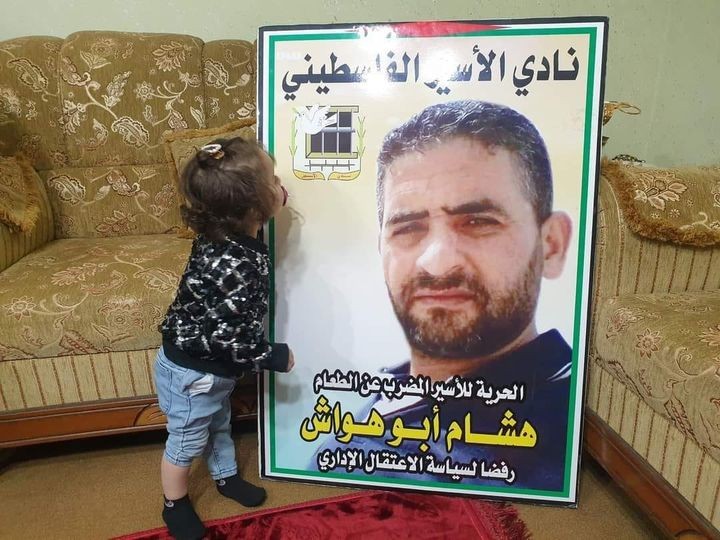
Palestinian prisoner Hisham Abu Hawash, jailed without charge or trial, is now on his 129th day of hunger strike. His family and fellow Palestinian prisoners are demanding immediate action for his release. Abu Hawash has been jailed under Israeli administrative detention orders, which have been renewed successively, since 27 October 2020. While he was on hunger strike, his detention was extended once again for four months — and the Israeli occupation refused to say that they would not extend it once more.
In the past days, Abu Hawash’s health condition has deteriorated significantly. Abu Hawash, 40 and the father of five children (Hadi, Mohammed, Izz al-Din, Waqas and Saba), has spent 8 years in total in Israeli occupation prisons. Of that time, 52 months — over half of his time behind bars — has been spent jailed without charge or trial under administrative detention orders.
The Israeli occupation has refused to transfer him to a civilian hospital, putting his life and long-term health in even greater jeopardy. He has been taken to civilian hospitals on multiple occasions, but every time, he is returned to the Ramleh prison clinic. Even the transfers are a form of pressure on his weakened physical condition and an attempt to force him to end his strike. Abu Hawash joins a long line of Palestinian hunger strikers who have put their bodies and lives on the line to demand their release and an end to the policy of administrative detention.
He launched his hunger strike on 17 August 2021, and since that time, he has been systematically deprived of family visits, and even his lawyer’s visits have been repeatedly obstructed. Abu Hawash’s family emphasized that he is being subjected to a “slow killing operation” implemented by the occupation. They also expressed their fear that the occupation would attempt to forcibly feed him or inject him with nutrients in an attempt to break his strike, warning that they and Hisham himself completely reject any such action. He has been denied visits for a specialist doctor for over one week.
Abu Hawash’s case has been repeatedly dismissed by the Israeli occupation courts, even on the matter of ordering him to a civilian hospital. It underlines the reasons why the administrative detainees have announced that they will launch a collective boycott of the Israeli military courts and appeals courts beginning on 1 January 2022, as the court system only gives a veneer of legitimacy to an illegitimate regime. The Israeli occupation is entirely responsible for the life and health of Hisham Abu Hawash, now in great danger after nearly four months on hunger strike.
Currently, approximately 500 out of the 4,550 Palestinian political prisoners are jailed without charge or trial under administrative detention. Administrative detention orders were first introduced to Palestine by the British colonial mandate and were later adopted by the Zionist project to target Palestinians. These orders are issued for up to six months at a time and are indefinitely renewable; consequently, Palestinians are jailed for years at a time without charge, trial or even knowing when or if they will be released.
Samidoun Palestinian Prisoner Solidarity Network urges all supporters of Palestine to take action to support Hisham Abu Hawash and all Palestinian prisoners struggling for freedom, for their own lives and for the Palestinian people. They are confronting the system of Israeli oppression on the front lines, with their bodies and their lives, to bring the system of administrative detention to an end. Take these actions below to stand with the hunger strikers and the struggle for liberation of Palestine, from the river to the sea!
There is a growing social media campaign to #FreeThemAll #معركة_الامعاء_الخاوية Use these hashtags and the social media action sheet to post every day at 9 pm Palestine time (8 pm central Europe, 7 pm UTC, 2 pm Eastern, 11 am Pacific) on Twitter and Instagram. Post in all languages! Many people have been conducting online hunger strikes in solidarity with the prisoners. Take action and join the social media outrage and break the isolation imposed upon them by the Israeli occupation!
Take to the streets: Organize a protest in solidarity with Palestine!
Take to the streets and join the actions on our full list of events, which is constantly being updated as new actions are announced! Organize your own if there is none in your area, and send us your events at samidoun@samidoun.net.
Boycott Israel!
The international, Arab and Palestinian campaign to boycott Israel can play an important role at this critical time. Local boycott groups can protest and label Israeli produce and groceries, while many complicit corporations – including HP, G4S, Puma, Teva and others, profit from their role in support Zionist colonialism throughout occupied Palestine. By participating in the boycott of Israel, you can directly help to throw a wrench in the economy of settler colonialism.
Demand Your Government Sanction Israel!
The racist, settler colonial state of Israel and its war crimes against the Palestinian people are enabled and backed extensively by the over $3.8 billion each year given to Israel by the United States — targeted directly to support the Israeli occupation military killing children, women, men and elders throughout occupied Palestine. From Canada to Australia to the European Union, Western governments and imperialist powers provide ongoing diplomatic, political and economic support to Israel as well as selling billions of dollars of weaponry to the settler-colonial state. Meanwhile, they also purchase billions of dollars in weaponry from the Israeli state. Governments in league with imperialist powers, such as in the Philippines, Brazil, India and elsewhere, also buy weapons and “security” services — all “battle-tested” on the Palestinian population. Call your representatives, MPs, political officials and demand your government sanction Israel now, cut off all aid, expel its ambassadors, and stop buying and selling weapons!
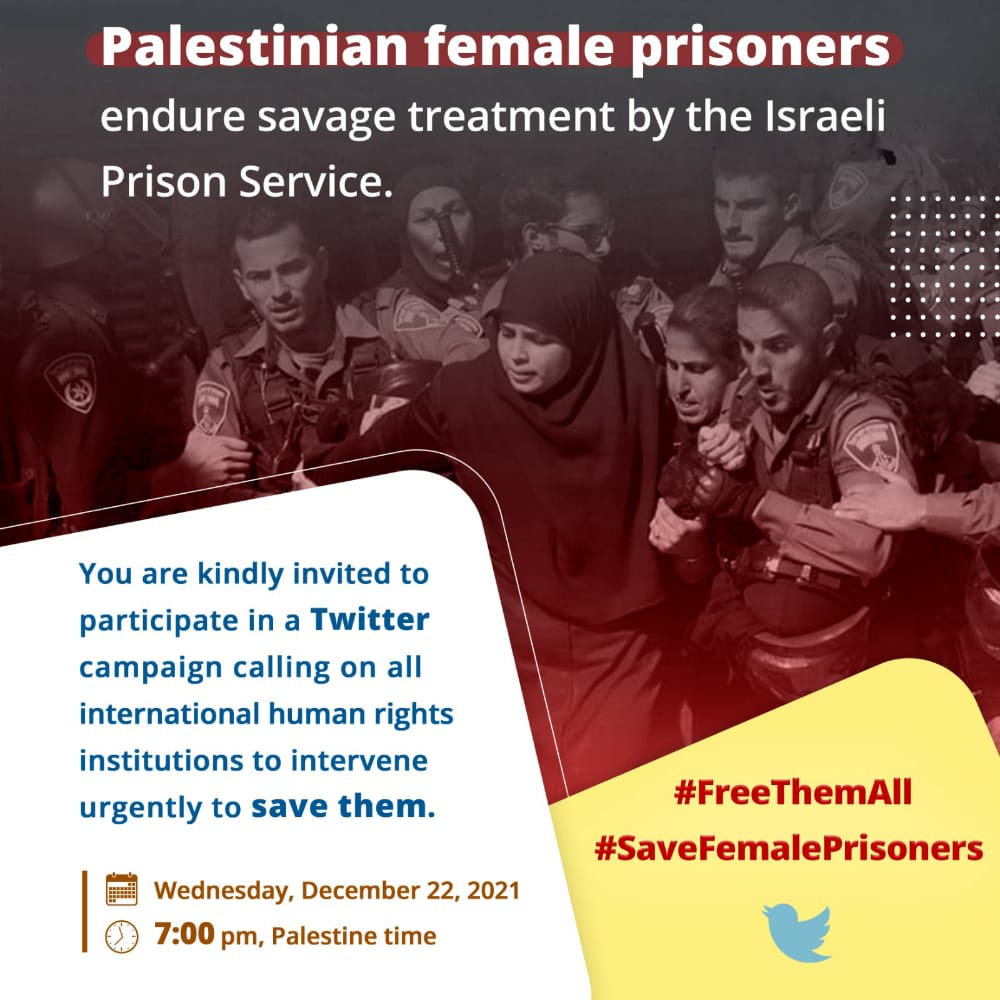
On Wednesday, 22 December, Marah Bakir and Shorouq Dwayyat were released from isolation and returned to their rooms in the Palestinian women prisoners’ section of Damon prison. Mona Qaadan had earlier been returned to her section. Both Bakir and Dwayyat, the elected representatives of the women prisoners, had been transferred away from Damon prison and held in solitary confinement by Israeli occupation forces in retaliation for their defense of Palestinian women prisoners’ rights. Palestinian prisoners’ organizations also reported that the women’s electronic devices, such as cooking tools, were returned. This marks an accomplishment for the Palestinian women’s resistance and the Palestinian prisoners’ movement, obtained through struggle and action.
Of course, the struggle is not over. Palestinian women continue to be denied family visits and other necessities. Click here to send a letter to the ICRC demanding they take action to uphold Palestinian women prisoners’ rights.
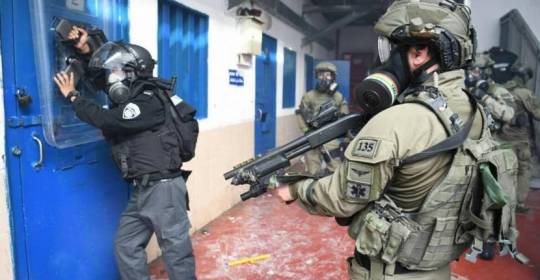
Both Bakir and Dwayyat, along with their fellow women prisoners, were attacked on multiple occasions by repressive units invading their sections. Palestinian women political prisoners have been denied family visits for over three months, they are subjected to security cameras in the halls and the prison courtyard, and unhealthy, humid conditions in the winter with insufficient heating and blankets. Women prisoners, including Israa Jaabis, who suffers from severe health issues and injuries, are denied appropriate medical care. The repressive forces invaded the women’s cells and attacked them, turning off the electricity and pulling the hijabs from several women’s heads. The women had refused to be suddenly transferred from cell to cell after 9 pm at night when the repressive forces attacked them.
The assault on the women prisoners and the isolation of Bakir, Dwayyat and Qaadan was met with an outraged response from the Palestinian people, their resistance organizations and the prisoners’ movement. The women prisoners closed their sections and returned their meals, while three women prisoners — Nurhan Awad, Maysoon Musa al-Jabali, and Shatila Abu Ayada — launched an open hunger strike on 21 December to demand the return of their colleagues.
In Nafha prison, one Palestinian prisoner, Yousef Mabhouh, physically confronted and wounded an Israeli occupation jailer in protest of the abuse of the women prisoners. Throughout the Israeli occupation prisons, Palestinian prisoners returned their morning meals on Wednesday to demand that Bakir and Dwayyat be released from solitary confinement, that Hisham Abu Hawash, on hunger strike for 128 days, be freed from imprisonment without charge or trial, and to stop the attacks on Palestinian prisoners in Nafha prison by repressive units. Palestinian resistance organizations also declared their full support and readiness to mobilize in defense of the prisoners.
Samidoun Palestinian Prisoner Solidarity Network salutes the Palestinian women prisoners and the Palestinian prisoners’ movement as a whole and their ongoing resistance and leadership. The return of Dwayyat and Bakir to their sections and the restoration of the prisoners’ belonging is a material achievement that shows that the prisoners’ resistance wins. However, the struggle is still not over — to obtain the demands of the prisoners and their liberation. We urge all international supporters of Palestine to take action to support imprisoned Palestinian women in their struggle for justice — until the liberation of Palestine, from the river to the sea.
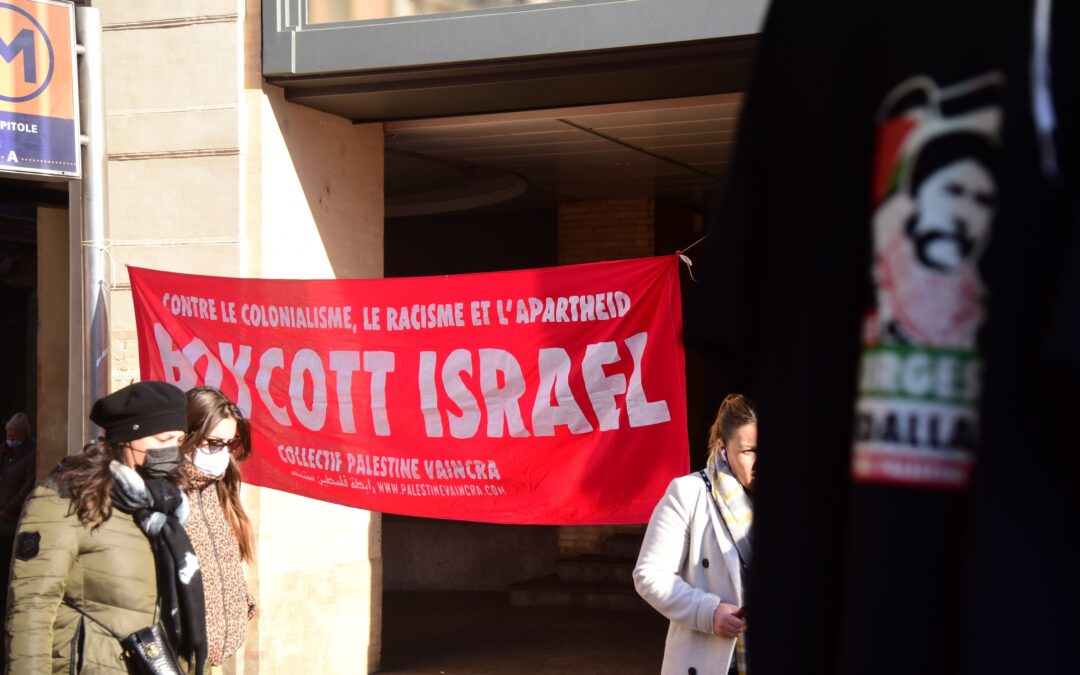
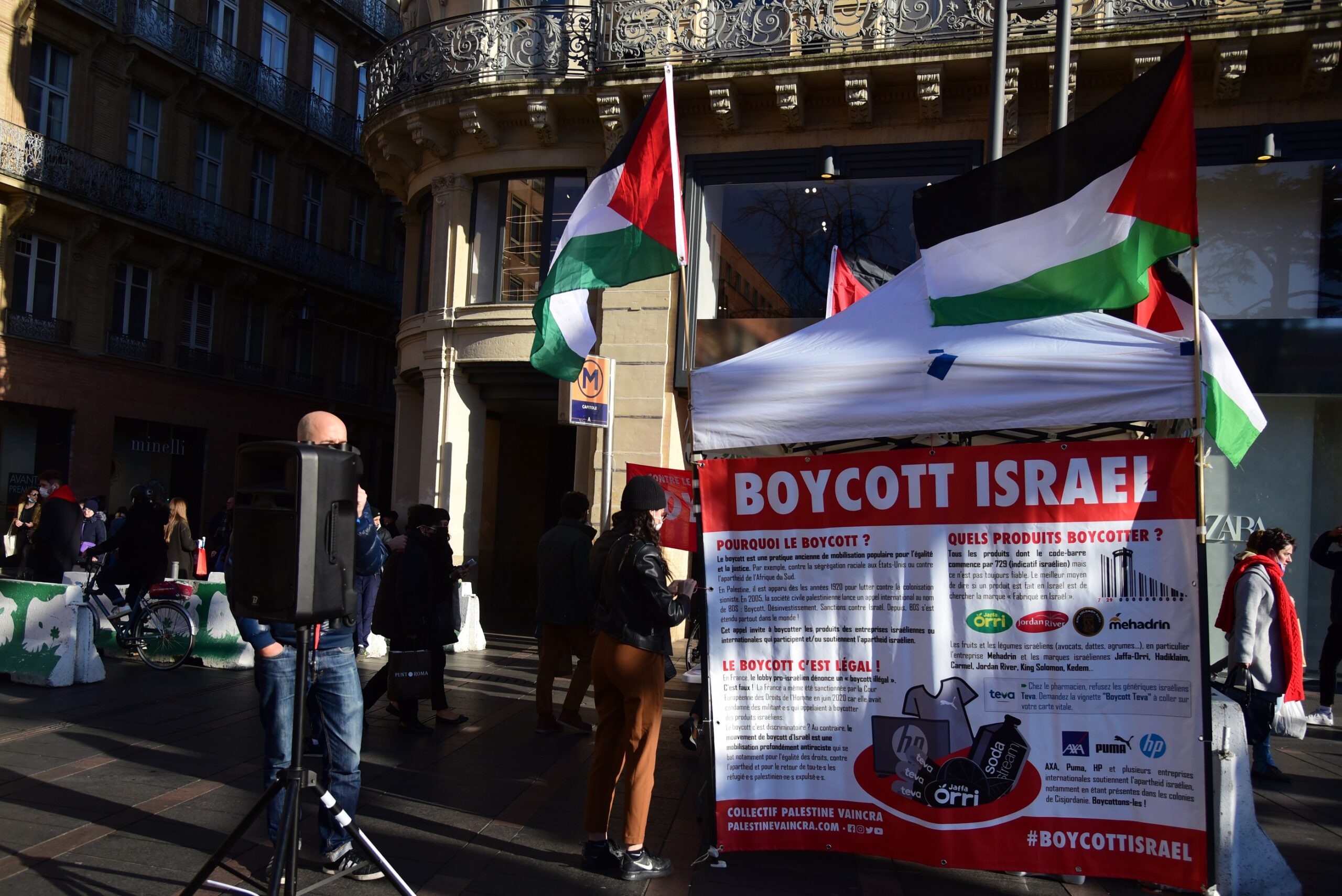
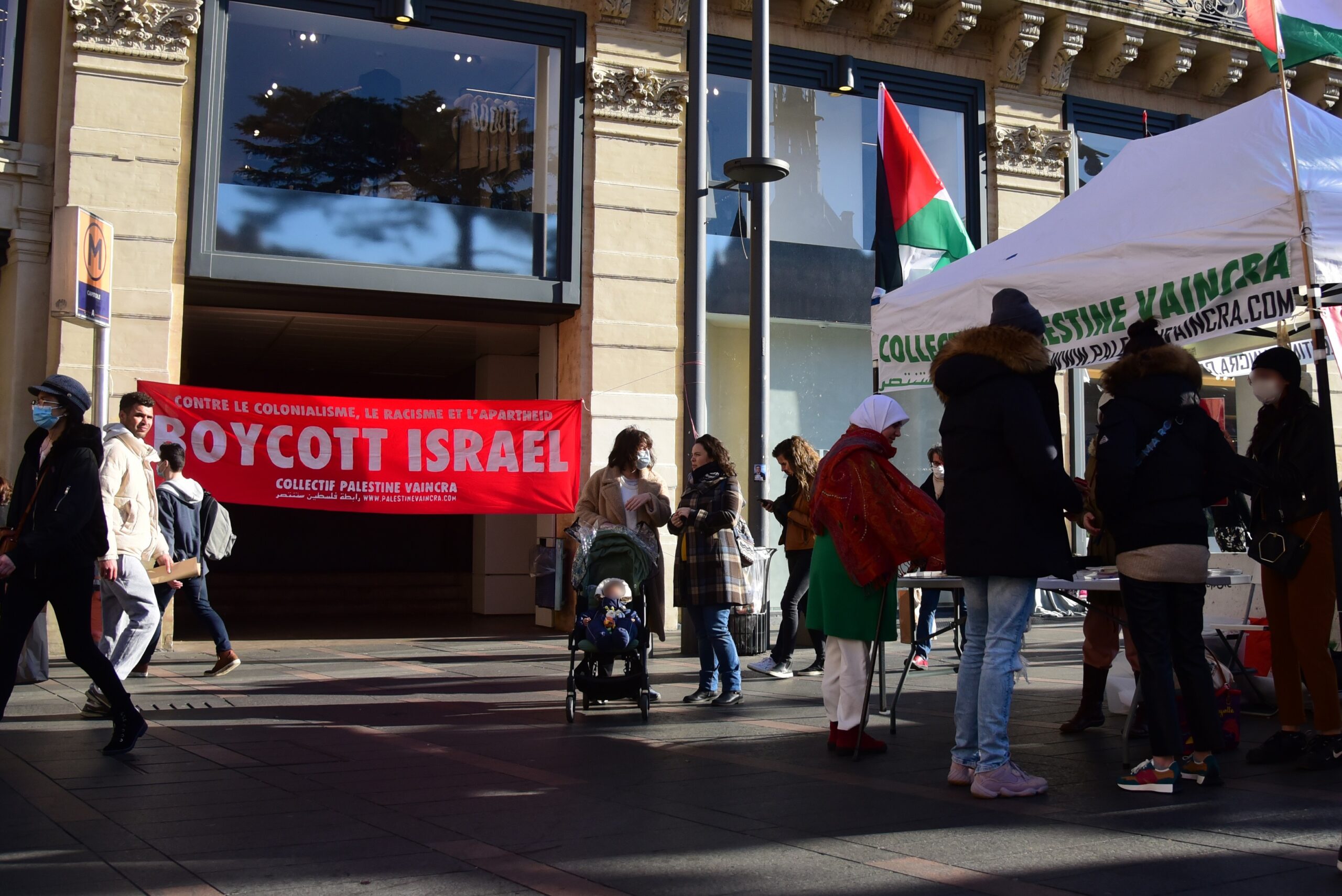
On Wednesday, 22 December 22, the Collectif Palestine Vaincra organized a Palestine Stand outside the Capitole metro station in Toulouse, France, under a beautiful winter sun. The slogan of the stand — “For Christmas, I’m boycotting Israel” — raised awareness among holiday shoppers out in the center city about the importance of boycotting Israeli corporations and the international companies that support and profit from colonialism, racism and apartheid.
The Collectif Palestine Vaincra is a member organization of the Samidoun Network. For over two hours, the Collectif set up an information booth, flying many Palestinian flags and a banner “Against Colonialism, Racism and Apartheid: Boycott Israel” as well as a large explanatory poster on the international campaign to boycott Israel.
Photo: Corine Janeau
In addition, organizers distributed hundreds of leaflets with the list of products to boycott and conducted numerous discussions with people interested in the Palestinian cause.
Photo: Corine Janeau
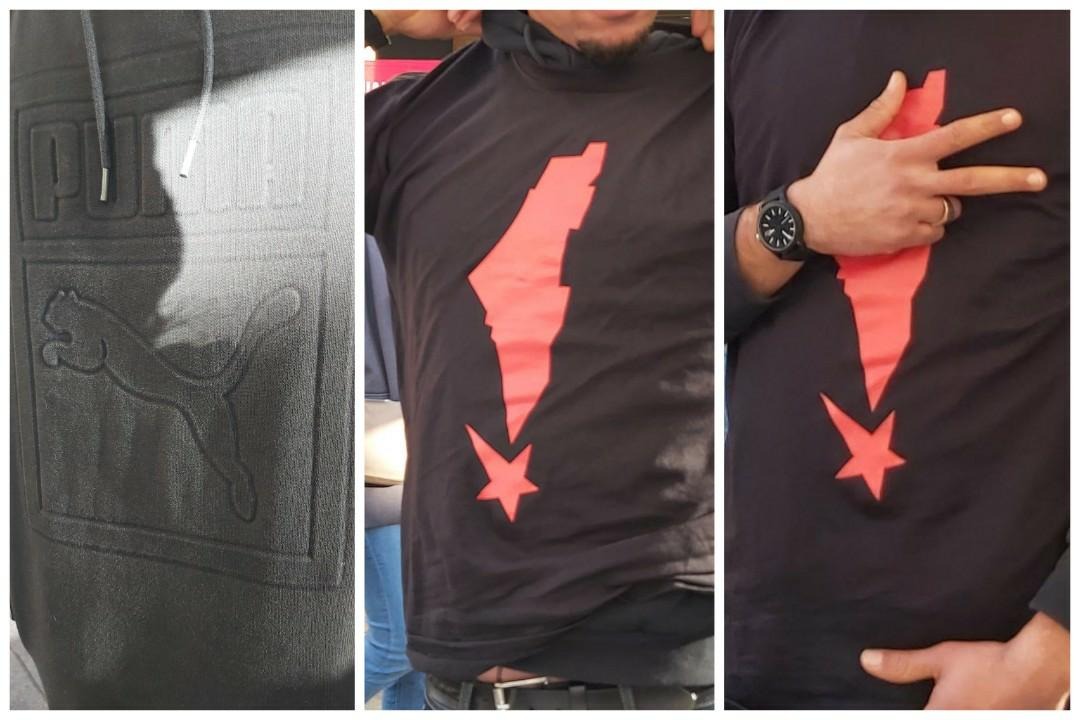
During the various speeches at the microphone, speakers invited passers-by to consume ethically during the end of the year celebrations by boycotting “made in apartheid” products. In particular, we denounced the Puma brand sponsorship of the Israeli Football Federation , including several teams in settlements in the occupied West Bank, and Hewlett Packard which equips the Israeli army. Upon learning about the Puma boycott campaign, one young man hurried to the stand to buy a Palestine t-shirt to put over his Puma sweatshirt and pledged never to buy the brand again. This is just one example among many supporters of Palestine and the boycott who visited the stand.
At the same time, dozens of people took photos proudly displaying a sign “For Christmas, I want a free Palestine” highlighting their solidarity with the Palestinian people who have resisted colonization for more than 70 years.
This Palestine Stand in the heart of downtown Toulouse was a success, especially as it took place despite a relentless campaign by some pro-Israel organizations which have tried in vain to censor us.
In their campaign for silencing, they were able to count on shameful declarations of support from the municipality of Toulouse and then from Sylvain Maillard, member of the National Assembly from French President Emmanuel Macron’s LREM party and ardent defender of Israeli apartheid , who called for the French government to officially dissolve the Collectif on the Israeli I24News channel.
The Collectif Palestine Vaincra affirms: Faithful to our anti-colonial and anti-racist commitments, we will not give in to this intimidation and we will continue our solidarity with the struggle of the Palestinian people and their legitimate resistance until the liberation of Palestine from the river to the sea!
Every month, the Collectif Palestine Vaincra organizes stands in different parts of Toulouse to support campaigns for the Palestinian people and their resistance for the liberation of Palestine from the river to the sea. Contact the Collectif to get involved, or reach out to Samidoun Network to get involved in your local area outside of France.
Israeli Prison Service assaulted and severely beat female prisoners and isolated 3 of them. You are kindly invited to participate in the Twitter campaign on Wednesday, December 22. Speak up for Palestinian female prisoners. Your voices matter!
The isolated Palestinian women prisoners have been returned to Damon prison but not to their rooms with their fellow imprisoned Palestinian women. While the Israeli prison administration committed to releasing Marah Bakir, Shorouq Dwayyat and Mona Qaadan from solitary confinement as a condition of the prisoners’ movement for negotiations on the conditions of the women prisoners, it only returned them to the prison itself and not to their rooms.
As a result, the Palestinian prisoners’ movement is joining with resistance factions in calling for action and mobilization to defend the Palestinian women prisoners, who have faced violent physical assaults, forcible transfers, solitary confinement and denials of fundamental rights, including family visits and appropriate health care. Palestinian national and Islamic forces called for days of protest on 24 December, while the Palestinian resistance factions pledged to stand beside the prisoners in the struggle.
On Wednesday, 22 December, Palestinian political prisoners will return their breakfast meals and close their sections until noon, to demand the immediate return of Dwayyat, Bakir and Qaadan to their cells. These protest actions will focus on three demands:
The implementation of the agreement to return Dwayyat, Bakir and Qaadan to their rooms with their fellow imprisoned women and restore the previous situation of the women prisoners;
The release of Hisham Abu Hawash, on hunger strike for nearly 130 days to end his administrative detention, imprisonment without charge or trial;
Ending the attacks on the prisoners in Nafha prison, especially those in section 12.
The Handala Center for Prisoners and Ex-Prisoners reported that the Palestinian prisoners in Ramon prison have already begun these protest steps to demand implementation of these three points.
The women prisoners were repeatedly attacked by repressive units between Thursday, 16 December and Sunday, 19 December. They engaged in physical attacks on the women prisoners, isolating their elected leaders (Bakir and Dwayyat), turning off their electricity and imposing further restrictions on them, such as denying them showers for over three days.
Their fellow Palestinian prisoners, including the male prisoners, responded to these attacks with outrage. In Nafha prison, Yousef al-Mabhouh, a Palestinian political prisoner from Gaza, physically confronted and wounded a jailer to express his anger at the abuse of the women prisoners. Following this, Israeli occupation forces entered numerous repressive units into Nafha prison, removing all of the detainees to the prison yard. A group of prisoners, including Mabhouh as well as at least three more prisoners, including Fadi Abu Sabah, Tamer al-Derini and a third unknown person, who were later transferred to the prison clinic, were beaten severely. Mabhouh was taken away by helicopter from the scene.
Multiple prisoners in Nafha were then transferred to solitary confinement outside the prison, including Youssef Massoud, Ashraf al-Zughair, Munir Marei, Mohammed Arman, Mahmoud Radwan and Omar Sharif, and Israeli occupation forces announced that they were banning family visits to all Hamas prisoners. The Palestinian Prisoners’ Society demanded information about the fate and whereabouts of Mabhouh and more than 80 prisoners of section 12, which remain unknown, including sick and elderly prisoners.
Meanwhile, Hisham Abu Hawash, on hunger strike for the 127th day, is facing increasingly dangerous health conditions. Abu Hawash, 40, from Dura near al-Khalil, has been repeatedly transferred to civil hospitals or a short period before being returned to the Ramle prison clinic, putting even more pressure on his body in an attempt to force him to end his hunger strike. The Israeli High Court declined to order him transferred to a civilian hospital, claiming that only the prison administration can make this decision. He is on hunger strike to demand an end to his administrative detention, imprisonment without charge or trial, and the refusal to transfer Abu Hawash to a hospital is a new method of pressure upon him to end his strike.
Abu Hawash has been jailed without charge or trial since 27 October 2020 and has spent a total of 8 years in prison, including 52 months without charge or trial under administrative detention. He is married and the father of five children: Hadi, Mohammed, Izz al-Din, Waqas and Saba.
This comes as Palestinians jailed without charge or trial announced they will launch a collective boycott of the Israeli military courts on 1 January 2022, with escalating protest steps up to and including a collective hunger strike to bring administrative detention to an end. Currently, approximately 500 of the 4550 Palestinian political prisoners are jailed without charge or trial under these arbitrary orders, which can be indefinitely renewed. Palestinians routinely spend years at a time jailed without charge or trial under administrative detention orders, which were first introduced to Palestine by British colonialism before being adopted by the Israeli occupation.
Samidoun Palestinian Prisoner Solidarity Network urges the strongest campaign of international solidarity with these imprisoned Palestinian women and men, on the front lines in the struggle for justice and liberation in Palestine. Learn more about Palestinian women prisoners and how you and your organization can support their struggle at the Aseerat campaign page.
Join the social media campaign to support women prisoners! On Wednesday, 22 December, at 7 pm Palestine time (6 pm central Europe, 9 am Pacific, 12 noon Eastern), join the social media storm. Tweet using the hashtags: #FreeThemAll #SaveFemalePrisoners


 In March 2021, Samidoun launched the
  In February of 2021, Israeli “Defense” Minister and war criminal, Benny Gantz,
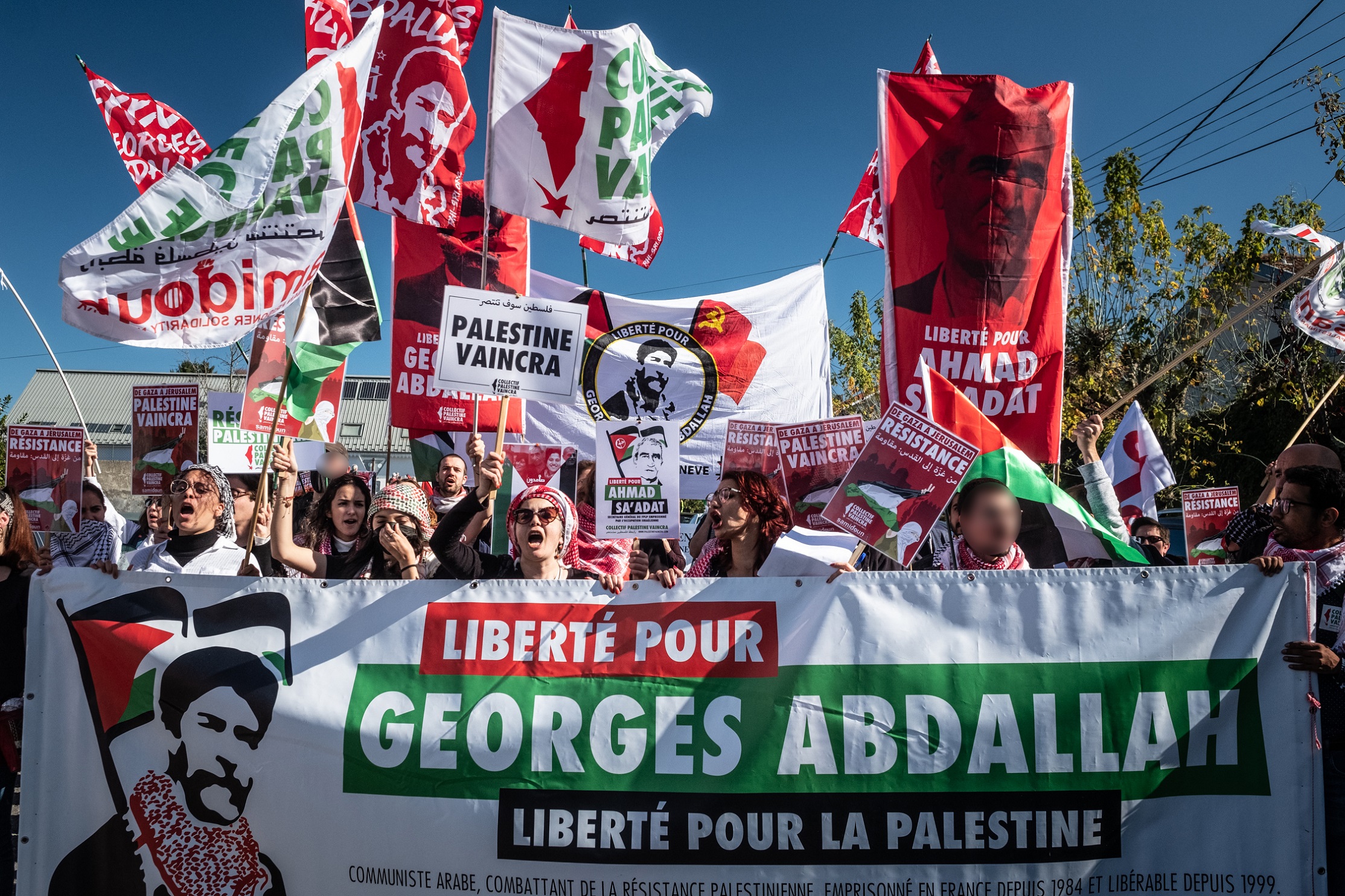 2021 was a banner year for the campaign to free Georges Abdallah, with unprecedented global action and support to free this Lebanese Arab struggler for Palestine imprisoned in France for over 37 years. There were over
 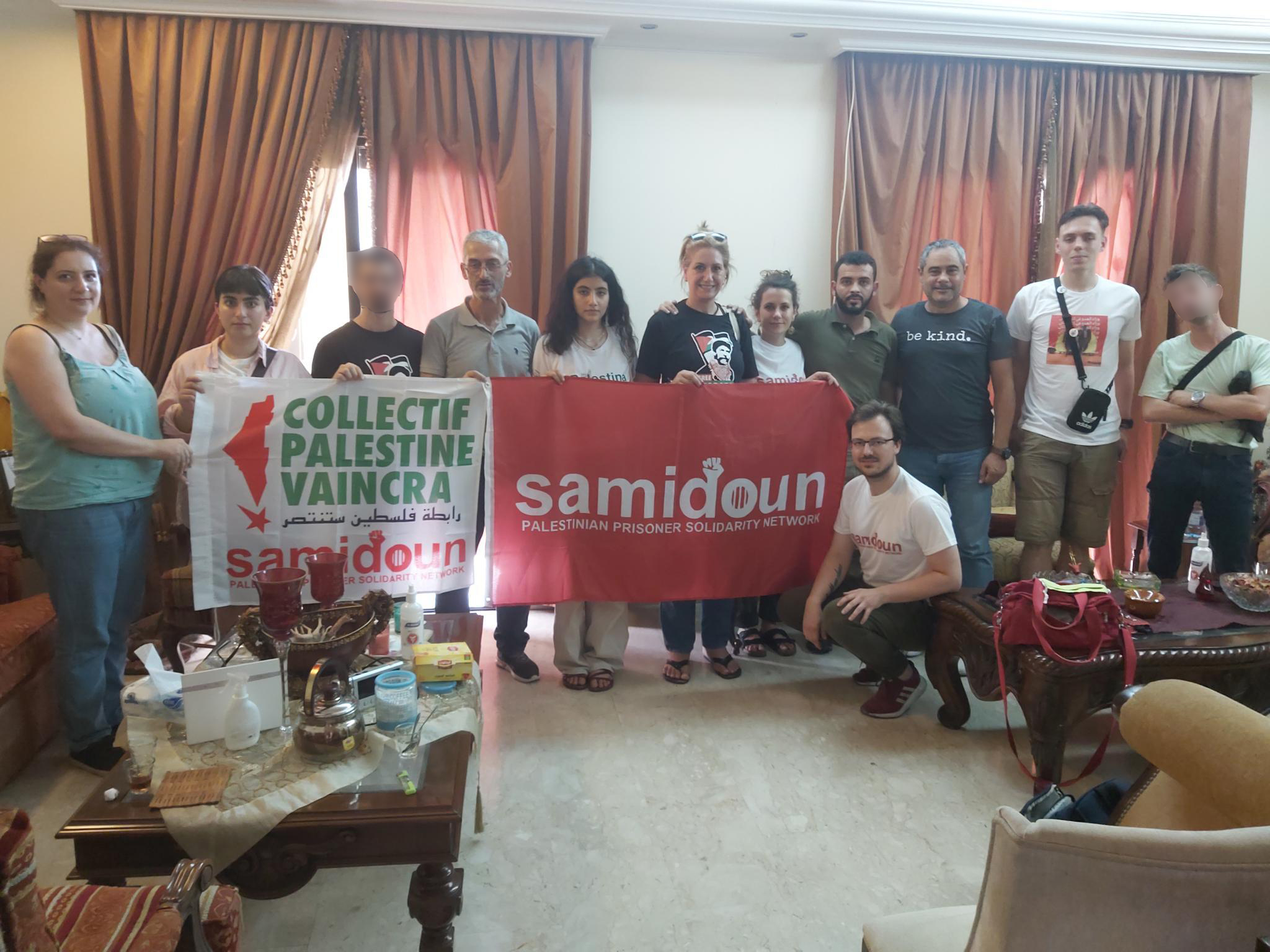 In July 2021,
 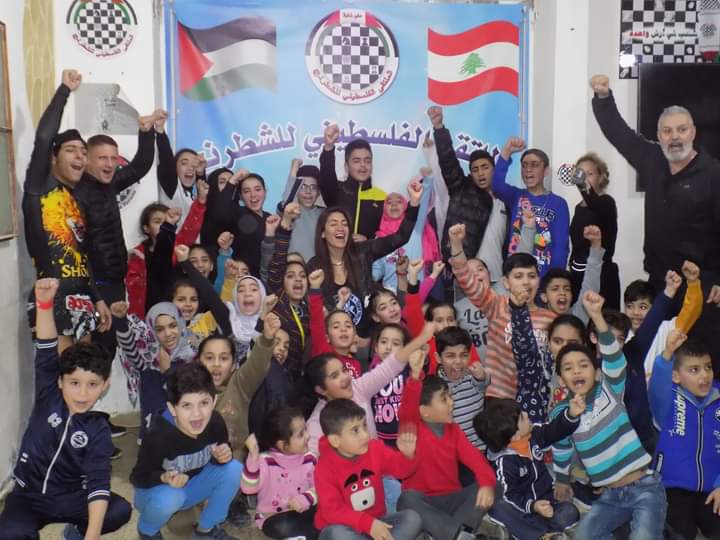 In 2021, Samidoun ensured that our political solidarity was also material solidarity. We raised the funds needed to refurbish the
 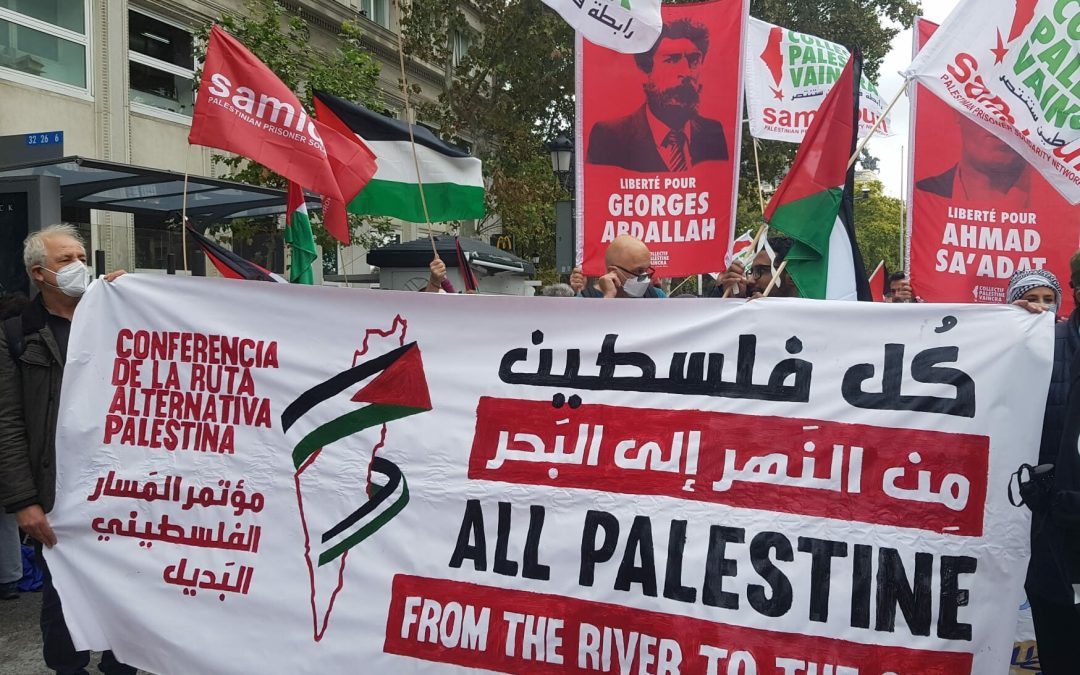 The
The 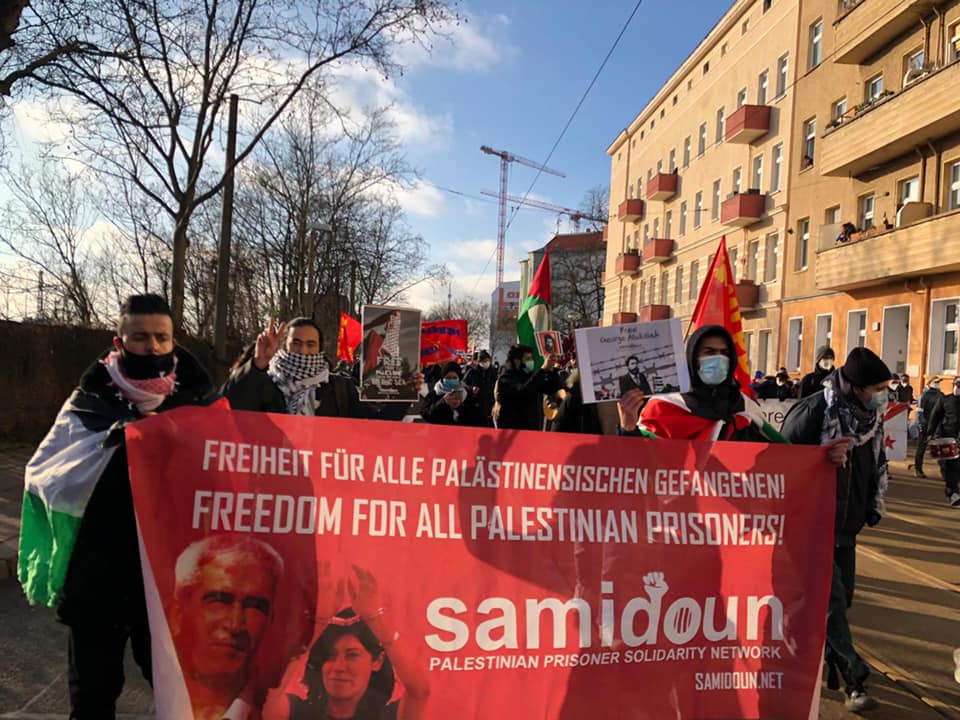
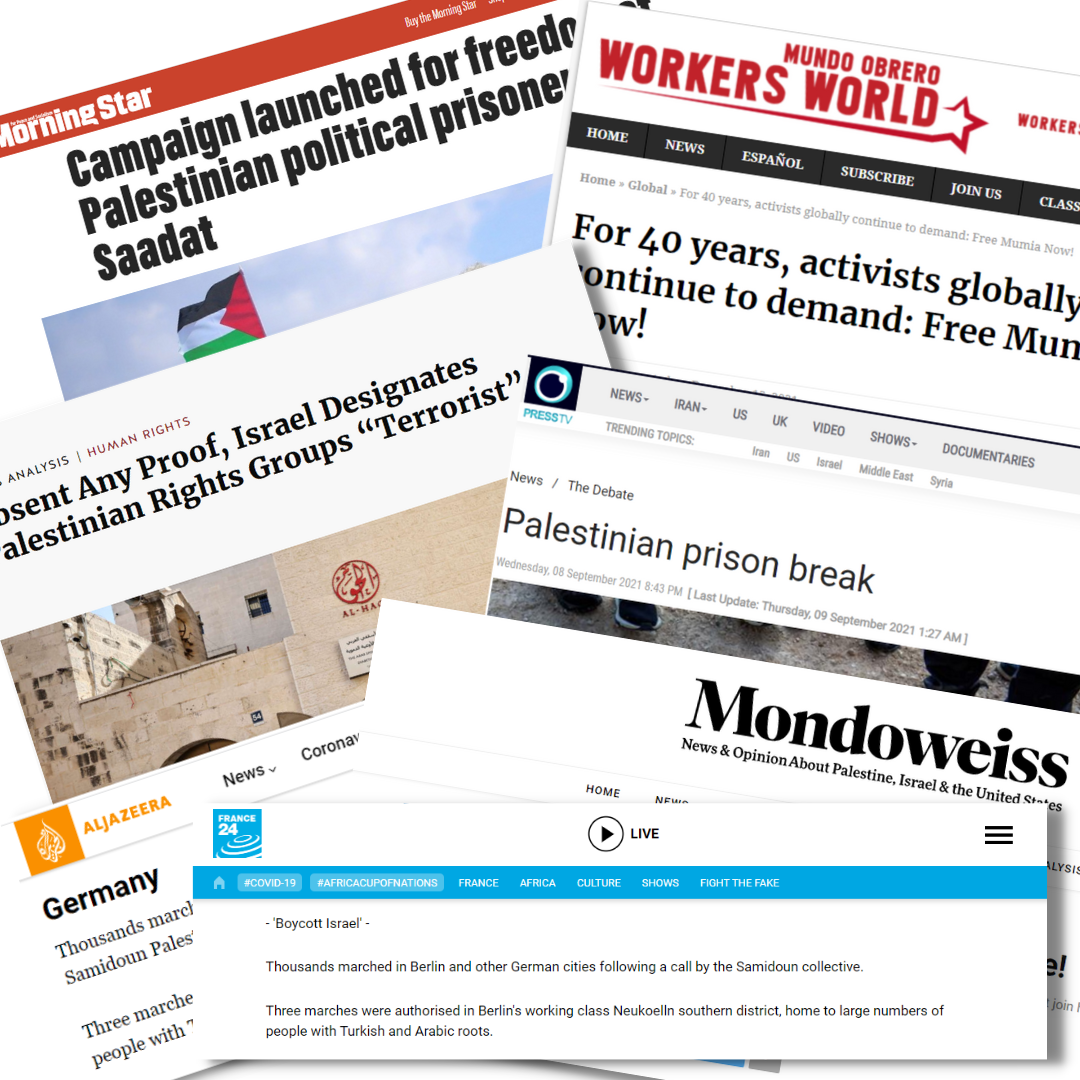 In 2021,
 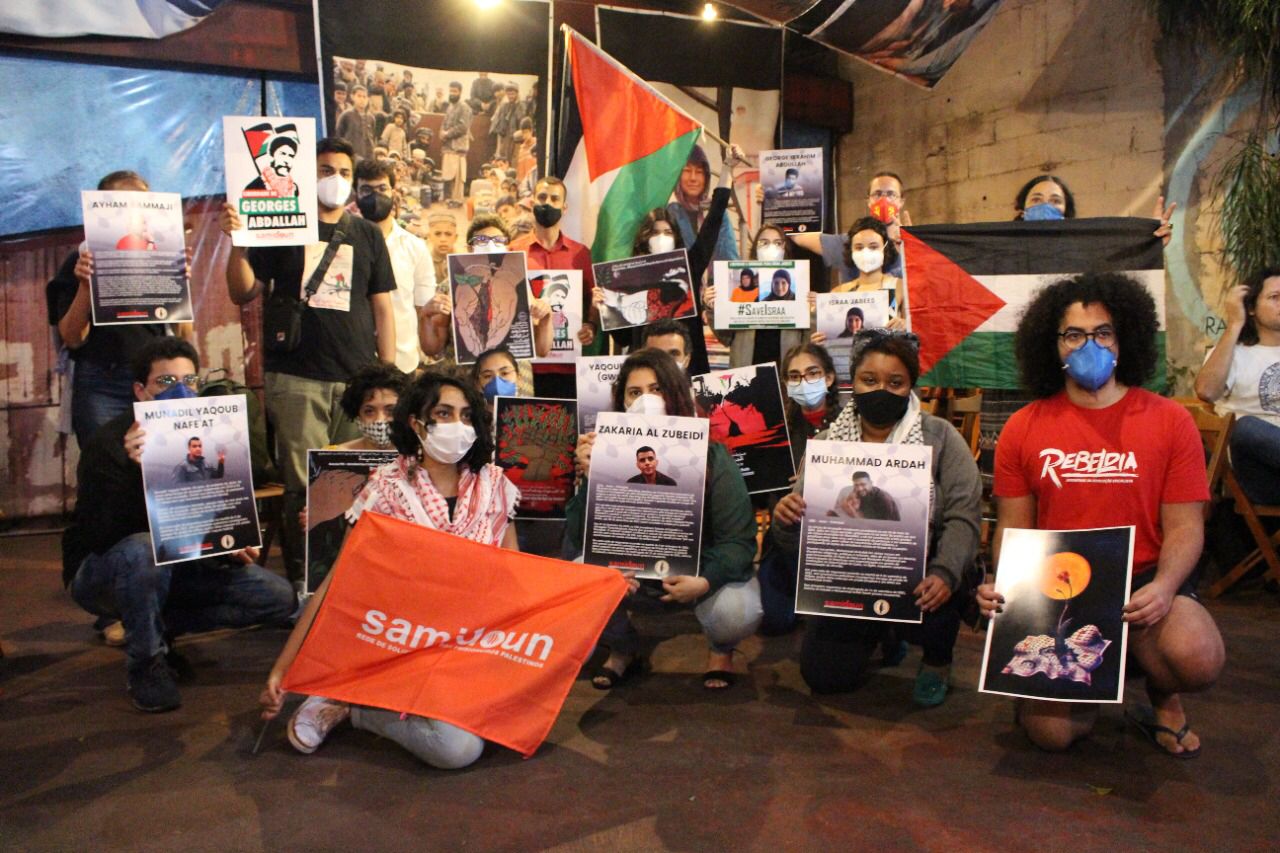 2021 was a year of growth and building for the global Samidoun Palestinian Prisoner Solidarity Network! We welcomed new chapters —
 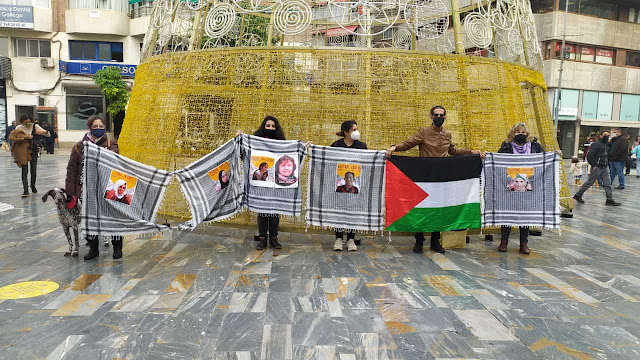 Palestina Libre Murcia — an affiliate of the Samidoun Network — organized a protest action in Murcia, Spain, on 24 December 2021 in support of
 At the same time, dozens of people took photos proudly displaying a sign “For Christmas, I want a free Palestine” highlighting their solidarity with the Palestinian people who have resisted colonization for more than 70 years.
 In their campaign for silencing, they were able to count on shameful declarations of support