On Friday 27th January 2017, Inminds human rights group will protest outside BETT 2017 in London, at the inclusion of Hewlett Packard, a company implicated in the torture and killing of children in Palestine, at the worlds leading education technology event BETT which attracts over 35,000 teachers and others in the education sector from around the world.
Inminds chair Abbas Ali said “The Stockholm International Peace Research Institute has identified Hewlett Packard as one of the top 20 arms companies in the US. They are guilt of providing the IT backbone of the Israel military which according to UNICEF destroyed 258 schools and kindergardens in Gaza in 2014, slaughtering 521 children in the process. HP is also guilty of providing essential IT services and infrastructure that keeps Israel’s dungeons and torture dens operational. This is where, according to the United Nations Rights of the Child, Israel tortures and sexually abuses young children. We are shocked that a company complicit in these war crimes against children is invited to a teachers educational event. The only thing they teach is death, they have no place in the classroom.”
Inminds chair Abbas Ali added “We are also demanding the immediate release of Palestinian aid worker Mohammed Khalil al-Halabi, who has been languishing in a HP powered Israeli dungeon since June 2016. Mohammed Halabi has been awarded “Humanitarian Hero” award by the United Nations for his work with children in Gaza for the Christian charity World Vision. With his arrest and the freezing of their bank accounts in Jerusalem by Israel, Word Vision has been forced to closed down operations in Gaza, immediately putting at risk the the lives of the 40,000 children that it provides for in Gaza. Israel is not content with bombing children in Gaza, it is now after those children that survived the slaughter and those humanitarians who care for them!”
A message from the family of Mohammed Khalil al-Halabi will be read out at the protest.
The campaign to free Mohammed Khalil al-Halabi was launched on 14th January with a projection on the walls of the Palace of Westminster calling for his freedom.
Samidoun Palestinian Prisoner Solidarity Network participated on Monday, 23 January in an event at the European Parliament organized by the GUE/NGL(European United Left/Nordic Green Left) group in support of the Boycott, Divestment and Sanctions movement and against attempts to criminalize BDS movements, organizations and organizers.
The conference was originally organized in response to an Israel-lobby organized event in the European Parliament, which was initially to feature former Israeli foreign minister Tzipi Livni as a keynote speaker. Livni, however, did not attend the event, citing “illness;” her decision not to attend followed the announcement that Belgian police would arrest and question her in relation to war crimes complaints against her in relation to her involvement in the 2008-09 “Operation Cast Lead” attack on Gaza.
Many Palestinian community and Palestine solidarity organizers attended the event, filling the room for the discussion of pushing back attempts to suppress Palestinian and solidarity organizing in Europe.
The event was opened by MEP Neoklis Sylikiotis of Cyprus, who emphasized the importance of international support for the rights of the Palestinian people, followed by MEP Malin Bjork, who focused on the relation of the repression of the BDS movement to an overall attempt to silence freedom of expression and shrink democratic spaces for organizing and struggle across the continent.
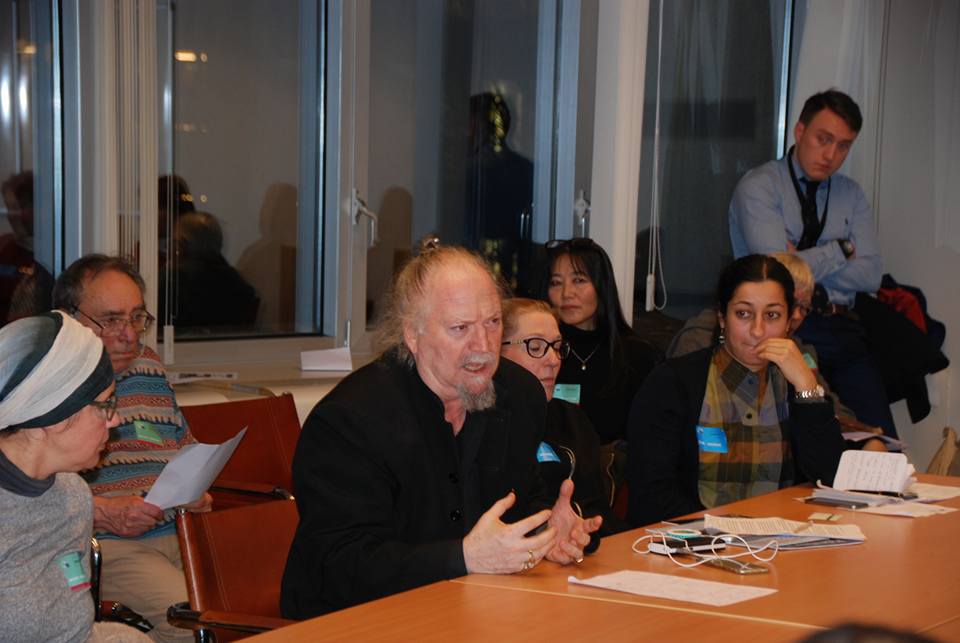
Charlotte Kates, Samidoun’s international coordinator, presented at the event on the growing international efforts to attack and criminalize BDS organizing. She spoke about the Israeli state-sponsored attempts to push back against “delegitimization,” itself caused by ongoing Israeli settler colonialism and violations of Palestinian rights. In particular, she highlighted the cases of several Palestinian prisoners, including journalist Omar Nazzal, imprisoned as he attempted to attend the European Federation of Journalists conference in Sarajevo in 2016; re-arrested hunger striker and journalist Mohammed al-Qeeq; and Salah Khawaja, member of the Secretariat of the BDS National Committee being pursued under a “secret file.”
Kates highlighted European complicity with Israeli occupation and oppression, particularly citing the example of LAW TRAIN, an EU-funded research project that brings Israeli police and universities together with the Belgian ministry of justice and the Catholic University of Leuven to share expertise in interrogation techniques. Over 5 million Euros are invested in this project, with half of those funds going to Israel. In Portugal, the Portuguese movement and Palestinian organizations were successful in convincing the Portuguese government to pull out of LAW TRAIN, while there is a growing campaign in Belgium to do the same.
Anna Wester of the Palestine Solidarity Association in Sweden spoke next, focusing on their successful campaign targeting Veolia and other local BDS actions. She highlighted several examples of attempts by Israel lobby groups and the Israeli embassy directly to smear and attack Swedish organizing and work for Palestine, noting the impact of such attacks on building support for BDS.
Photo: Mahmoud Nader
Wester was followed by Dror Feiler of the European Jews for a Just Peace and Ship to Gaza – Sweden, who discussed the long-time and growing progressive Jewish movement internationally to challenge the Israeli state and Zionism. He discussed the role of EJJP and other Jewish organizations in standing up to attempts to criminalize BDS and exposing attempts to label the Palestinian or Palestine solidarity movement as “anti-Semitic,” noting the role of far-right organizations in Europe and the U.S. in supporting the Israeli state.
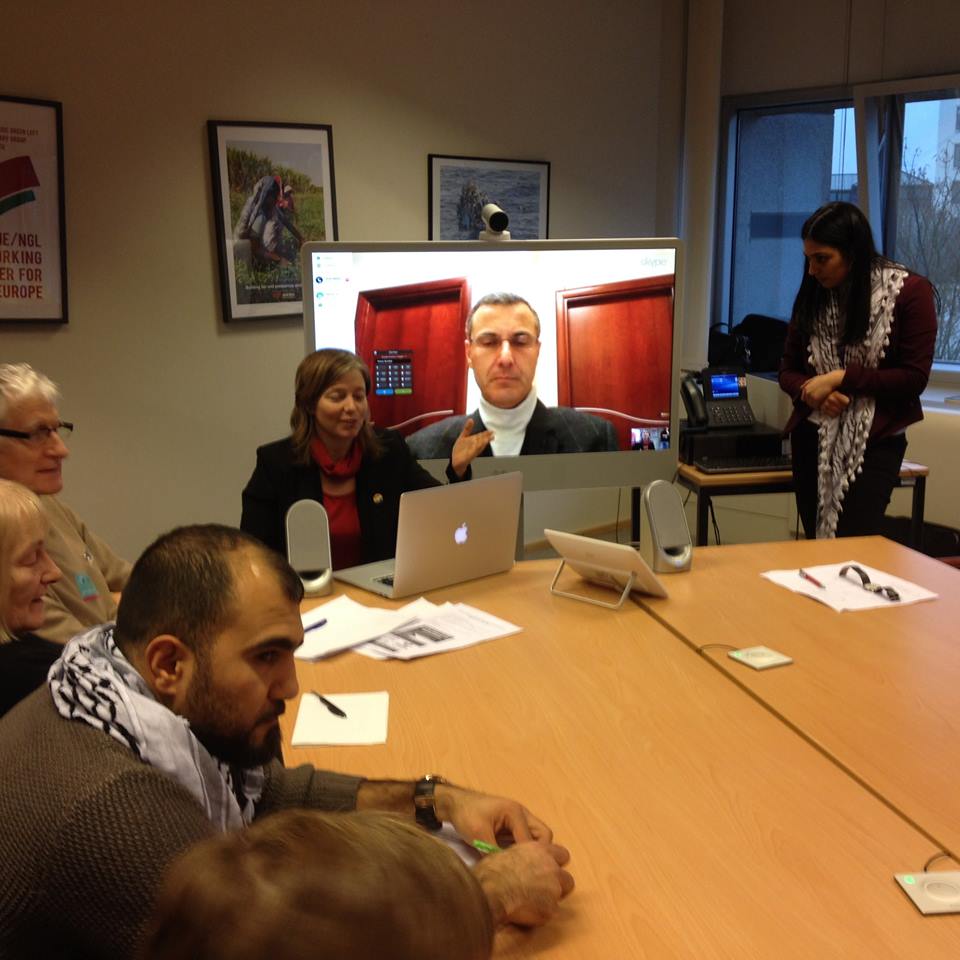
The meeting then featured a Skype call with Omar Barghouti of the Palestinian BDS National Committee and the Palestinian Campaign for the Academic and Cultural Boycott of Israel. Barghouti spoke about the BDS campaign and its role in working for justice for all sectors of the Palestinian people. He highlighted the centrality of the right of return for Palestinian refugees, the largest sector of the Palestinian population, in working for Palestinian rights. He also highlighted the importance of connections between struggles for justice, including the Palestinian liberation movement, the Black movement, indigenous rights movements and other social justice struggles. Barghouti urged an arms embargo on the Israeli state as well as a ban on settlement products, emphasizing the need to put an end to European complicity with the occupation.
Following the presentations, participants engaged in an active discussion about expanding the BDS movement and confronting targeting and criminalization; towards the end of the event, representatives of the Israeli mission to the EU and other pro-Zionist attendees of the anti-BDS event entered the room in an attempt to film, photograph and disrupt the attendees.
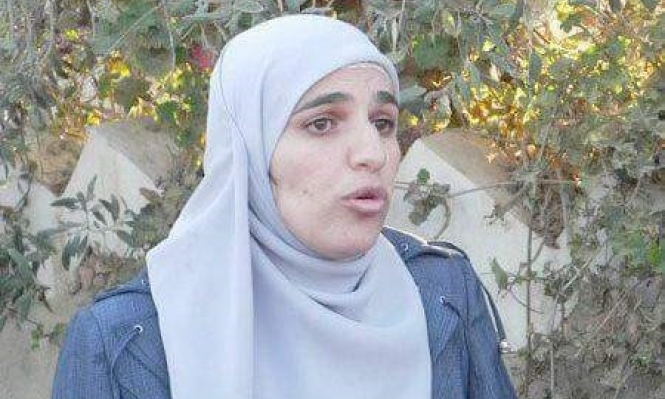
Re-arrested Palestinian prisoner Randa Shahatit has launched a hunger strike; as of 26 January, she has been refusing food for four days in protest of her re-arrest and her isolation in HaSharon prison. Shahatit, 29, was seized by occupation forces on Friday night, 20 January, at an Israeli occupation military checkpoint at the entrance to al-Fuwwar refugee camp south of al-Khalil.
She has previously been arrested on multiple occasions; freed from a 50-month sentence in the Wafa al-Ahrar prisoner exchange in 2011, she was seized on 4 August 2016 and accused of “violating the terms of her release.” She was released 12 days later on bail conditions while her case was considered by the secret Israeli military committee that can re-impose former sentences on prisoners freed in prisoner exchanges. During this time, she was forbidden to leave her hometown of Yatta or participate in any events and ordered to report weekly to the Israeli military base in Kiryat Arba illegal settlement. On 3 January, her confinement was lifted and Palestinian lawyer Ahmad Safia reported that the Ofer military court had decided not to reimpose her sentence but that for four years, she “must not breach her release conditions.”
However, only two weeks later, Shahatit was again arrested. She is now accused of violating her bail conditions while the military commission reviewed her case. Shahatit, who has a bachelor’s degree in law, is married to Yousef Abu Sabha, who was with her when she was taken from their car. They have three children, Hamza, Ibrahim and Abrar, who are 3 years old, 2 years old and 9 months old. She will have another hearing in the Ofer military court today, 26 January, reported her sister, Jihan Shahatit.
A number of Palestinian prisoners have been subject to orders for administrative detention, imprisonment without charge or trial. Over 700 Palestinian prisoners – out of 7,000 total Palestinians in Israeli jails – are held without charge or trial on the basis of “secret evidence” in this type of detention. These detention orders are indefinitely renewable, and Palestinians can be held for years at a time in administrative detention.
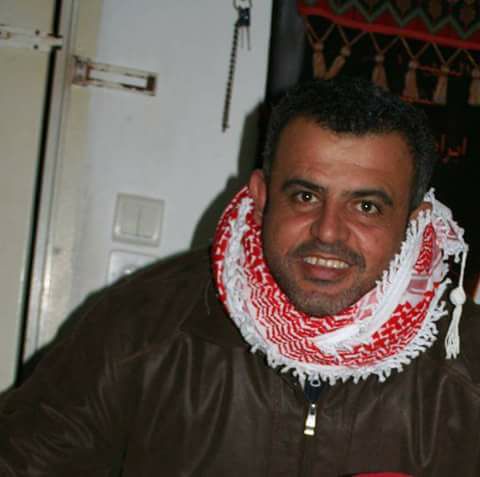
On 23 January, Palestinian community activist and leader Shaher al-Rai, 47, had his administrative detention order renewed by the Israeli military for the fifth time. He was seized alongside fellow prominent Palestinian leftist Jamal Barham on 3 June 2015 in raids on their home by occupation military forces. Al-Rai was interrogated about “membership in an illegal organization,” the leftist Popular Front for the Liberation of Palestine, but he refused to confess; he was shortly thereafter ordered to administrative detention. He has been arrested seven times, including three stints in administrative detention, and imprisoned for over 12 years in total. Al-Rai is currently held in the Negev desert prison.
Al-Rai is married to Palestinian activist Manal al-Rai and they have three children, Jarrah, 24, Wajla, 20, and Kanaan, 5. Manal al-Rai spoke about the impact of her husband’s administrative detention on their young son in this video from Addameer Prisoner Support and Human Rights Association:
Earlier, Al-Rai was imprisoned by Palestinian Authority security forces for multiple years after he and his cousin were implicated in a false affidavit given by a Palestinian prisoner under Israeli torture. The confession was proven false by incontrovertible evidence and the Palestinian who made the confession under torture released and later compensated by Israeli intelligence, in an unusual case. Nevertheless, al-Rai remained held in PA prison for years after the discrediting of the confession, and released only after a widespread campaign.
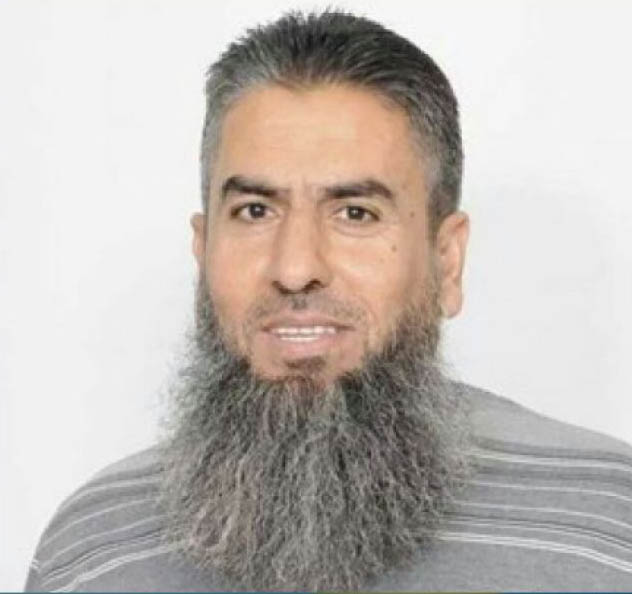
Meanwhile, Palestinian administrative detainee Bajis Nakhleh, 50, from the Jalazon refugee camp in Ramallah, has threatened to launch an open hunger strike after he was transferred to solitary confinement. His administrative detention without charge or trial was most recently renewed for the third time since his seizure by occupation forces on 5 March 2016. Nakhleh has spent over 20 years in Israeli prisons and was
one of the Marj al-Zohour deportees, when leaders of Hamas and Islamic Jihad were forcibly deported from Palestine in 1992.
Ahmed Mubarak, 48, became the fourth member of the Palestinian Legislative Council currently held without charge or trial under administrative detention on 23 January, when the Ofer Military Court issued an order for his imprisonment for six months. Mubarak’s home was forcibly raided by Israeli occupation military forces on 16 January. The PLC member has been imprisoned for over five years in repeated arrests and was most recently held without charge or trial under administrative detention in 2014.
Alongside Mubarak, his fellow members of the PLC held in administrative detention are Hassan Yousef, Mohammed Natsheh and Azzam Salhab. PLC members Marwan Barghouthi, Ahmad Sa’adat and Mohammed Abu Teir are also imprisoned in Israeli jails; PFLP General Secretary Sa’adat is serving a 30-year sentence, Barghouthi is serving multiple life sentences and Abu Teir is serving a 17-month sentence.
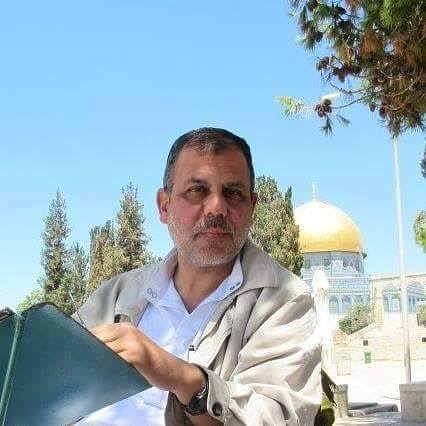
Palestinian writer Walid Hodali, also seized by occupation forces in a raid on his home in Tira, west of Ramallah, on 16 January, was also ordered to four months in administrative detention without charge or trial on 23 Januaary. Hodali, 57, is a former prisoner who spent over 15 years total in Israeli jails; his wife, Etaf Alayan, also spent over 14 years in Israeli prison and engaged in multiple hunger strikes. Today, Hodali is the director of the Jerusalem Literary Office and a member of the Palestinian Writers’ Union. He has released a number of novels, short stories and articles and has produced two films.
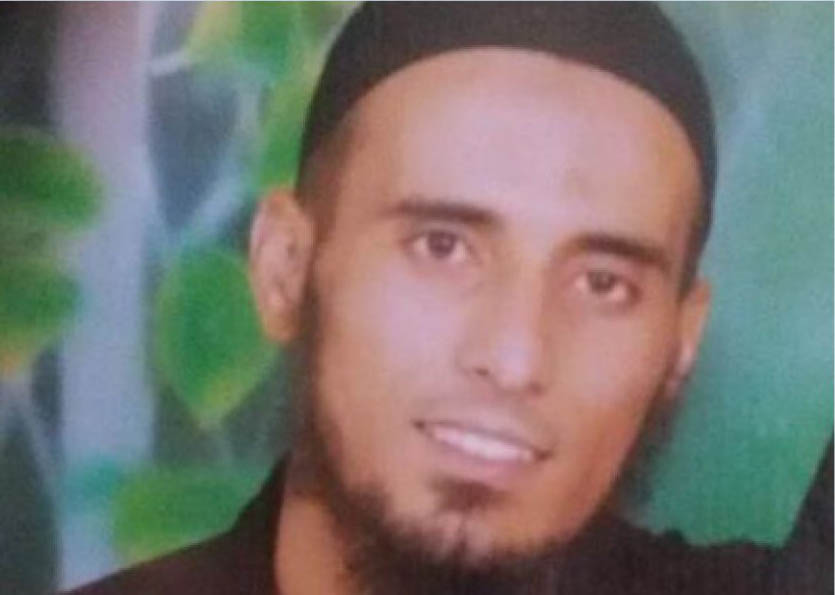
In addition, Palestinian prisoner Faisal Khalifa, 35, from Nour Shams refugee camp east of Tulkarem, was ordered to six more months in administrative detention on 25 January; he has been imprisoned without charge or trial since 10 February 2016. Khalifa previously spent eight years in Israeli prisons until his release in 2013 and was also arrested by Palestinian Authority security forces under security coordination. His brother, Faris Khalifa, is serving a 10-year sentence, while his other brother Fursan Khalifa was released to the Gaza Strip in the 2011 Wafa al-Ahrar prisoner exchange.
Palestinian administrative detainee Islam Saleh Dar Musa, 24, has launched a hunger strike on 25 January to protest his separation from his imprisoned father, Sheikh Saleh Dar Musa, 52. Islam Dar Musa has been imprisoned without charge or trial since 20 August 2016; he was originally ordered to four months in administrative detention, and the order was renewed in December. Saleh Dar Musa is serving 17 life sentences and has been imprisoned since 27 September 2003. Islam applied to transfer to Ramon prison to be with his father, but it was denied; he has not seen his father since he was imprisoned in 2013 and met his father in Hadarim prison before his release in 2015.
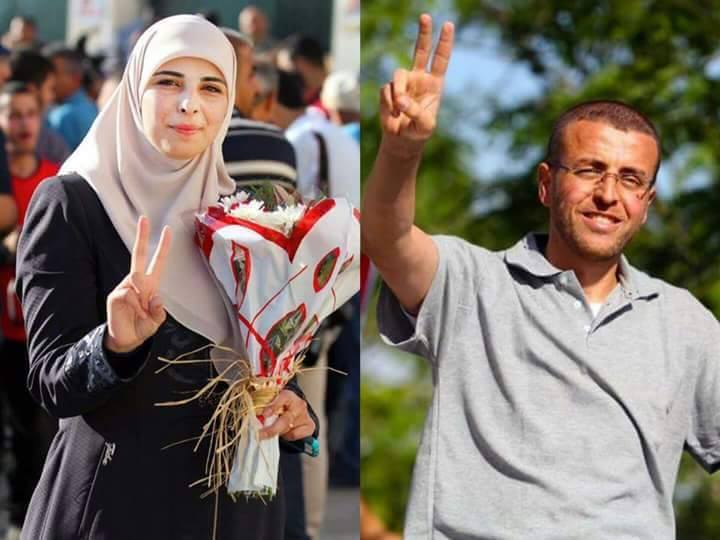
Imprisoned Palestinian journalist and former long-term hunger striker Mohammed al-Qeeq will be brought before the Ofer military court today, 26 January, and may be ordered to administrative detention without charge or trial. Fayha Shalash, fellow journalist and al-Qeeq’s wife, said that the Israeli military court ordered his arrest extended for 72 hours on Monday, 23 January.
Shalash said to Wattan TV that occupation authorities have not garnered any confessions or charges against al-Qeeq since they seized him on 15 January as he returned from a protest in Bethlehem demanding the release of the detained bodies of Palestinians killed by Israeli forces. She emphasized that he will begin a hunger strike if he is ordered again to administrative detention.
Shalash herself was ordered to interrogation by Israeli intelligence on Wednesday, 25 January after al-Qeeq’s family home in al-Khalil and their apartment in Ramallah were raided by occupation forces in a pre-dawn attacks ransacking the home and subjecting Shalash to a strip search. Al-Qeeq was transferred yesterday to the Petah Tikva interrogation center.
Al-Qeeq previously engaged in a 94-day hunger strike against his imprisonment without charge or trial, winning his release in May 2016 and drawing international attention to the persecution of Palestinian journalists and the imprisonment of Palestinians without charge or trial under administrative detention.
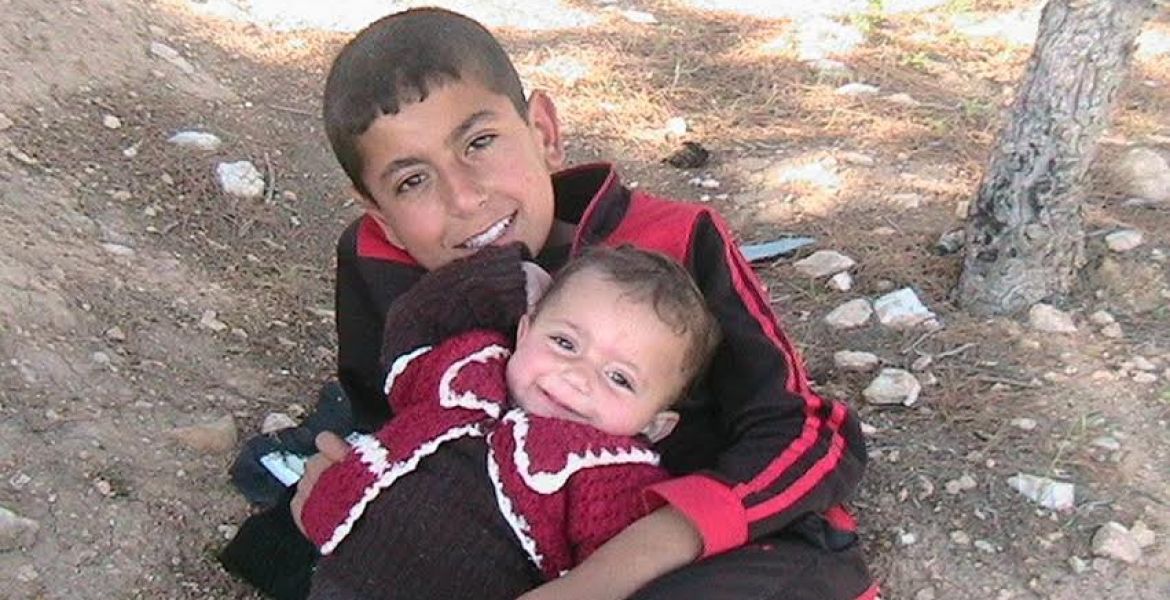
Injured Palestinian child prisoner Osama Zeidat, 15, has been released on bail following his second surgery for his severely injured foot, said Palestinian lawyer Akram Samara of the Palestinian Prisoners’ Society.
Samara said that the Ofer military appeals court issued an order to release Osama on 25,000 NIS ($6,000 USD) bail paid by his family. He was shot by Israeli occupation forces in his back and foot on 23 September and seized by them, accused of attempting to attack soldiers or settlers, despite the fact that the only person injured was the boy. He underwent a surgery and was held in Shaare Tzedek hospital for three weeks and was transferred to the Ramle prison clinic before his healing had finished. He has continued to be in severe pain, and he was transferred to military court on a hospital bed; at other times, his hearings were cancelled or postponed because of the lack of an ambulance.
His mother, Lina Mar’i, noted that their joy is incomplete due to the massive bail imposed upon Osama, as well as a condition that his father must bring him to the Israeli occupation military court on demand. She noted that he will continue his treatment in a Palestinian hospital in Ramallah.
Following multiple complaints by his family and Palestinian lawyers, Osama received another surgery on his foot on Sunday, 22 January in Assaf Harofeh hospital.
Meanwhile, injured Palestinian child prisoner Ahmed Issa, 17, was ordered by the Salem military court to remain detained until next Monday, 30 January. Ahmed, from Jenin, is held shackled to his hospital bed in Afula hospital. He was run over by an Israeli military jeep on 3 January. Ahmed’s fellow child prisoner, Sharif Khanfar, 16, was injured by the same jeep; he is detained in Assaf Harofeh hospital and his leg was amputated.
In addition, child prisoner Ahmed Kaddour, 16, remains imprisoned despite his multiple illnesses and poor health condition. Ahmed was arrested on 2 January near the Ofer military checkpoint west of Ramallah and accused of throwing stones at occupation soldiers. Ahmed is quite ill and suffers from leukemia and epilepsy as well as injuries to his right hand and leg. His family is demanding his immediate release.
These boys are among over 300 Palestinian children currently jailed by the Israeli occupation.
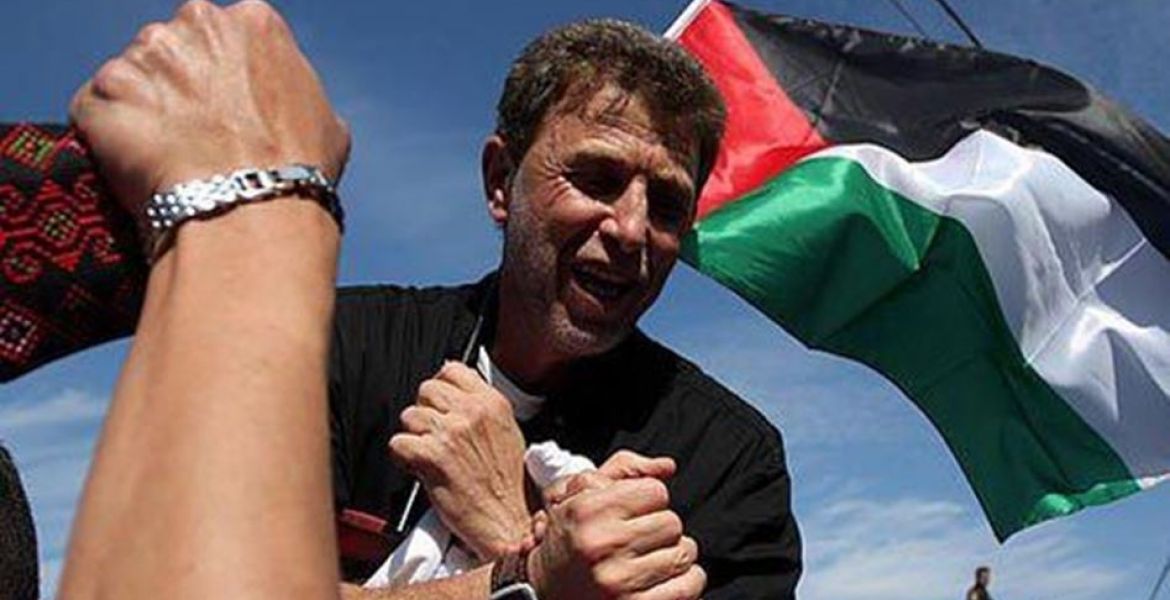
Barghouthi, 59, is currently imprisoned while a secret Israeli military commission decides whether or not to impose his original life sentence; he was freed in 2011 as part of the Wafa al-Ahrar prisoner exchange after nearly 34 years in Israeli prison. In 2014, he was among dozens of former prisoners rounded up en masse in an attempt to pressure Palestinian resistance organizations; on the basis of secret evidence and dubious allegations of “connections with” members of “prohibited organizations,” including every major Palestinian political party. Barghouthi did not have his sentence reimposed; instead, he was ordered to 30 more months of imprisonment, which ended on 17 December 2016. The military prosecution appealed this sentence and is calling for the reimposition of his original sentence; this appeal has been sitting before the secretive commission since 2015.
His lawyers have appealed for his release; however, Israeli military courts have kept him imprisoned until the committee issues a decision on his case. During this time, he has been repeatedly transferred from one prison to another, including this transfer on 10 January.
Barghouthi was shackled hand and foot in the all-metal vehicle; in the fall, his right hand was wounded and his left foot was injured. His lawyer said on 22 January that he has not received tests or treatment for his continuing severe pain in his left leg.
Activists in New York City will be protesting on Friday, 27 November at a protest organized by Samidoun, focusing on the call to release Barghouthi and the international movement to boycott Hewlett-Packard products, as HP is engaged in multiple contracts with Israeli occupation forces, including the Israel prison service, profiting from the imprisonment of Palestinians. Protesters will gather at 5:30 pm at the Union Square Best Buy at 52 E. 14th Street; all are welcome to join.
Organize a protest, demonstration, speaking event or banner drop in your city, community or campus calling for freedom for Nael Barghouthi and his fellow Palestinian prisoners.
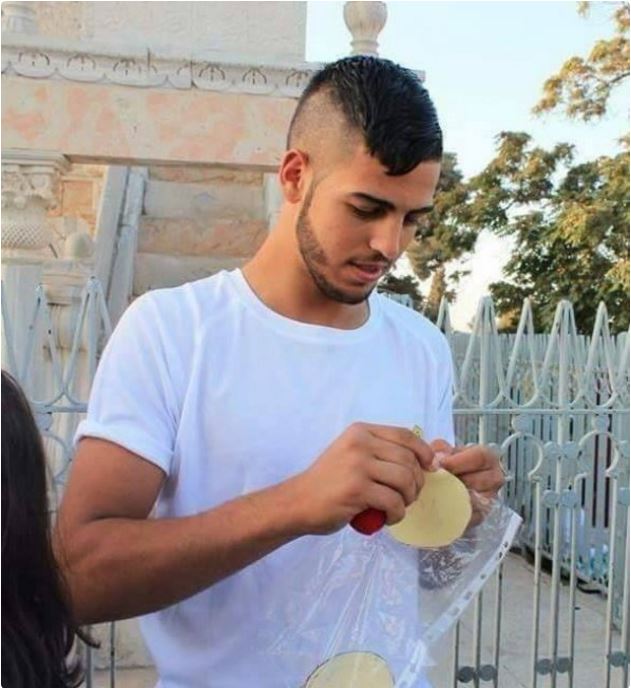
Palestinian youth Hakim Musa Daoud Derbas, 18, from the town of Issawiya in Jerusalem, was sentenced to five and a half years in Israeli prison on 24 January on allegations of membership in the leftist Palestinian party, the Popular Front for the Liberation of Palestine.
Derbas was arrested on 28 February 2016 when he was a minor and ordered to administrative detention. Several months later, he was returned to interrogation and subject to a lengthy list of allegations centering on his relationship with the PFLP. He is currently held in Ramon prison.
Meanwhile, also on 24 January, the Israeli court in Beersheba sentenced Hani Fathi Asleem, 41, from al-Sabra neighborhood in Gaza City, to five years in Israeli prison. Asleem was seized on 24 March 2016 as he entered the Beit Hanoun/Erez crossing; he had received a permit to travel to Jerusalem for medical treatment for his right leg. Instead, he was seized by Israeli intelligence and taken to Ashkelon interrogation center and accused him of membership in the Palestinian Islamic Jihad movement. He is currently held in Nafha prison.
Sa’adat, the imprisoned General Secretary of the Popular Front for the Liberation of Palestine, recently inspired an international week of action demanding his freedom and that of fellow Palestinian prisoners.
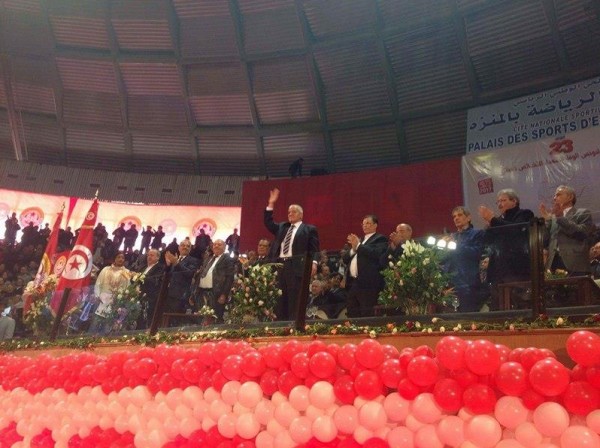
Fadwa Barghouthi, the wife of imprisoned prominent Fateh leader Marwan Barghouthi, addressed the conference, praising the Tunisian people’s commitment to the Palestinian cause.
Sa’adat and Barghouthi are two of the most prominent Palestinian political leaders serving lengthy sentences in Israeli jails; Sa’adat is serving a 30-year sentence while Barghouthi is serving multiple life sentences in Israeli prison. Both were presented with the Shield of the Union in a ceremony at the massive labor conference.
The conference is electing new leadership for the labor union and focusing on the need to confront neoliberalism and social inequality. Speakers also focused on the need to defend Tunisian workers migrating abroad to organize and protect their rights.
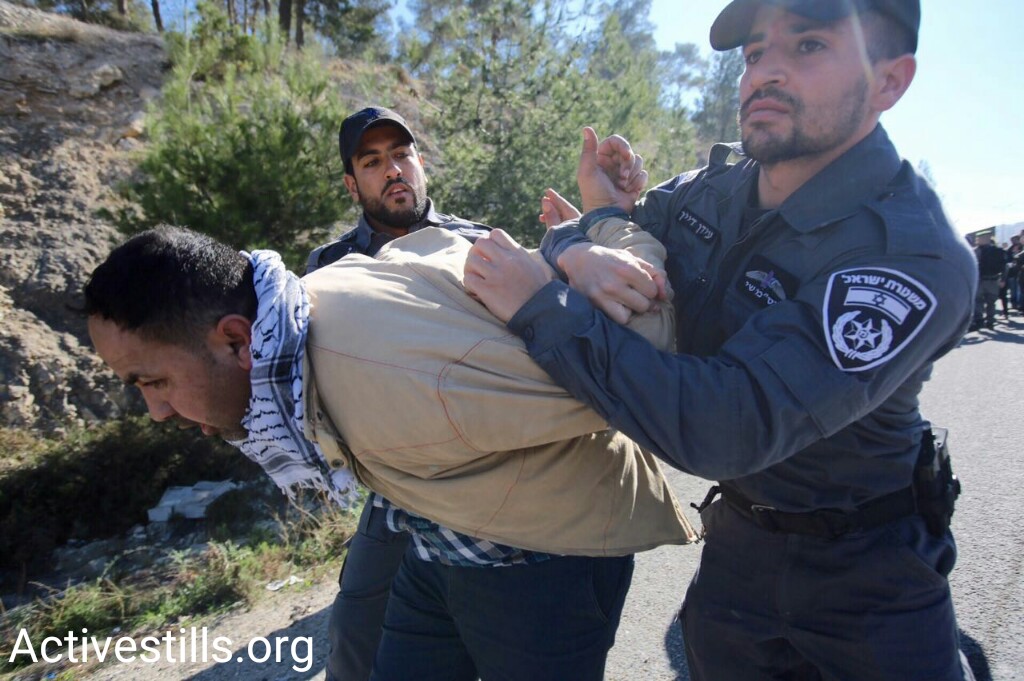
Palestinian popular resistance activists and human rights defenders continue to come under attack by Israeli occupation forces. In a pre-dawn raid on Thursday, 26 January, Israeli occupation forces raided the home of Abdullah Abu Rahma, the coordinator of the Popular Committee Against the Wall in Jenin.
In an interview with Wattan TV, Abu Rahma said that 40 soldiers surrounded the village and raided the home, ransacking the house and confiscating the computers and mobile phones of the family. Abu Rahma himself had been released only one day prior; he was held for two days after he was seized by Israeli forces while attending the Ofer military court hearing of six other popular resistance activists. His home was last raided in September 2016, when once again mobile phones and computers were confiscated.
The six Popular Struggle Coordination Committee (PSCC) activists were seized by Israeli occupation forces as they erected a protest tent in the name of Bab al-Shams outside the Ma’ale Adumim illegal settlement, protesting Israeli threats to annex it to Jerusalem and defending Palestinian indigenous land. Four – Jamil Barghouthi, Ahmed Odeh, Khaled Quteishat and Lema Nazeeh – were ordered released on Sunday, 22 January under the conditions of paying a 30,000 NIS bail (over $7,000 USD) and three days of house arrest. Mohammed Khatib and Akram Khatib were released on bail on 24 January after two more days of interrogation, following the hearing at which Abu Rahma was arrested.
One of those arrested, Lema Nazeeh, is the deputy chair of the Popular Struggle Coordination Committee and has been arrested five times in three years for participating in public protests against settlements, land confiscation and the imprisonment of Palestinians. Mohammed Khatib is also a board member of PSCC.

 Organized by www.inminds.com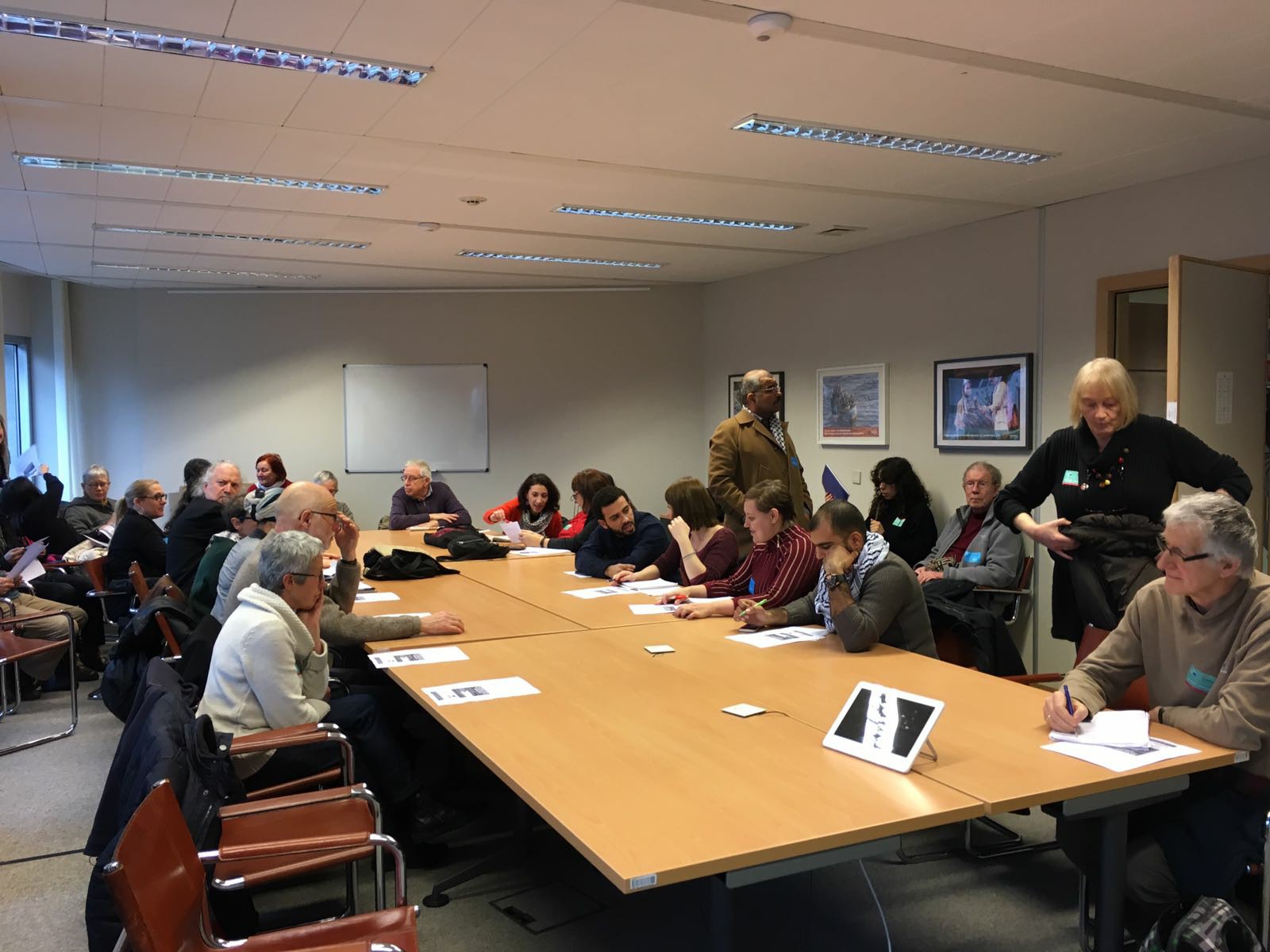
 Following the presentations, participants engaged in an active discussion about expanding the BDS movement and confronting targeting and criminalization; towards the end of the event, representatives of the Israeli mission to the EU and other pro-Zionist attendees of the anti-BDS event entered the room in an attempt to film, photograph and disrupt the attendees.
 Re-arrested Palestinian prisoner
  On 23 January, Palestinian community activist and leader
  Meanwhile, Palestinian administrative detainee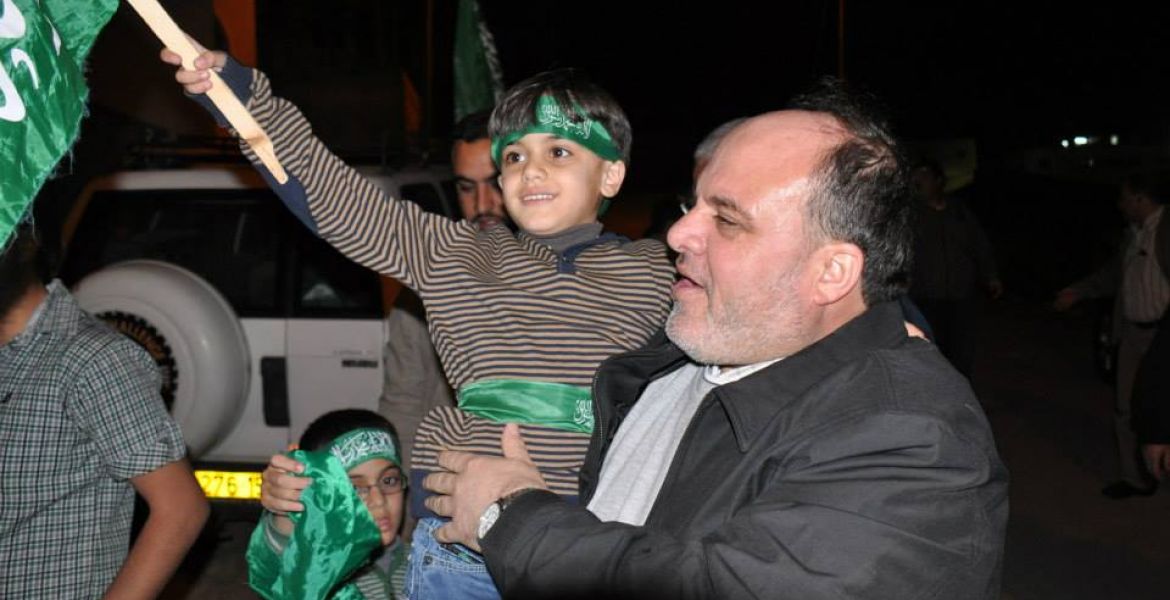
 Palestinian writer
  In addition, Palestinian prisoner
  Imprisoned Palestinian journalist and former long-term hunger striker
  Injured Palestinian child prisoner
  Palestinian prisoner
  Palestinian youth
  The 23rd conference of the
  Palestinian popular resistance activists and human rights defenders continue to come under attack by Israeli occupation forces. In a pre-dawn raid on Thursday, 26 January, Israeli occupation forces raided the home of