 Samidoun Palestinian Prisoner Solidarity Network joined dozens of anti-racist and human rights groups across Canada in a joint statement warning of the dangers to freedom of expression, particularly to oppressed communities, posed by the Canadian government’s “online harms” proposal. The statement notes that, “as currently formulated, it risks exacerbating the existing, well-documented pattern of online speech policing and removal targeting Indigenous, Black, Palestinian, and other colonized and racialized communities.” Palestinian pages and other content are routinely deleted by Big Tech social media companies and targeted for suppression by Israel and Western states. Palestinians have been repeatedly imprisoned inside occupied Palestine for posting on social media, including poet Dareen Tatour, who was imprisoned for posting her poem, “Resist, My People, Resist Them,” on Facebook and YouTube. Read the full statement below:
Subject: Joint submission re: Online harms legislation
To whom it may concern,
As organizations and individuals with expertise in anti-racism, we are profoundly concerned by the government’s proposed “online harms” legislation – purporting to address “terrorist content,” “content that incites violence,” “hate speech,” “non-consensual sharing of intimate images,” and “child sexual exploitation content.”
While the proposal is billed as protecting marginalized groups from “hate, harassment, and violent rhetoric online,” we fear that, as currently formulated, it risks exacerbating the existing, well-documented pattern of online speech policing and removal targeting Indigenous, Black, Palestinian, and other colonized and racialized communities.
Particular aspects of concern regarding the proposed legislative framework from an anti-racism perspective include:
- Incentivization of over-removal produced by: the short timeline for required response after content being flagged (24 hours); the obligation for online communication service providers (OCSPs) to take proactive measures to identify harmful content, including through use of automated systems (repeatedly shown susceptible to amplifying existing biases); vague definitions that will lead platforms to be over-inclusive in order to be “safe;” and significant financial penalties for non-compliance.
- Conflation of very different types of online harms – for example, “hateful” or “terrorist” content with “child sexual exploitation” or “non-consensual sharing of intimate images” – under a single regulatory regime. This is particularly problematic given the existing deployment of categories of “hate speech” and “terrorist speech” to censor Black and Palestinian content online; abetted, in the Palestinian case, by efforts to institutionalize the International Holocaust Remembrance Alliance definition of antisemitism, widely critiqued for conflating criticisms of Israeli policy with antisemitism.
- Increased information-sharing with law enforcement and security agencies regarding possibly harmful content. As law and technology scholar Michael Geist observes, this may “lead to the prospect of [artificial intelligence] identifying what it thinks is content caught by the law and generating a report to the RCMP” – likely intensifying the current state of over-policing and -surveillance of colonized and racialized communities.
- Sweeping search powers for “inspectors” to verify compliance with the legislation, secret hearings, and new information-gathering powers for CSIS – allocating further police-like capacities to CSIS.
- Absence of adequate transparency, accountability, and redress measures with no clear mechanisms for publicly assessing whether Internet companies are fulfilling their obligation to prevent discriminatory treatment in content removal and reporting to law enforcement and CSIS; the protection of companies from criminal and civil liability for notifications to law enforcement and CSIS made in “good faith”; and no requirement to restore content found to be wrongfully removed, deferring to Internet companies’ own community standards. As three UN Special Rapporteurs recently noted, “such terms of service or community standards do not reference human rights and related responsibilities, thereby creating the possibility of an ‘escape route’ from human rights oversight.”
According to Daphne Keller, Director of the Program on Platform Regulation at Stanford’s Cyber Policy Center, Canada’s proposal is “like a list of the worst ideas around the world – the ones human rights groups … have been fighting in the EU, India, Australia, Singapore, Indonesia, and elsewhere.”
Our concerns are compounded by troubling deficiencies in the government’s ongoing consultation process organized to validate the proposed legislation. Expert perspectives on addressing harmful speech online while protecting civil liberties have reportedly been disregarded. Planned consultation meetings with community representatives have been cancelled due to the election, yet the deadline for the consultation period remains as previously advertised, September 25 – just five days after the election.
Given the serious risks posed by the proposed “online harms” legislation – including to the very communities it is represented as protecting – we call for the government to suspend any implementation, until a full, fair, open, and responsive consultation with anti-racism, human rights, and civil liberties experts has taken place, and the problems and pitfalls identified have been rectified.
Click here to sign as an individual or organization. The list of signatories will be periodically updated.
Organizational signatories
Arab Canadian Lawyers Association
British Columbia Civil Liberties Association
Canada Palestine Association
Canada Palestine Support Network – CanPalNet
Canadian BDS Coalition
Canadian Arab Federation
Canadian Council of Muslim Women (CCMW)
Canadian Foreign Policy Institute
Canadians for Justice and Peace in the Middle East (CJPME)
Canadians for Peace and Justice in Kashmir (CPJK)
Canadians United Against Hate
Catholics for Justice and Peace in the Holy Land
Community Coalition Against Racism (Hamilton)
Continuing Education Students’ Association of X University (CESAX)
Independent Jewish Voices Canada / Voix juives indépendantes
International Civil Liberties Monitoring Group (ICLMG)
Islamic Social Services Association
Jewish Liberation Theology Institute
Just Peace Advocates/Mouvement Pour Une Paix Juste
Ligue des droits et libertés
Mathabah Institute
Niagara Movement for Justice in Palestine-Israel (NMJPI), ON Canada
Oakville Palestinian Rights Association
PAJU (Palestinian and Jewish Unity)
Palestinian Canadian Congress
Samidoun Palestinian Prisoner Solidarity Network
Sisters Dialogue
Socialist Action / Ligue pour l’Action socialiste
South Asian Legal Clinic of Ontario
Uyghur Rights Advocacy Project
Individual signatories
Aman Sium, Eritreans for Peace and Justice
Anna Lippman, PhD candidate
Anne Dagenais, activist
Rev. Anne Hoganson, clergy
Annette Lengyel, Human Rights for Palestinians Activist
Aron Rosenberg, PhD Candidate, McGill University
Dr Arun Kundnani, writer
Azeezah Kanji, journalist and legal academic
Bill Skidmore, Human Rights professor, Carleton University (retired)
Dr Chandni Desai, Assistant Professor, Critical Studies of Equity and Solidarity, University of Toronto
Cheryl Gaster, Human Rights Lawyer (Retired)
Claudia K. Keller, Clergy
Corey Balsam, National Coordinator, Independent Jewish Voices
Dania Majid, Arab Canadian Lawyers Association
Dr David Palumbo-Liu, Louise Hewlett Nixon Professor, Stanford University., US
D Nashid, Barrister and Solicitor
Doug Hewitt-White, Conscience Canada
Dr. Adnan A. Husain (Department of History and Director, Muslim Societies-Global Perspectives Project, Queen’s University)
Dr. James Deutsch, Div. of Child and Adolescent Psychiatry, Univ. of Toronto
Dr. Sujith Xavier, Associate Professor, Faculty of Law University of Windsor
Ed Corrigan, lawyer
Elizabeth Block, member of Independent Jewish Voices and CFSC
Elizabeth-Anne Malischewski, Independent Jewish Voices
Emo Yango, The United Church of Canada
Ernest Dalymple-Alford, retired university professor
Faisal Bhabha, Associate Professor, Osgoode Hall Law School, York University
Fareed Khan, Human Rights & Anti-Racism Activist
Gail Nestel, Educator
Gordon Doctorow, Ed.D.
Dr. Greg Bird, Associate Professor, Wilfrid Laurier University
Greg Starr, College Instructor
Helga Mankovitz, member, Independent Jewish Voices
Jeannette Schieck, BA MSc retired OCT
Dr Jeffrey Monaghan, Associate Professor, Carleton University
Jenny Stimac, Independent Jewish Voices
Jeremy Wildeman, PhD
Jillian Rogin, Assistant Professor, University of Windsor, Faculty of Law
Karen Rodman (Rev), ordained minister and human rights advocate
Karin Brothers, writer and activist
Khaled Loutfi Mouammar, Former Member of the Immigration and Refugee Board of Canada
Kikélola Roach, Unifor National Chair in Social Justice and Democracy at X University (formerly Ryerson)
Lev Jaeger, United Jewish People’s Order member, Independent Jewish Voices member
Dr Mark Ayyash, Associate Professor of Sociology, Mount Royal University
Mark Robert Brill, member, Independent Jewish Voices, Ontario Coalition Against Poverty, long time activist
Mary Girard, human rights and justice activist
Murray Lumley, retired teacher
Michael Keefer, Professor Emeritus, University of Guelph
Dr Nahla Abdo, Professor, Carleton University
Nicholas Sammond, Director, Centre for the Study of the United States, University of Toronto
Omar Burgan, Labour researcher
Dr Paola Bacchetta, Professor, University of California, Berkeley
Parker Mah, artist/producer and community activist
Rabbi David Mivasair, emeritus, Ahavat Olam Synagogue
Rachel Small, World BEYOND War
Dr Randa Farah, Associate Professor, WesternU
Rashmi Luther, Lecturer (retired), School of Social Work, Carleton University
Ria Heynen, activist
Richard Marcuse, Arts Consultant
Dr Rinaldo Walcott, Associate Professor, University of Toronto
Sam Arnold, Independent Jewish Voices
Shawn Nock, human rights activist
Sid Shniad, solidarity activist, member Independent Jewish Voices Canada
Smadar Carmon, activist
Suzanne Berliner Weiss, activist and author
Sydney Nestel, IT consultant, retired
Tim McSorley, National Coordinator, International Civil Liberties Monitoring Group
Vicki Obedkoff, United Church of Canada minister
Wolfe Erlichman, Independent Jewish Voices
Stephen Aberle, Independent Jewish Voices
Will Reed, activist
Yom Shamash, Independent Jewish Voices
Zainab Amadahy, author and community activist
Zayd Ghunaim, community organizer
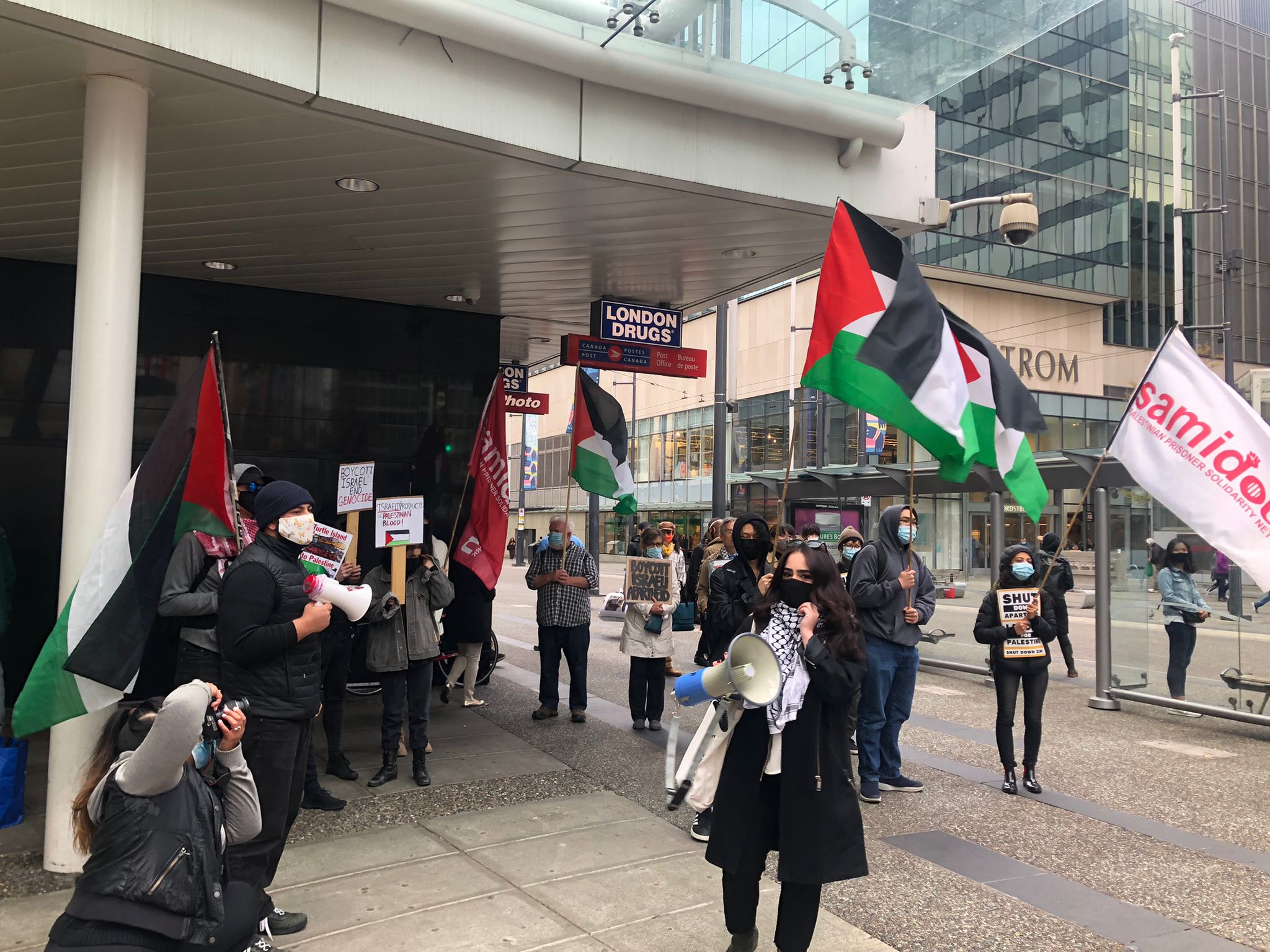 On Wednesday, 6 October, activists marched through downtown Vancouver, Canada, as part of the Boycott Tour, drawing attention to the complicity of corporations, universities and government institutions in Canada in the ongoing colonization, occupation and apartheid throughout occupied Palestine.
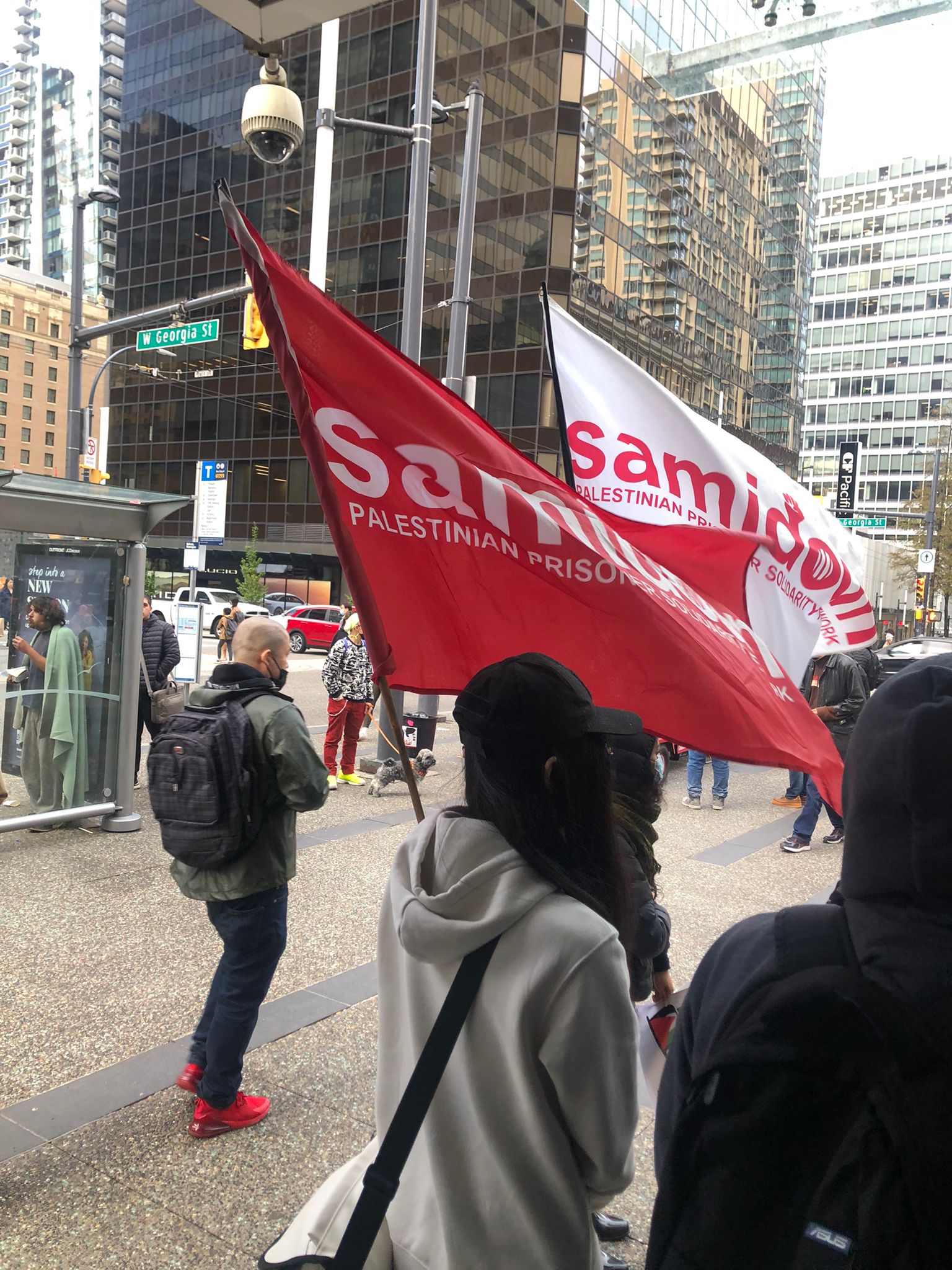 The march took place as part of Palestine Action Week, five days of collective action in solidarity with Palestinians and their fight for liberation, and against settler-colonialism, apartheid, and imperialist violence. Palestine Action Week was organized by a coalition of Vancouver-area groups, including Palestinian Youth Movement, National Students for Justice in Palestine, Canada Palestine Association, UBC Solidarity for Palestinian Human Rights, SFU Students for Justice in Palestine, Samidoun Palestinian Prisoner Solidarity Network, BDS Vancouver, Anti-racism coalition Vancouver, Independent Jewish Voices, Rise SFU, Sulong UBC, and the Caucus.
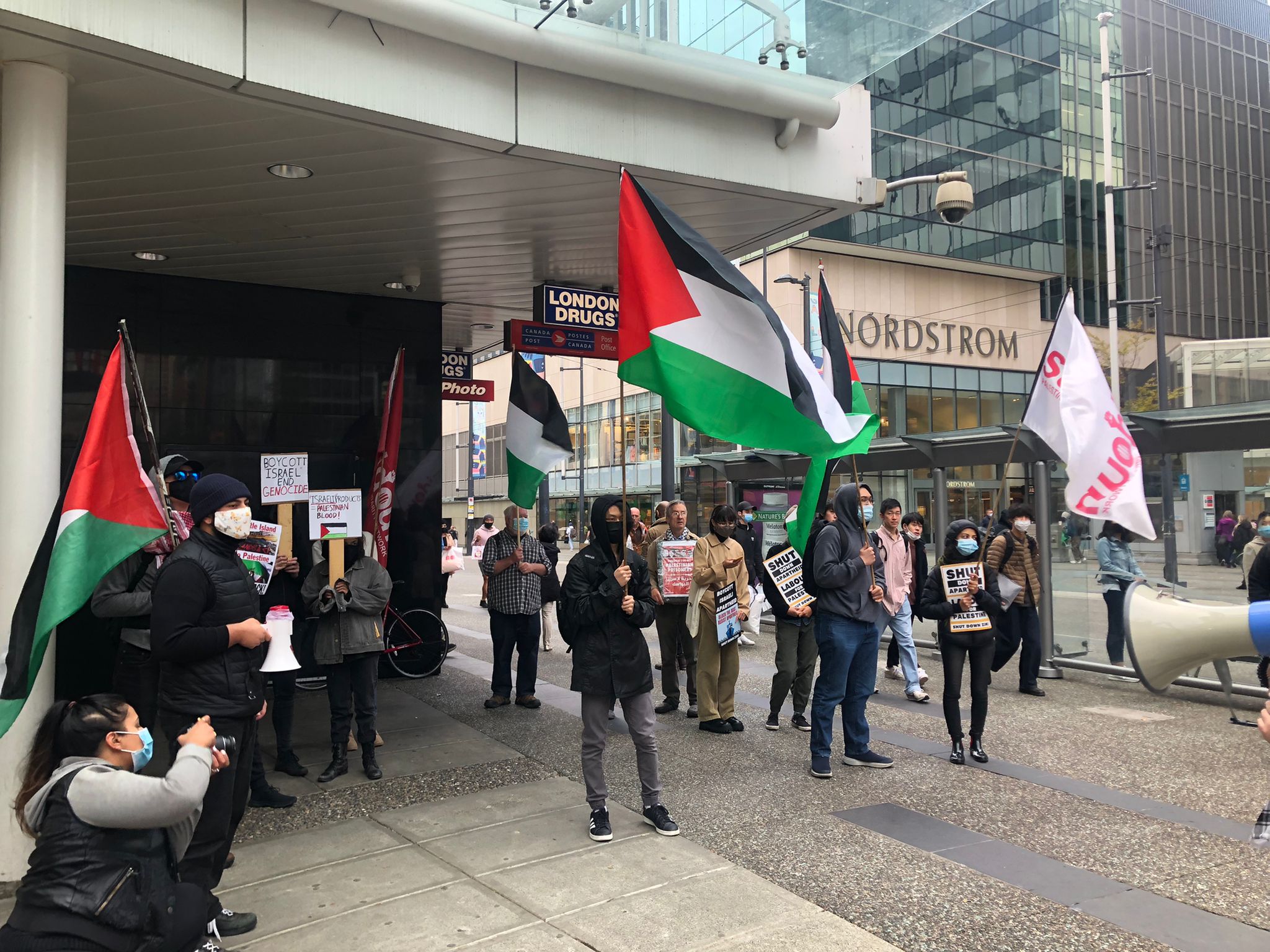 Protesters gathered outside London Drugs, a large Canadian drugstore chain that, among other products, markets SodaStream (created in an Israeli occupation factory exploiting Palestinian land and labour),
 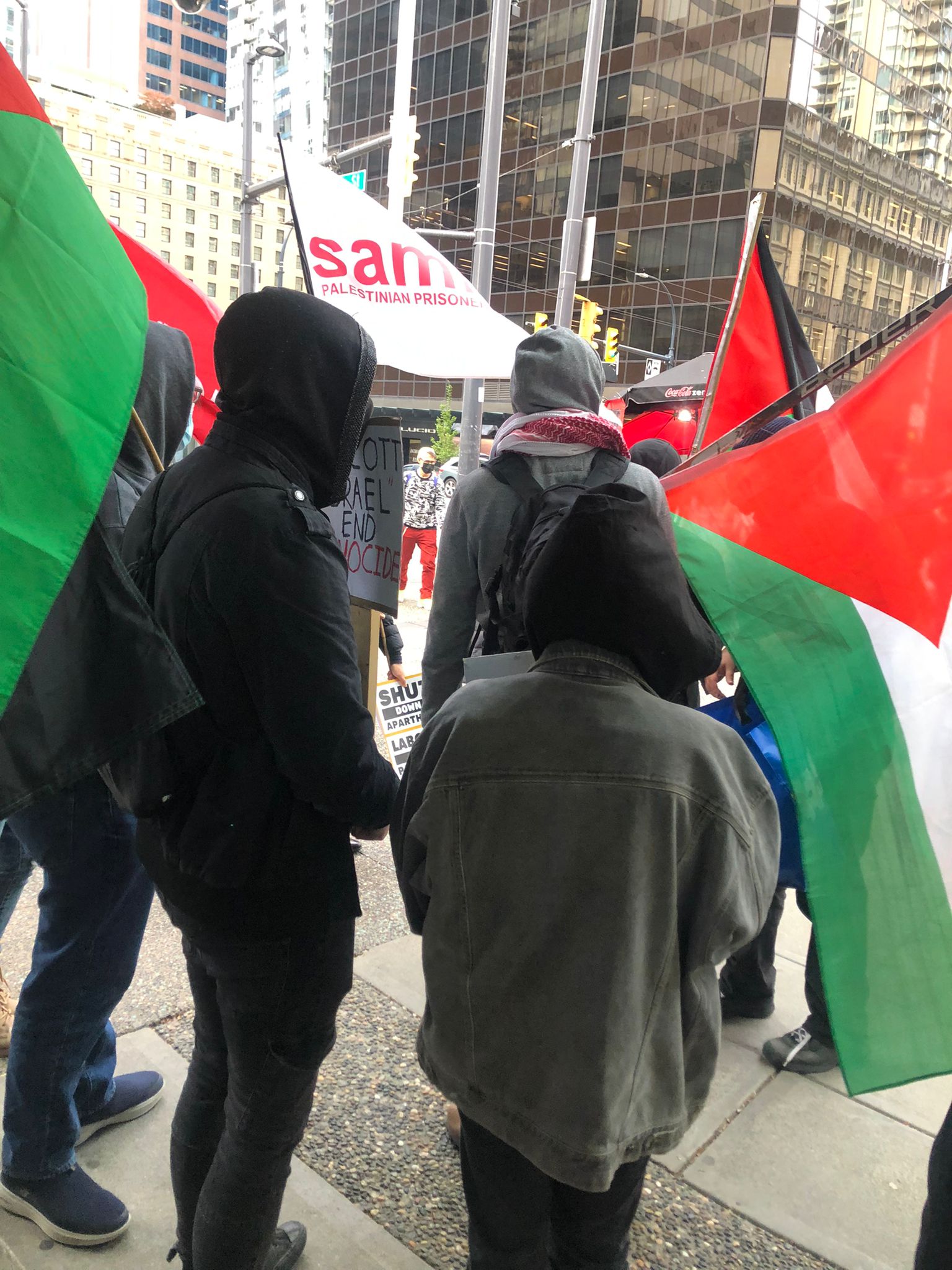 The marchers then proceeded past Best Buy, which also sells HP products, toward SportChek, which markets Puma sportswear, where they highlighted the
 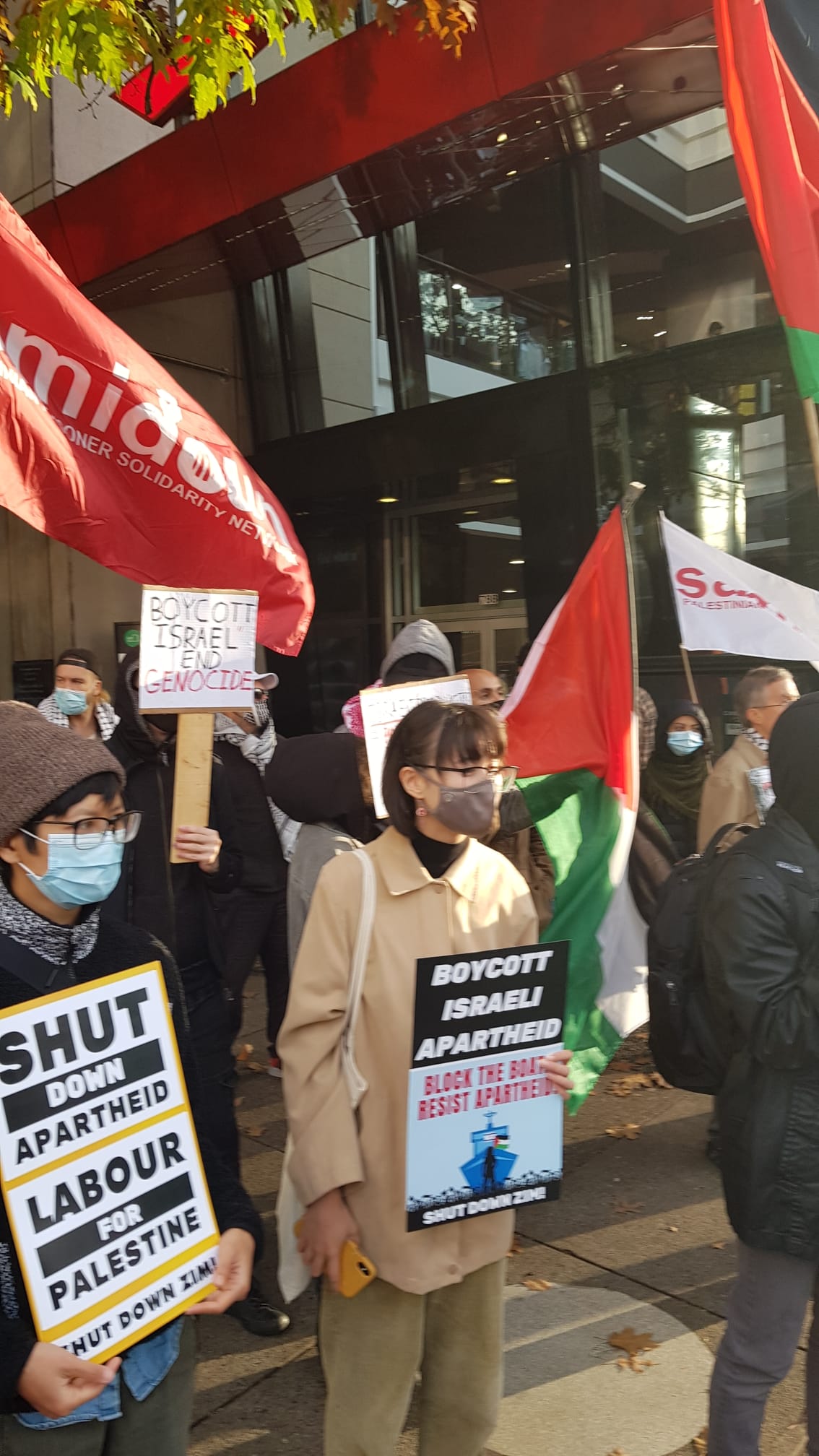 Charlotte Kates, international coordinator of Samidoun Network, spoke about Puma’s role in funding and sponsoring Israeli apartheid and colonialism. She also spoke about the various forms of repression targeting Palestinian athletes, including multiple imprisoned football players. She urged all to take action and show solidarity with the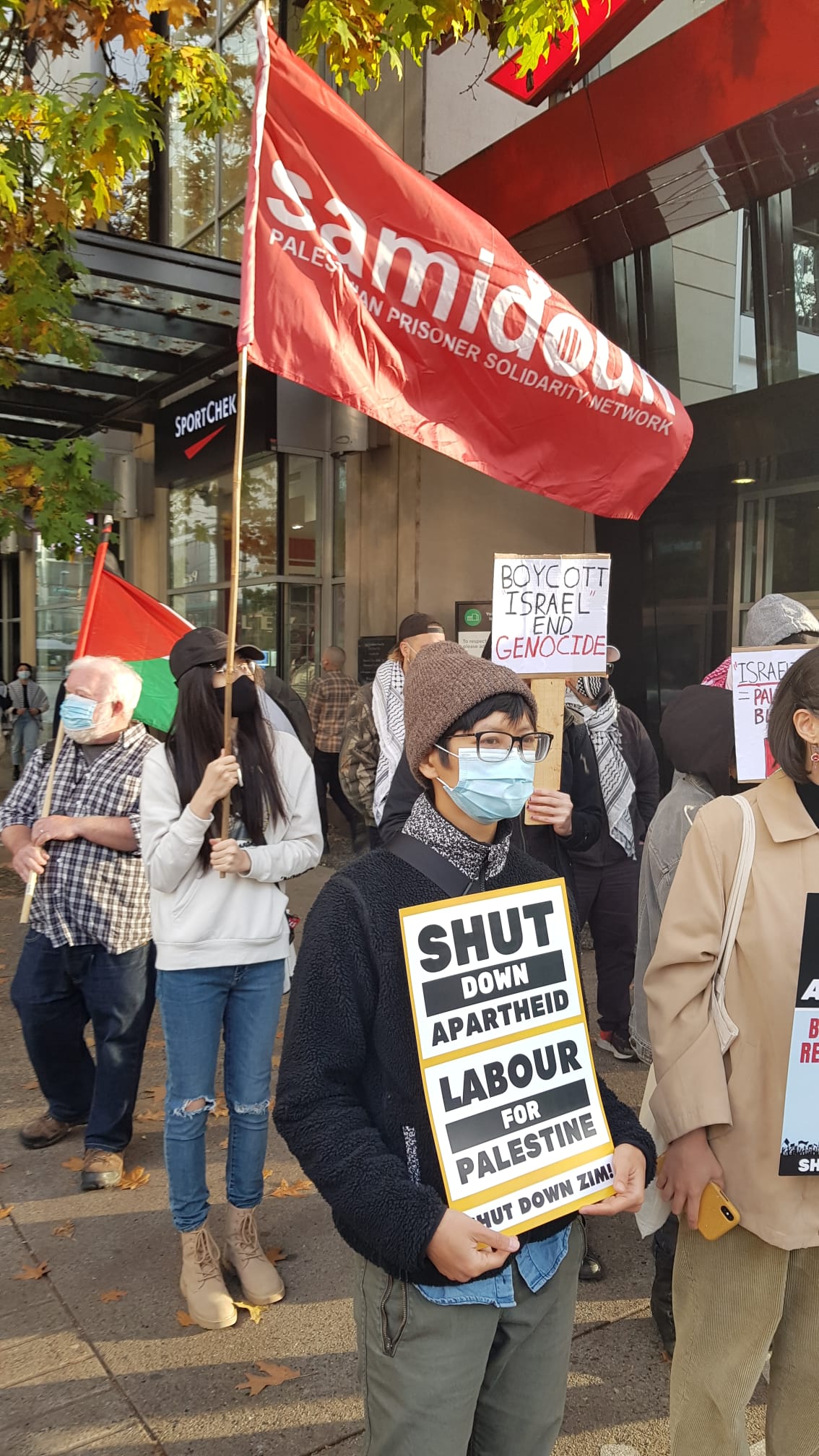
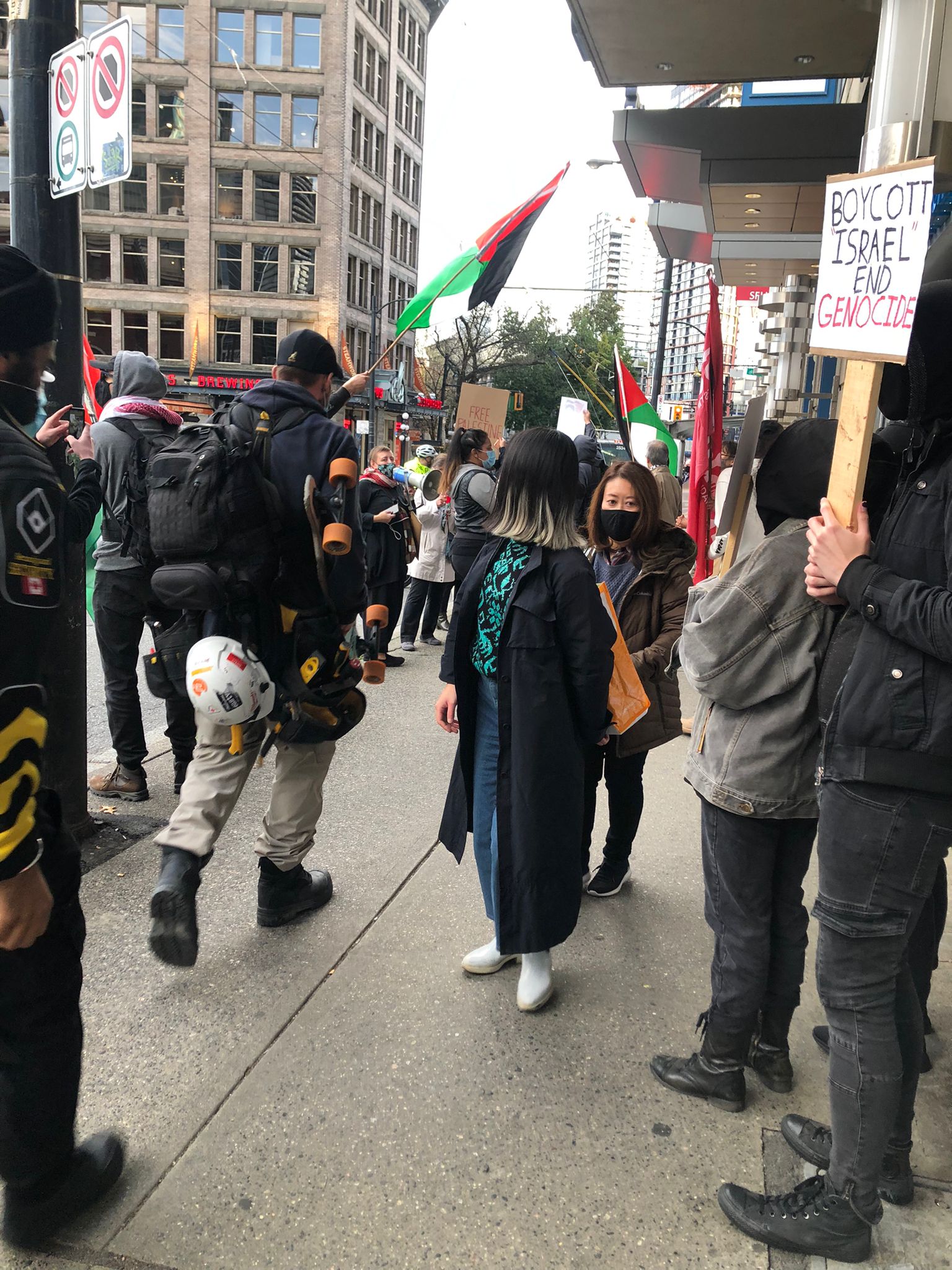 Marchers then proceeded to the BC Liquor Store, a government-owned liquor store that continues to market wines, marked “Product of Israel,” which are overwhelmingly created in illegal settlements on Palestinian land in the occupied West Bank of Palestine and the Syrian Golan Heights. As they marched through the streets, they chanted: “From the river to the sea, Palestine will be free! Boycott apartheid, boycott Israel! From Turtle Island to Palestine, colonialism is a crime!”
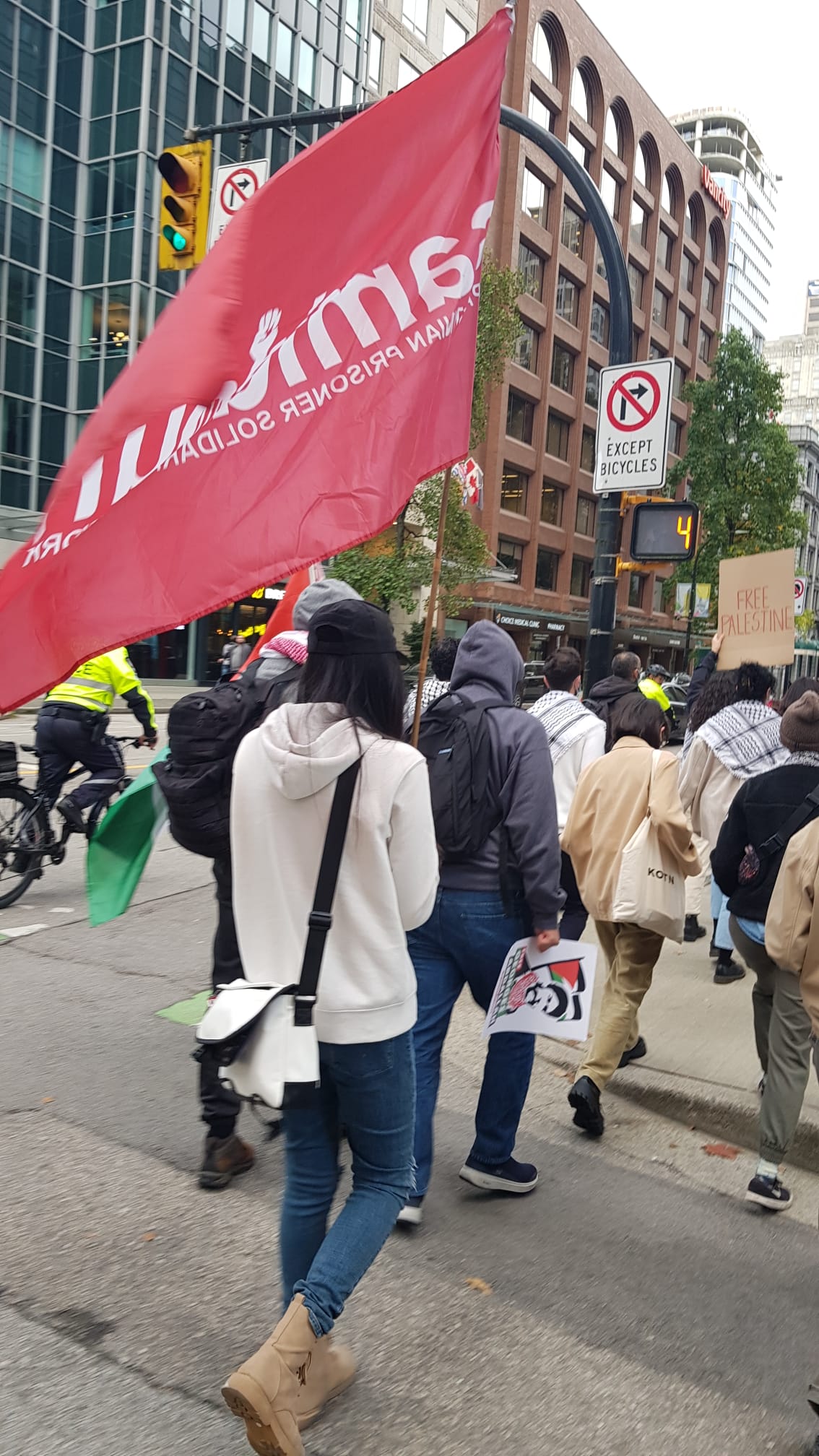 Outside the
 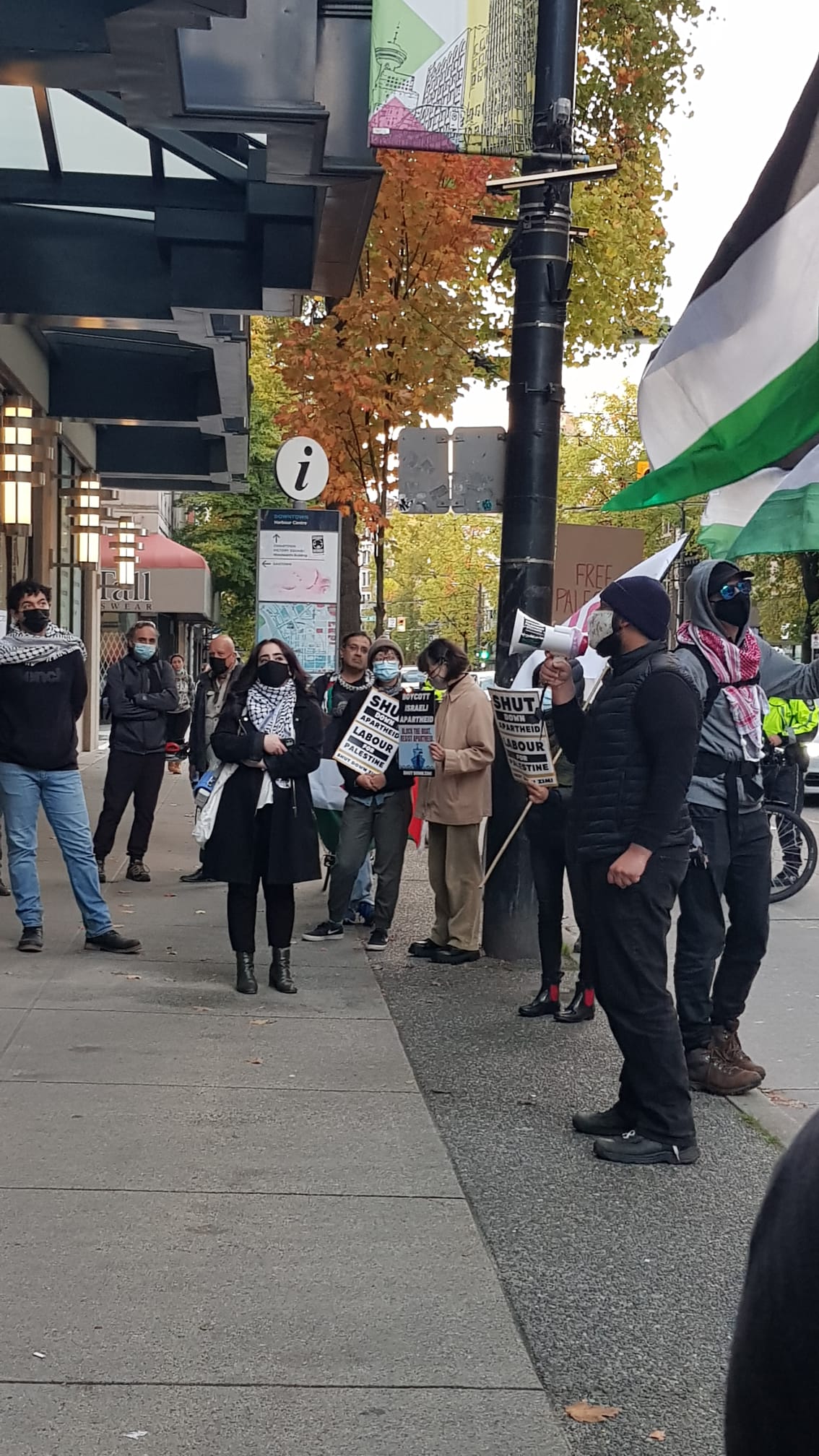 The protest then wound its way to Simon Fraser University’s Harbour Centre. Parsa, an SFU student with
 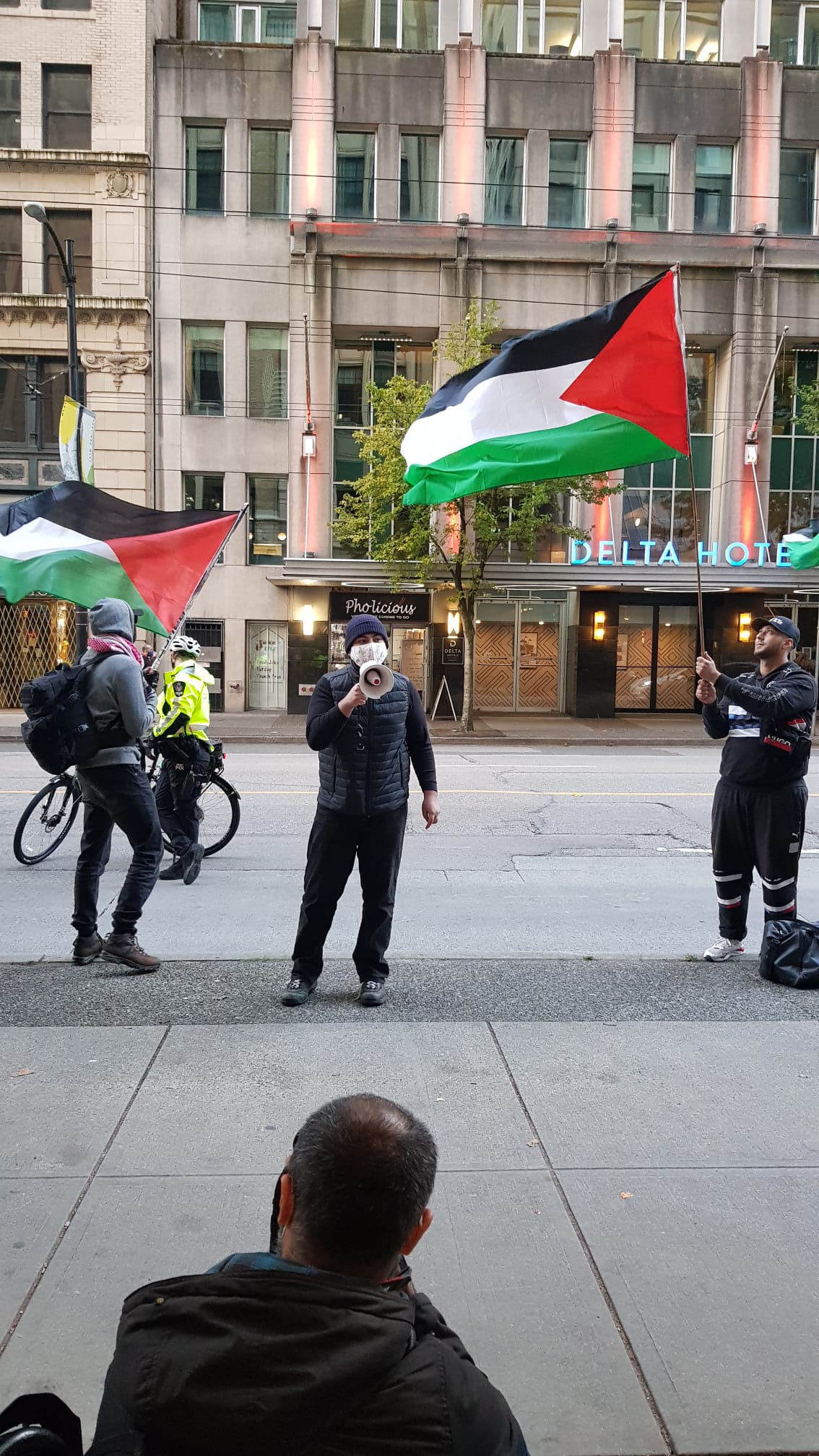 He emphasized the way that SFU and other universities act to quell student activism and separate students from the broader community, alongside ongoing complicity in colonialism here and in Palestine. He noted that SFU security had torn down all of the posters promoting Palestine Action Week only minutes after they were posted, focusing on silencing student voices rather than addressing ongoing colonial war crimes.
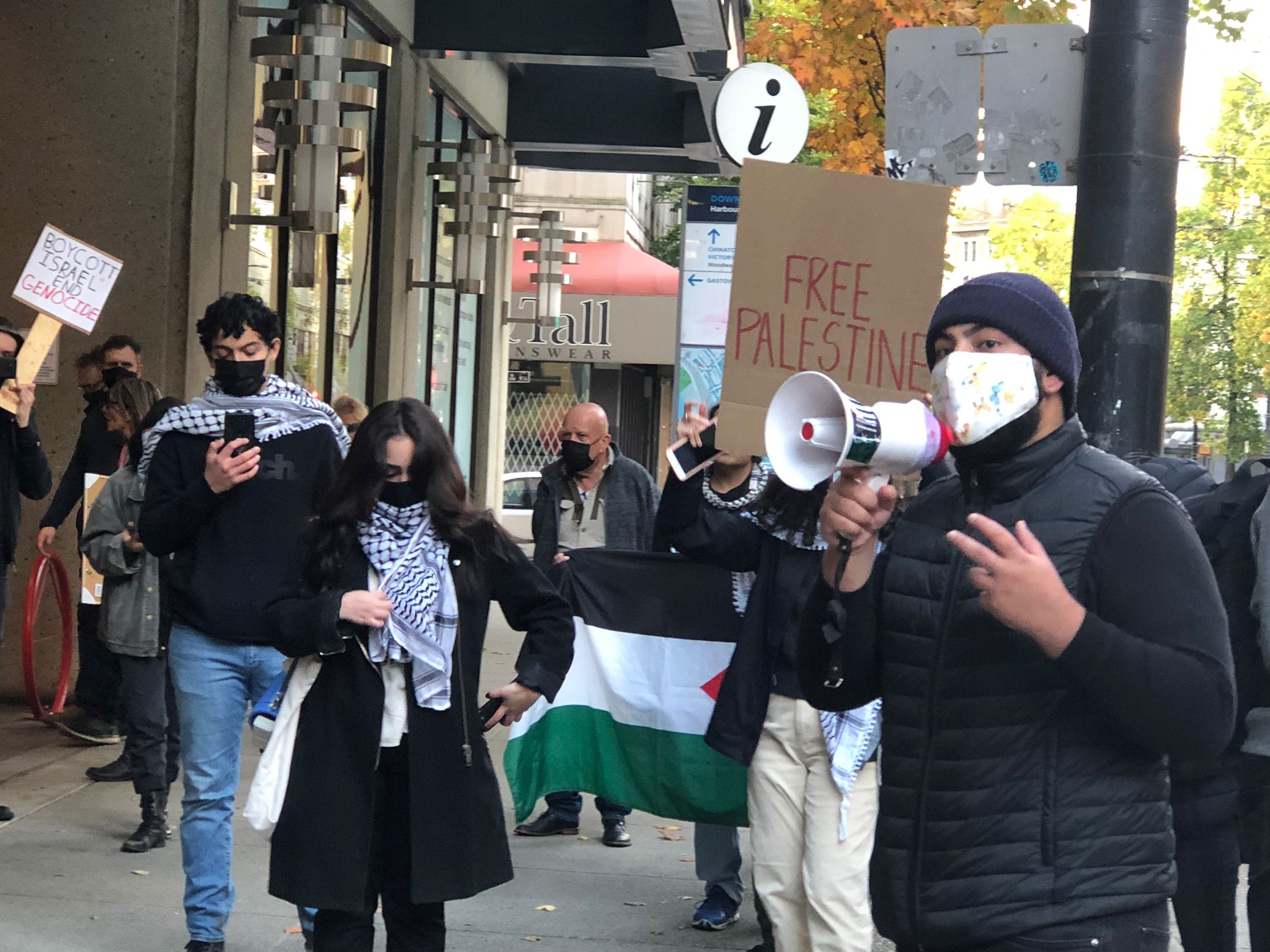 Palestine Action Week concluded on Friday, 8 October with a powerful event sponsored by the Palestinian Youth Movement and BAYAN Canada. Representatives of PYM and Sulong UBC delivered informative presentations on the history of the peoples’ struggles in Palestine and the Philippines, focusing on the struggle of political prisoners, followed by a discussion with Palestinian writer
 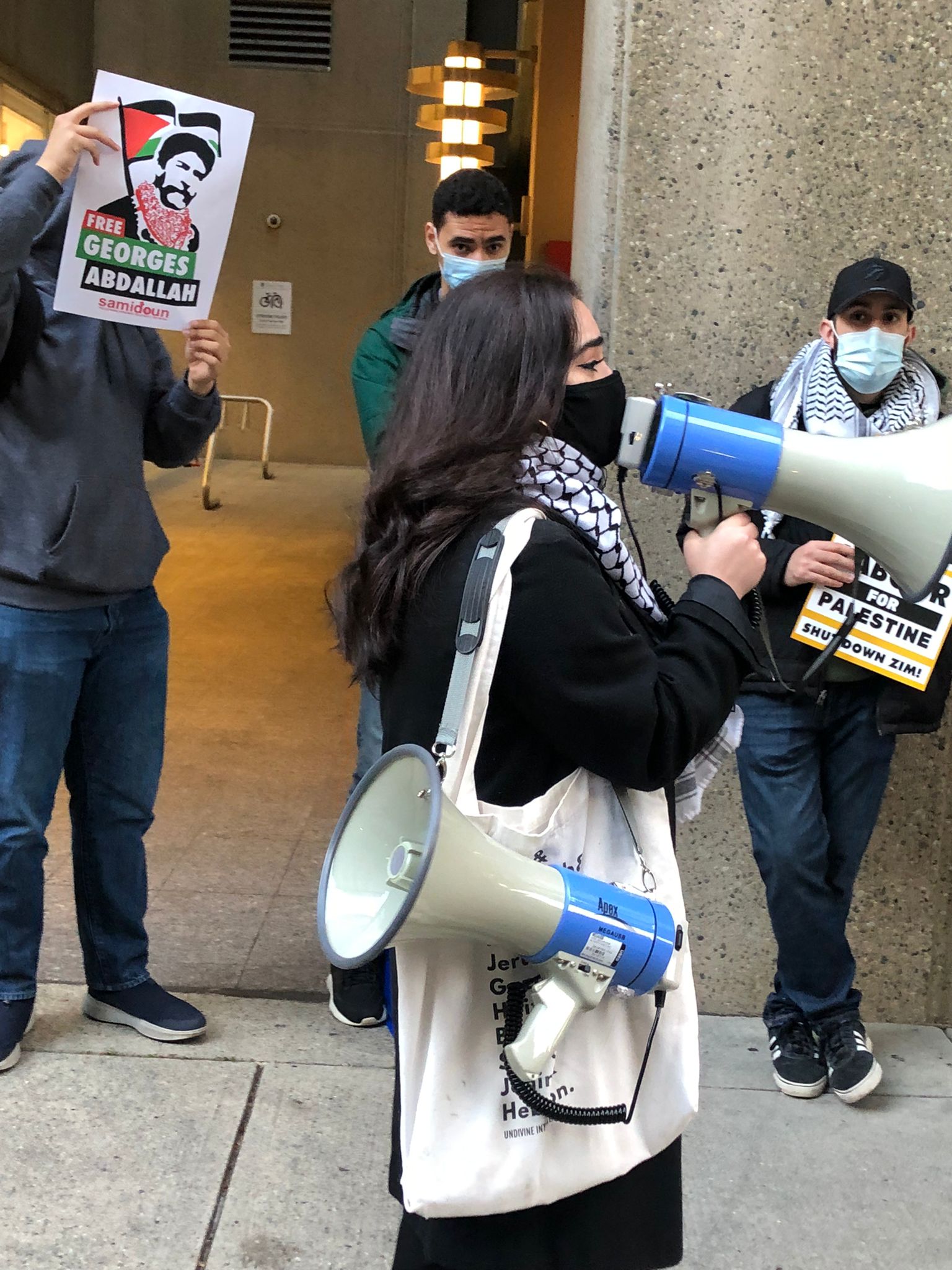 Organizers pledged to continue to build this week of action and further organizing for Palestine in Vancouver, across North America and internationally. The next Vancouver protest will take place on
  The following report is translated from the original French at
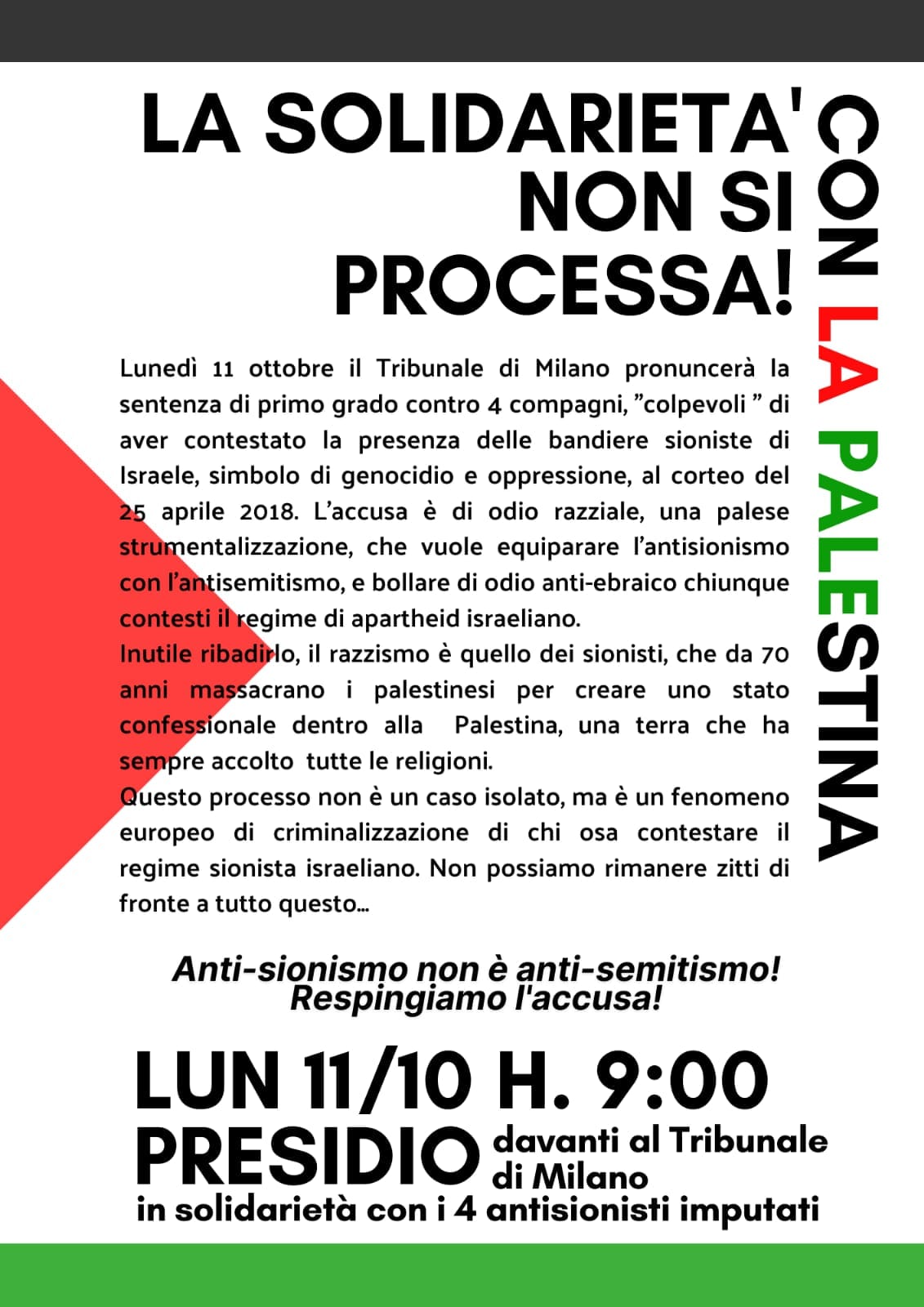
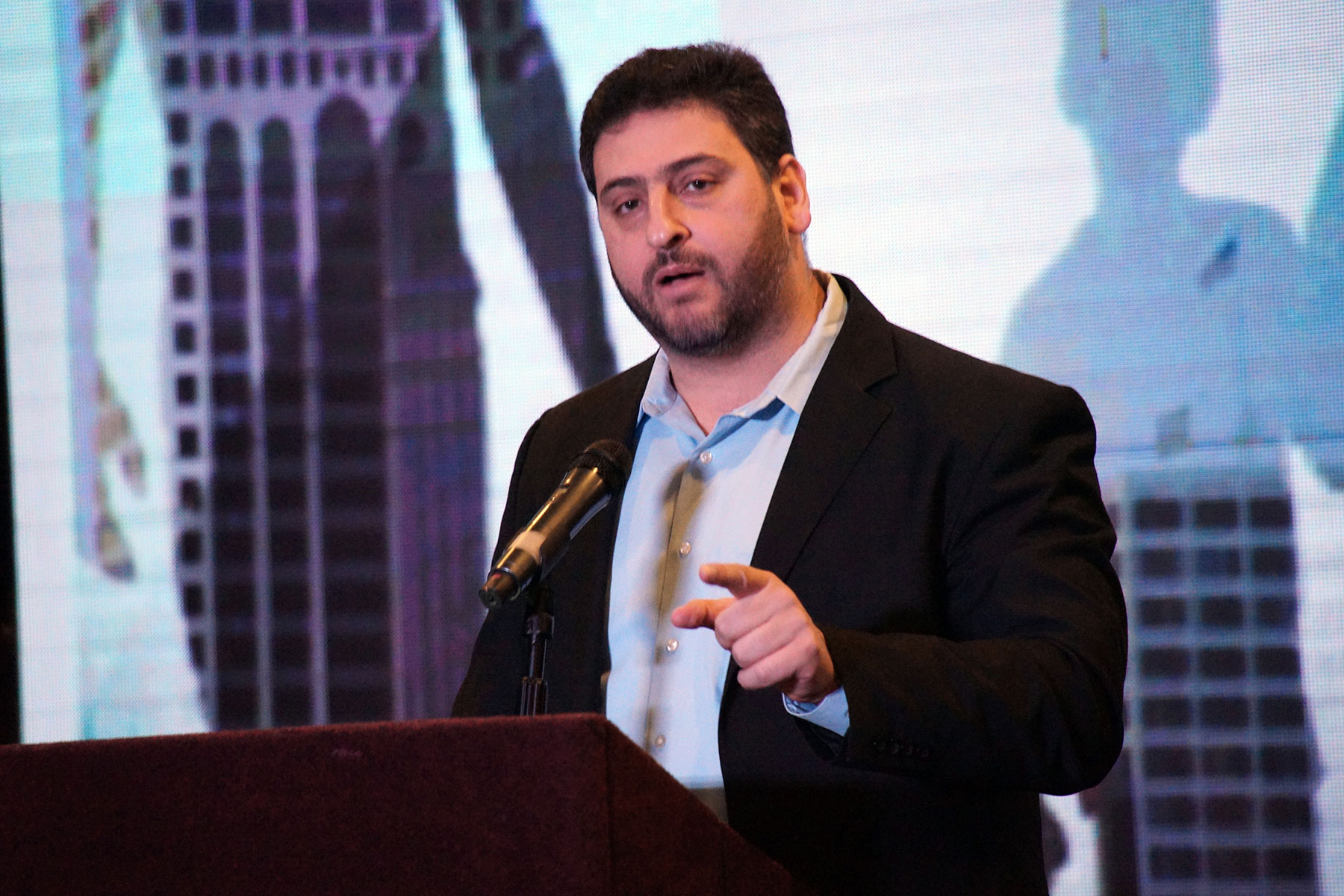 Samidoun Palestinian Prisoner Solidarity Network is an endorser of the following statement, which condemns attacks and smear campaigns perpetrated by institutions and outlets linked to the Palestinian Authority against Palestinian organizers. In this case, these smears targeted Dr. Osama Abu Irshaid of American Muslims for Palestine (pictured above). We view such campaigns as a natural counterpart of the “security coordination” in which the Palestinian Authority engages with the Israeli occupation, at the expense of Palestinians inside Palestine and in exile, as well as the imprisonment of Palestinian activists inside occupied Palestine in a “revolving door” with Zionist prisons. To sign the statement,
 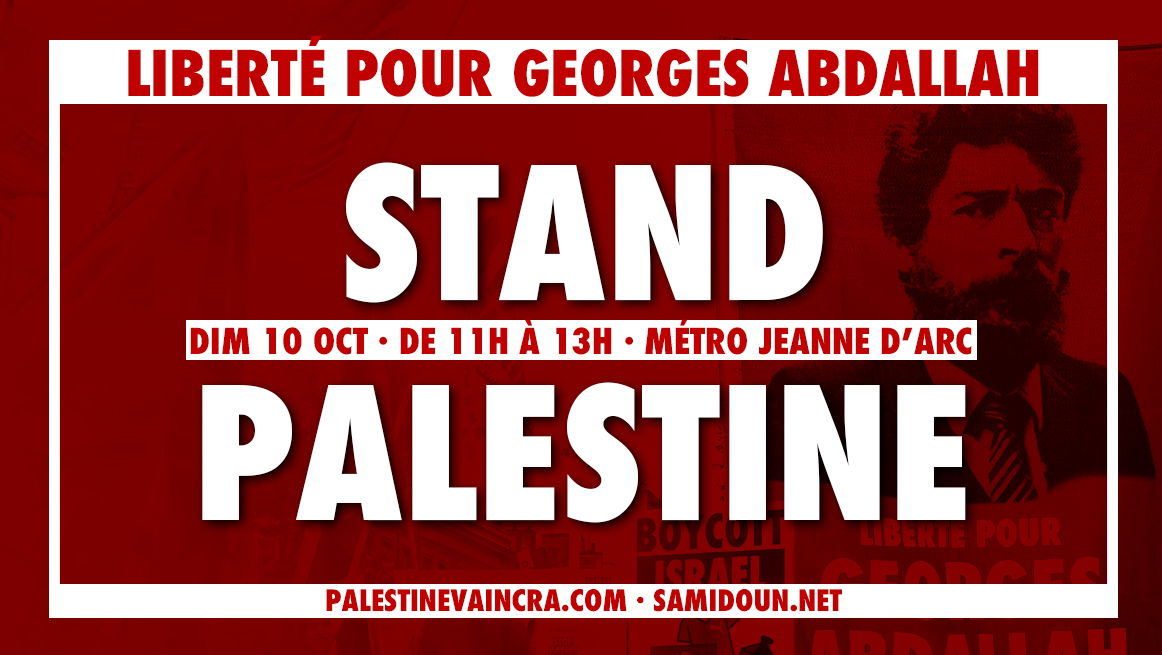 Sunday, 10 October
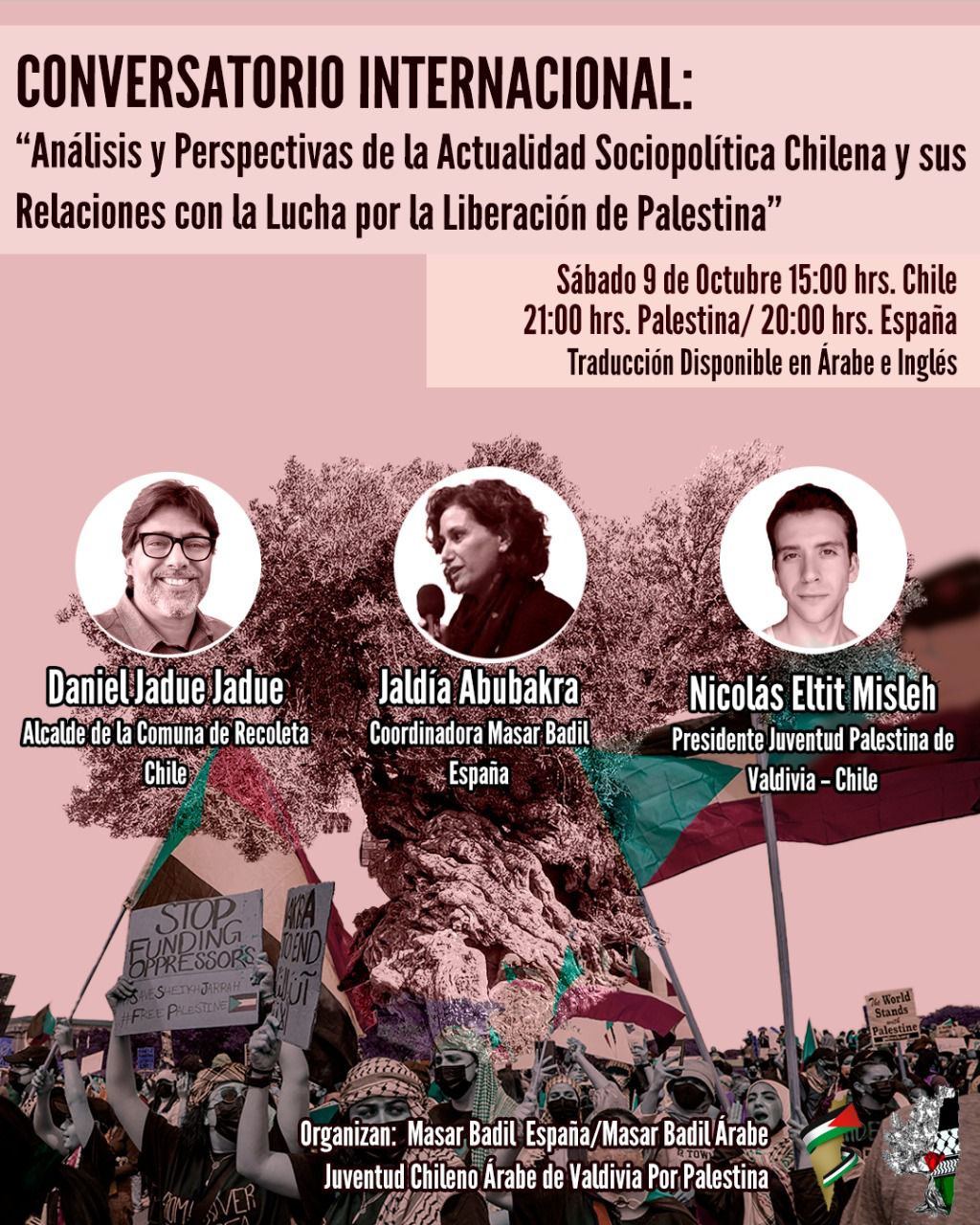
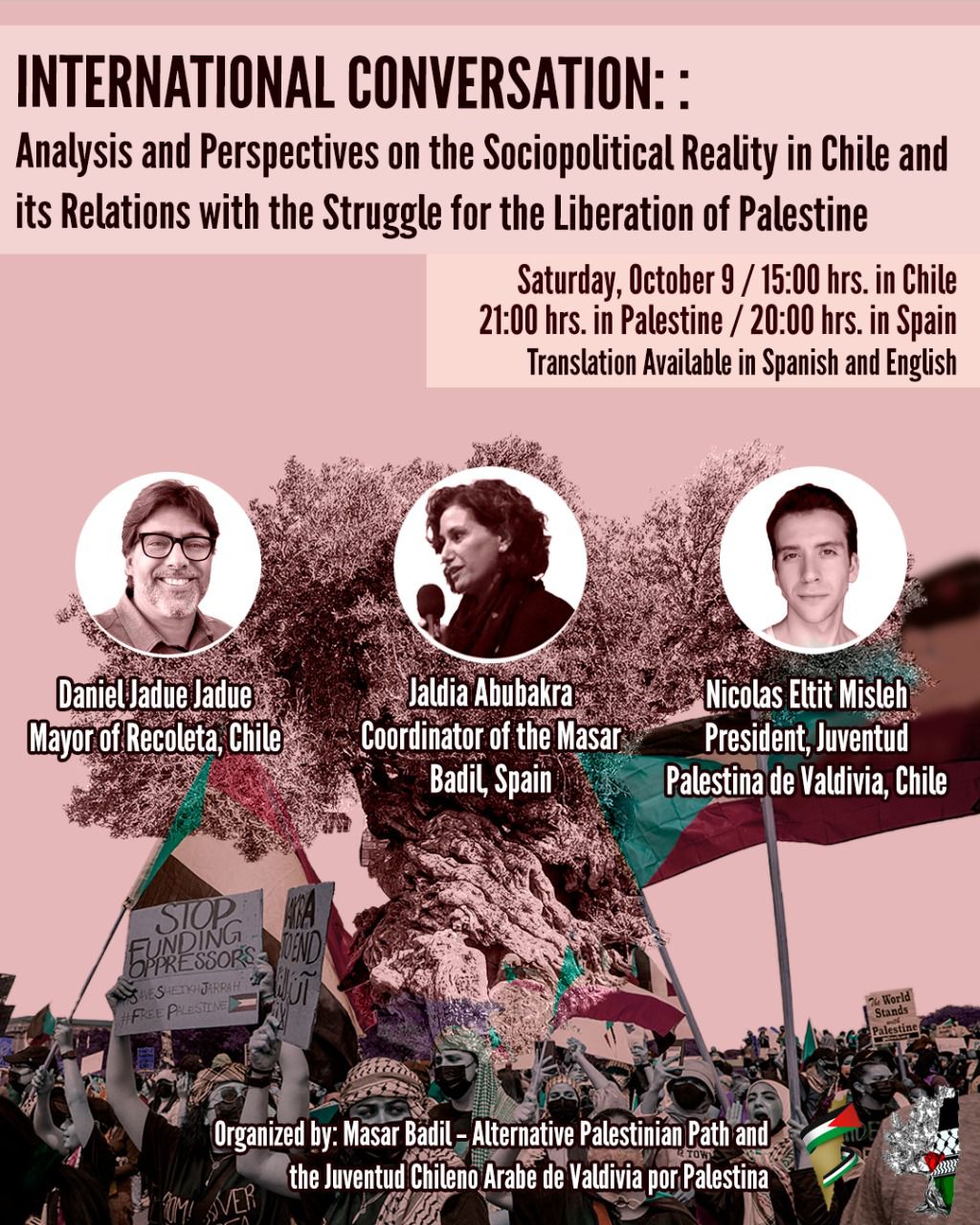 INTERNATIONAL CONVERSATION: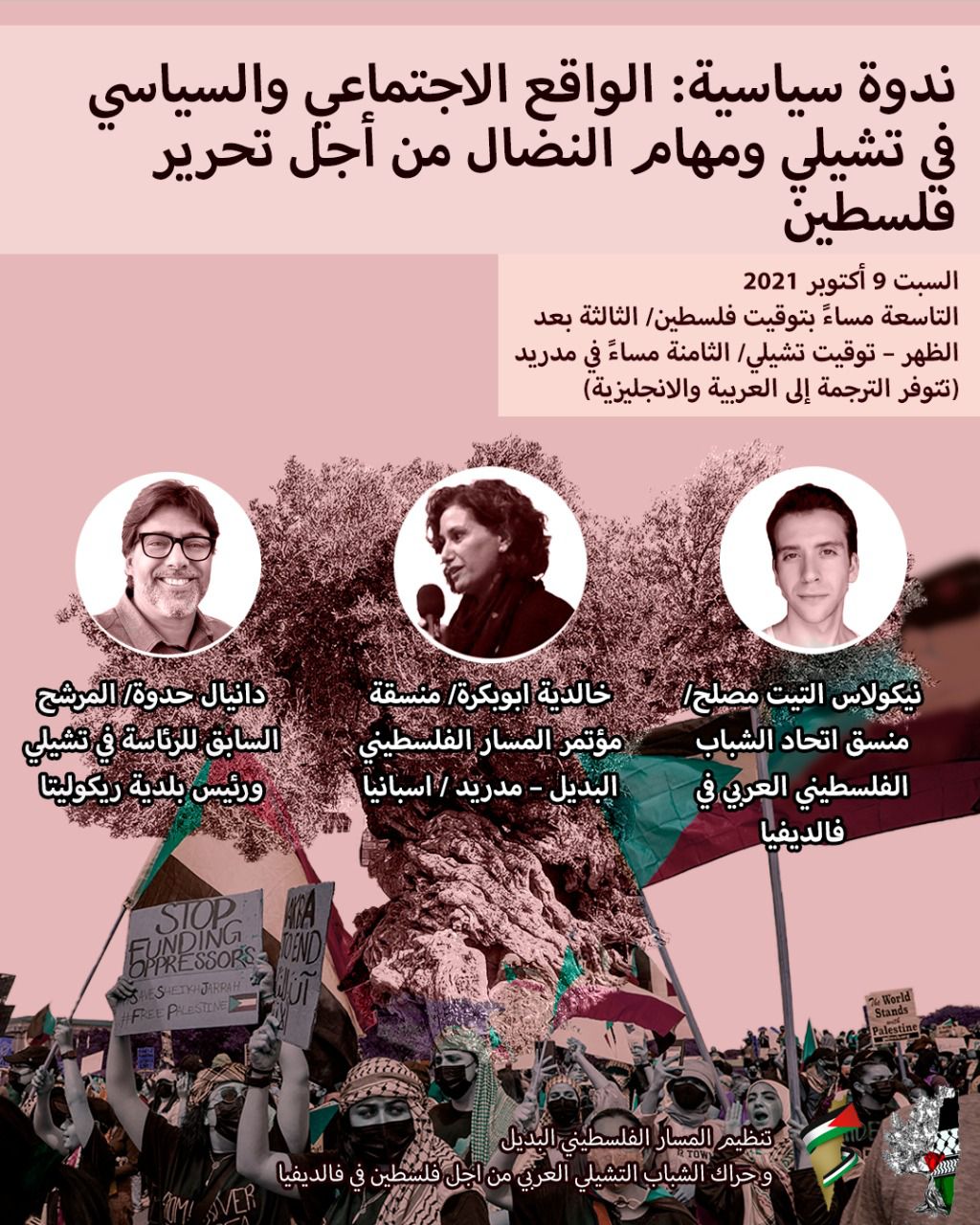
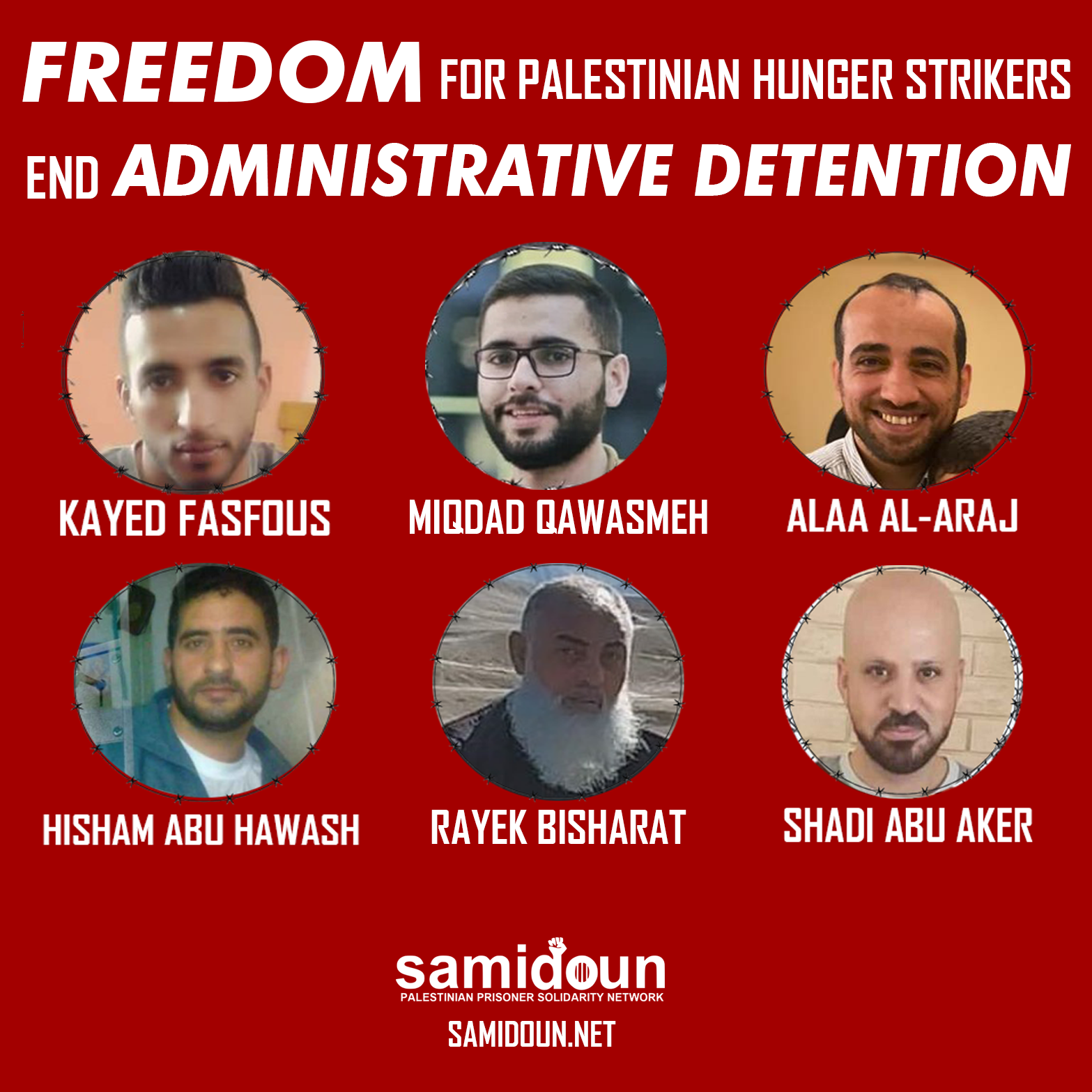
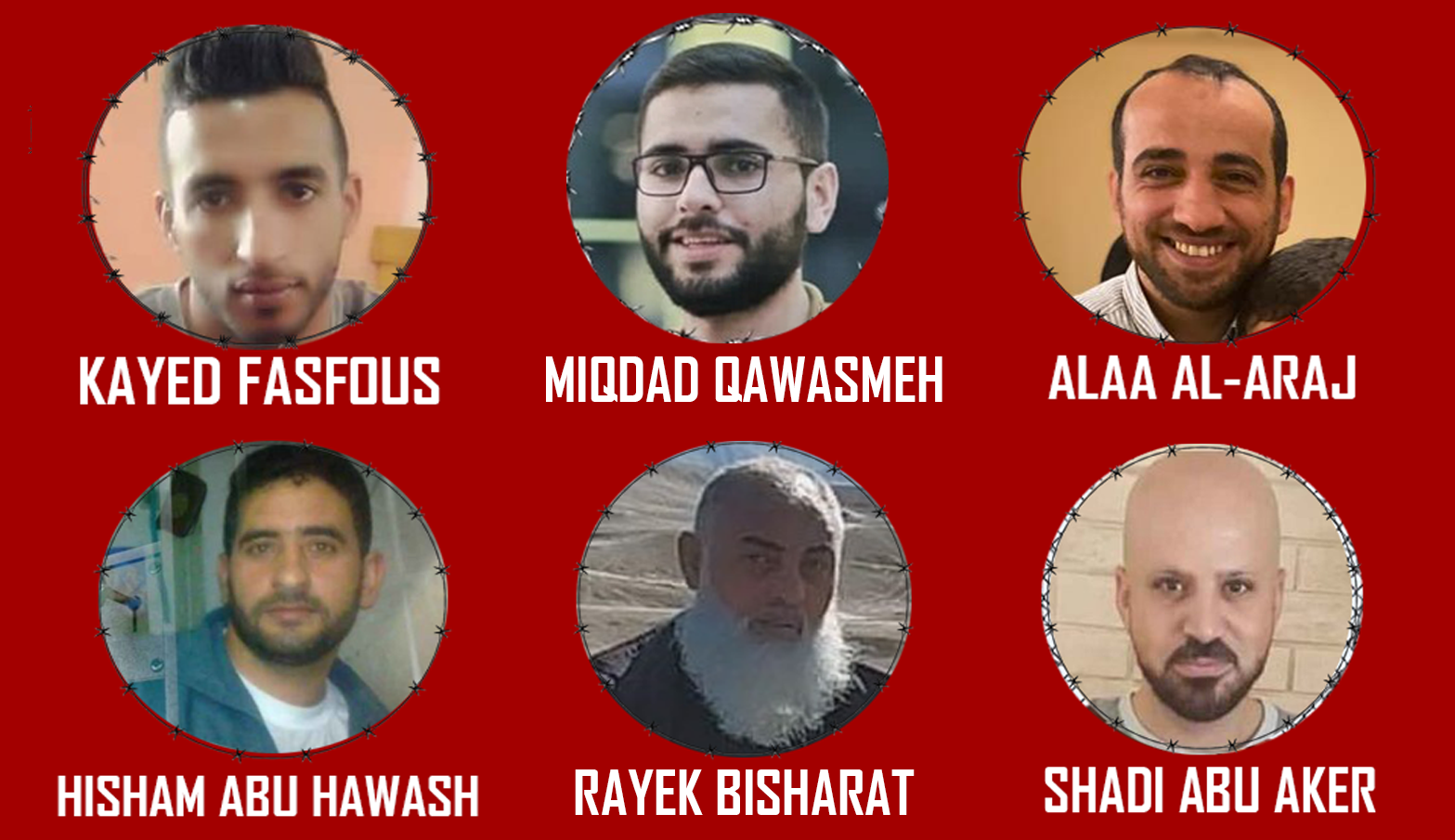 Six Palestinian prisoners are facing an increasingly urgent health crisis as they continue their hunger strike to end administrative detention, imprisonment without charge or trial. Kayed Fasfous, Miqdad Qawasmeh and Alaa al-Araj have all been hospitalized after 85, 78 and 60 days of hunger strike, respectively, and both are pledging to continue their hunger strikes until they obtain their freedom. They are joined by Hisham Abu Hawash, striking for 52 days, Rayek Bisharat for 47 day and Shadi Abu Aker for 44 days.
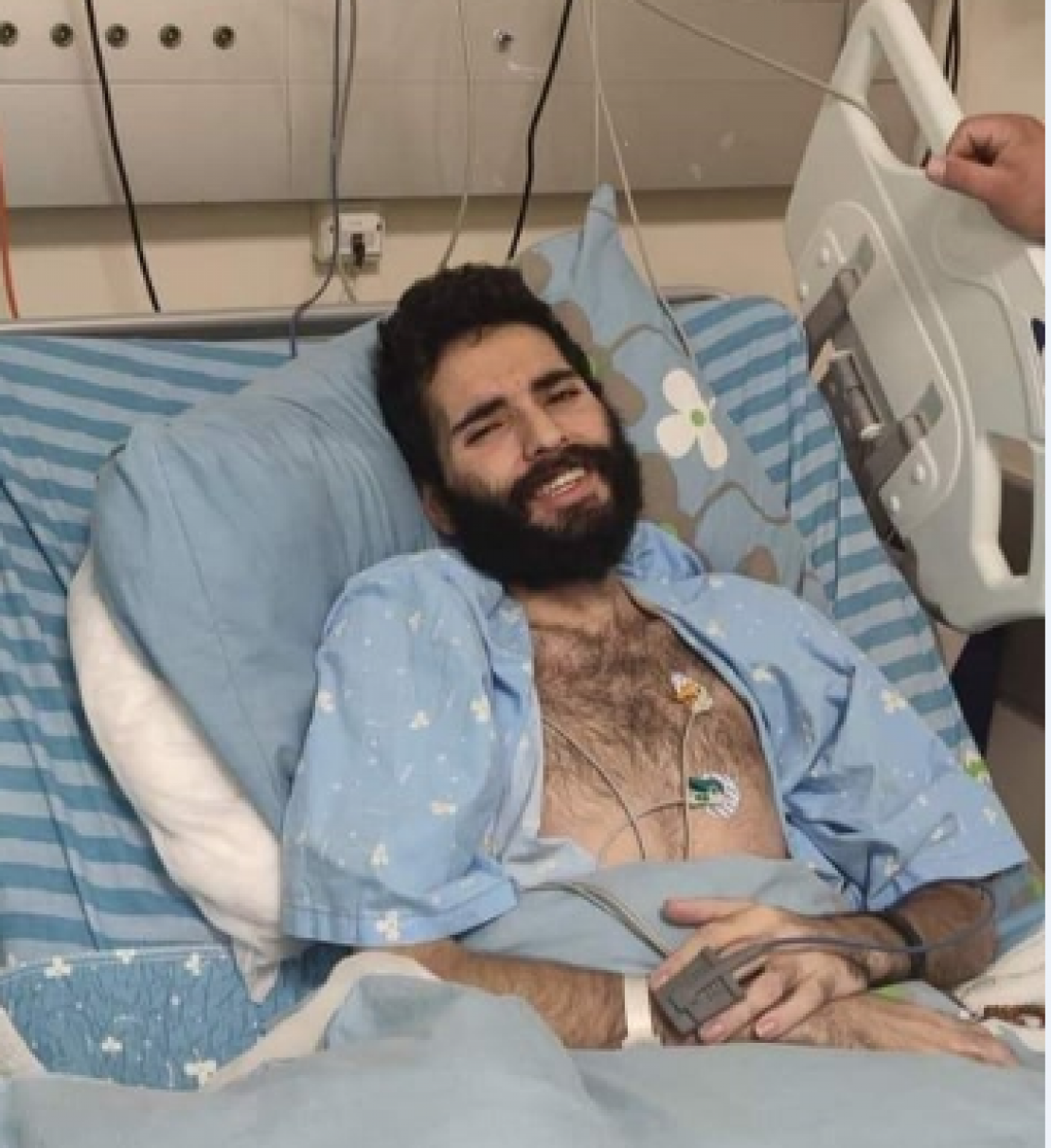 In a statement from Kaplan Hospital, Miqdad Qawasmeh declared: “I do not accept the decision to freeze my detention…I want to return to my family. I will continue the hunger strike, and I demand my rights.” emphasizing that his hunger strike will continue until freedom. While he may receive family or legal visits, he cannot be transferred or moved, because in reality, his detention is continuing.
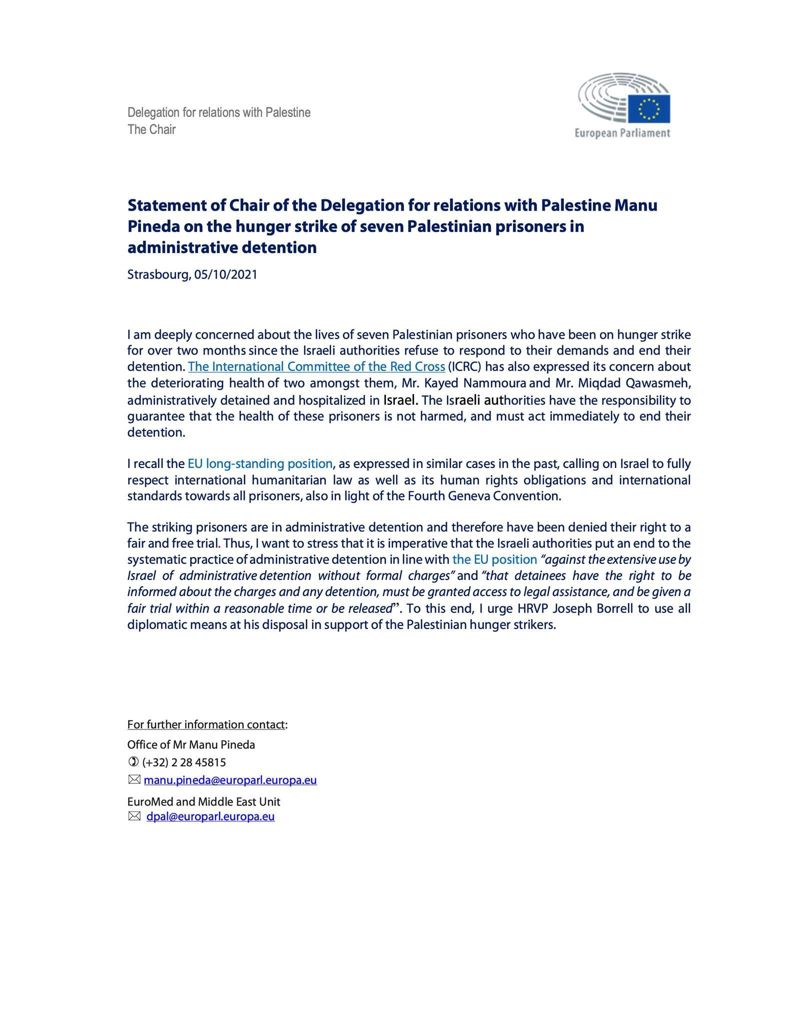 Manu Pineda, Member of European Parliament and Chair of the Delegation on relations with Palestine,